20,000 Weekly: Tesla’s Optimus Production Target Meets Mechanical Reality
Tesla aims to deliver humanoid robots to external clients by late 2027, but mechanical durability and AI generalization remain unresolved bottlenecks for the Fremont-based manufacturer.
By Andrew Fletcher ·
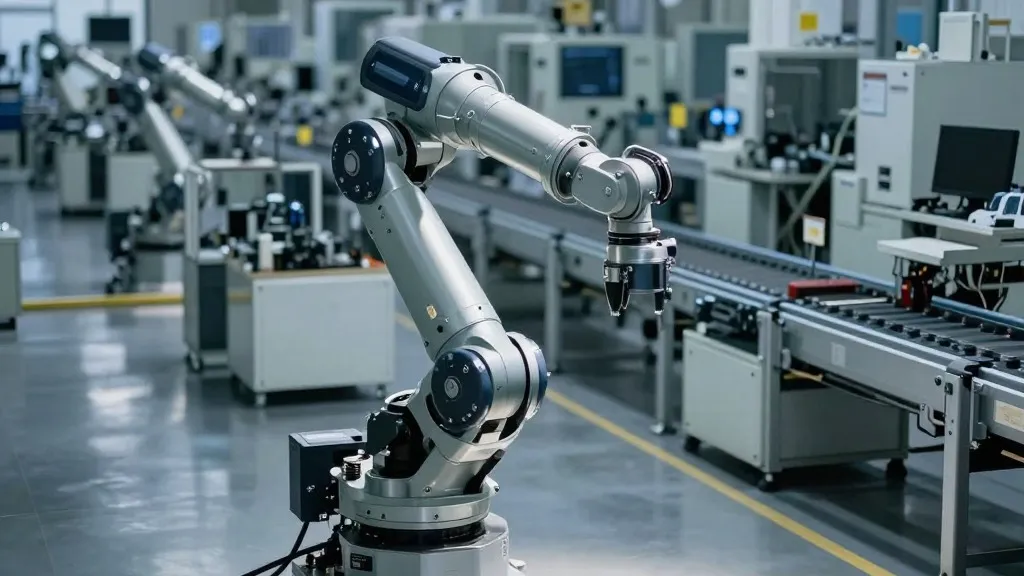
Tesla’s humanoid robot ambitions have hit a mechanical wall, with CEO Elon Musk acknowledging that the company’s most critical hardware components are still failing under stress. On the Q3 2026 earnings call, Musk confirmed that external deliveries of the Optimus robot are now targeted for the end of 2027, a significant shift from earlier projections. The delay is driven by persistent issues with the robot’s hands, its overall durability, and the artificial intelligence required to operate it effectively in unstructured environments.
The company has installed the majority of a production line in Fremont, California, originally designed for Model S and Model X vehicles. This facility is intended to eventually produce approximately 20,000 units per week, a rate equivalent to one million robots annually. However, Musk noted that reaching this capacity will take at least a year, possibly longer, because the design is still in flux. Early production has begun, but the hardware is not yet stable enough for mass market rollout, particularly regarding the electromechanical design and reliability.
The primary technical hurdle remains the robot’s dexterity. A Tesla Optimus engineer identified the hand as one of the most difficult hardware areas to perfect, citing the challenge of creating fingers that are soft enough to handle delicate objects yet durable enough to withstand constant industrial wear. Unlike human skin, the synthetic materials cannot heal, leading to rapid degradation. Custom gears also present reliability concerns. To address the AI gap, Tesla plans to build 10,000 to 20,000 robots for an internal “Optimus Academy” where they will practice tasks, as the company lacks a large fleet of field-deployed units to collect real-world data for its AI models.
This timeline follows a pattern of shifting targets. In 2024, Musk suggested high-volume production for external customers in 2026, and in January 2025, he claimed 10,000 robots would be built that year. None of those units were performing useful work by year’s end. The Q3 shareholder letter now describes the robots coming off the Fremont line as the first “production-quality” units, implying that all previous iterations were prototypes rather than finished products.
Competitors are not standing still. XPeng activated an automated production line for its IRON robot in Guangzhou in September, with mass production planned for late 2026 and deliveries in early 2027. Meanwhile, Boston Dynamics, which hired Tesla’s former Optimus head in January, has committed all its 2026 Atlas deployments, including to Google DeepMind. Boston Dynamics has adopted a more pragmatic approach to the hand problem, prioritizing sturdy industrial grippers over human-like dexterity, a strategy that may offer a faster path to commercial viability.
The market is watching closely to see if Tesla’s promised video, expected within a month or two, shows the robot performing unscripted tasks. If the demonstration relies on pre-programmed routines, it will reinforce the narrative that general-purpose robotics remains an unsolved problem. For now, the focus shifts to whether Tesla can bridge the gap between building a robot and making it economically useful before its rivals establish a foothold in the industrial sector.
The delay to late 2027 highlights the capital intensity of the humanoid market. While Tesla possesses the manufacturing scale to outproduce competitors, the complexity of integrating reliable AI with durable mechanical parts remains the central risk. Investors are left to weigh the promise of a 20,000-unit weekly output against the reality that the fundamental design is still being revised on the factory floor.
Source: Electrek