Alexandra children publish anthology amid 81 percent national reading failure
A weekend literacy program in Johannesburg has produced a self-published book written by 50 township students, addressing a crisis where most 10-year-olds cannot read for meaning.
By Priya Marino ·
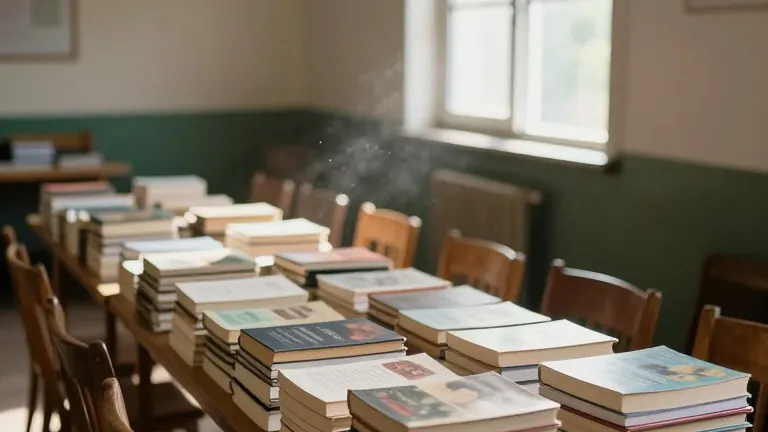
Eighty-one percent of 10-year-olds in South Africa cannot read for meaning in any of the country's 12 official languages, according to an international study cited by Basic Education Minister Siviwe Gwarube. This statistic underscores a national literacy crisis that is driving grassroots interventions in urban townships. One such project, based in Alexandra, has resulted in the publication of a seven-story anthology written by local children.
The book, titled From Gomora to the World. Stories from Alex, was launched at the Kwabhekilanga Sports Ground in Johannesburg. The anthology is the output of the Read Alex program, a free weekly literacy club initiated by the Run Alex Athletics Club. The program currently serves approximately 50 participants who attend weekend sessions focused primarily on English reading.
Phelelisa Somana, a coordinator for the book project, noted the maturity of the writing. She stated that reading the stories reminded her that children observe their environments more closely than adults assume. The stories draw directly from the daily realities of township life, including poverty, peer pressure, and the challenges of navigating high-density housing.
Thirteen-year-old Fiona Mogane contributed a story titled Lindani's Modelling Journey. The narrative follows a character whose mother is an alcoholic and spends government welfare grants on drink. Mogane wrote that the main character battles intrusive thoughts about drinking herself but eventually overcomes these by baking and selling scones to fund a modeling contest entry. The character finishes second in the competition.
Mogane, who is being raised by a single mother in Alexandra, described the value of community in her neighborhood. She identified the concept of Ubuntu as central to township life, defining it as helping other people when they are in need. She expressed a goal to attend university to study medicine and to build a house with a dedicated room for books.
Another contributor, 13-year-old Anita Maloka, wrote about a rural girl who moves to Johannesburg for school. Maloka described the lack of textbooks and overcrowded classrooms in her story. The character works toward a scholarship to attend a school with a science lab and a computer programming room. Maloka, who dreams of becoming a marine biologist, is also pursuing a scholarship to leave the township.
Government data indicates that only 15 percent of public schools in South Africa have a functioning library. UNICEF data shows that two-thirds of South African children do not have books at home. Tebogo Selekane, an English teacher at Kwa-bhekilanga secondary school, said two of her students had stories in the anthology. She reported that the students have improved their reading confidence and are responding more actively in class.
Basic Education Minister Siviwe Gwarube announced that the government is investing 10 billion rand, approximately 58 million dollars, over the next three years. The funding is allocated for the renovation and expansion of early childhood development centers. The ministry aims to strengthen early learning foundations for children before they start primary school.
Wandile Mathe, a 21-year-old writer and joint coordinator of the project, described South Africans as natural storytellers. He observed that storytelling occurs in public transport, queues, and shops. The anthology reflects this tradition, with young authors using their personal experiences as source material for their narratives.
The children who wrote the anthology are currently working toward educational goals that extend beyond the township. The program provides a platform for these students to publish their work while the government addresses the structural deficits in early education infrastructure.