Colorado archaeologist rules Jackass Hill viewpoint lacks historical significance
A preliminary report determines the Littleton park site is an indigenous open camp, allowing South Suburban Parks to proceed with construction.
By Abigail Brooks ·
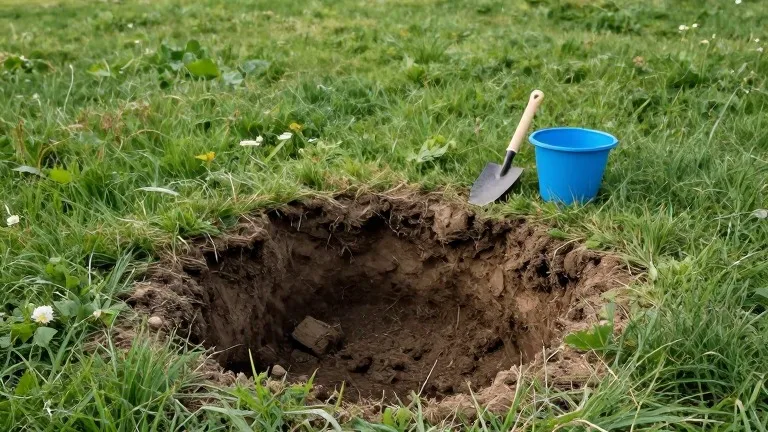
A preliminary state report has determined that the viewpoint at Jackass Hill Park in Littleton is not historically significant.
The October findings resolve a dispute that delayed a planned renovation by South Suburban Parks and Recreation.
The archaeological investigation began in August after community members recovered numerous items from the hilltop.
Littleton resident Ned Sterne and advocate archaeologist Craig Banister submitted hundreds of objects to the state prior to the excavation.
State officials examined 209 indigenous artifacts provided by the pair, identifying 70% as cultural items and the remaining 30% as unmodified rocks.
Dr. Holly Norton, the Colorado State Archaeologist and Deputy State Historic Preservation Officer, led the three-day investigation.
She described the scope of the collection as limited, noting that the team primarily recovered lithics, which are small pieces of chipped stone used for tools like projectile points.
Archaeologists also excavated a hearth at the location.
The report classified the lookout point as an indigenous open camp, a designation based on the recovery of more than 350 artifacts.
Approximately 90% of these items were undiagnostic bone fragments and lithic microflakes, while the remainder included larger flakes and fragments of manos.
Norton stated that the state requires clear boundaries to justify preserving a site, noting that the team found no distinct site remaining.
She explained that the difficulty in determining what remains stems from decades of the area serving as a popular neighborhood park where visitors collected artifacts for personal use. "The site is gone because of that collecting," Norton said. The report identified the hearth as a primary artifact of interest. Banister and Sterne sent a piece of charcoal from the hearth for radiocarbon testing at ICA Labs Inc. The analysis indicated an 82.2% probability that the charcoal had a calibrated age between 670 and 780 AD. Banister believes more material likely remains underground, noting that it is rare for sites to survive in urban metro areas where land has been built over. Sterne expressed that he was not surprised by the conclusion, citing the shallow nature of the dig. Norton acknowledged that the team used hand excavation, a standard method for site evaluation in North America. Sterne wants South Suburban to revise its plan to leave the top of the hill untouched, describing the area as hallowed ground to many residents. He noted that existing data suggests the location was used for 8,000 years. If the plan does not change, Sterne proposed a formal scientific excavation before construction begins. He warned against archaeology by backhoe, predicting that construction will dig six feet deep. The state recommended that an archaeologist monitor future construction to assess any newly unearthed materials. South Suburban Parks and Recreation told Denver7 that it is hiring an archaeologist before work starts. Norton said that digging deeper than the initial hand excavation could slightly raise the chance of finding more material, which the on-site archaeologists would help assess.
More News · Littleton news · Report a business · Got a Story?