Investors pivot to value stocks as tech sector faces record weekly losses
Amidst a historic sell-off in the S&P 500 and Nasdaq, a prominent investment strategy is rotating capital from high-flying tech stocks into diversified, high-quality companies.
By Abigail Brooks ·
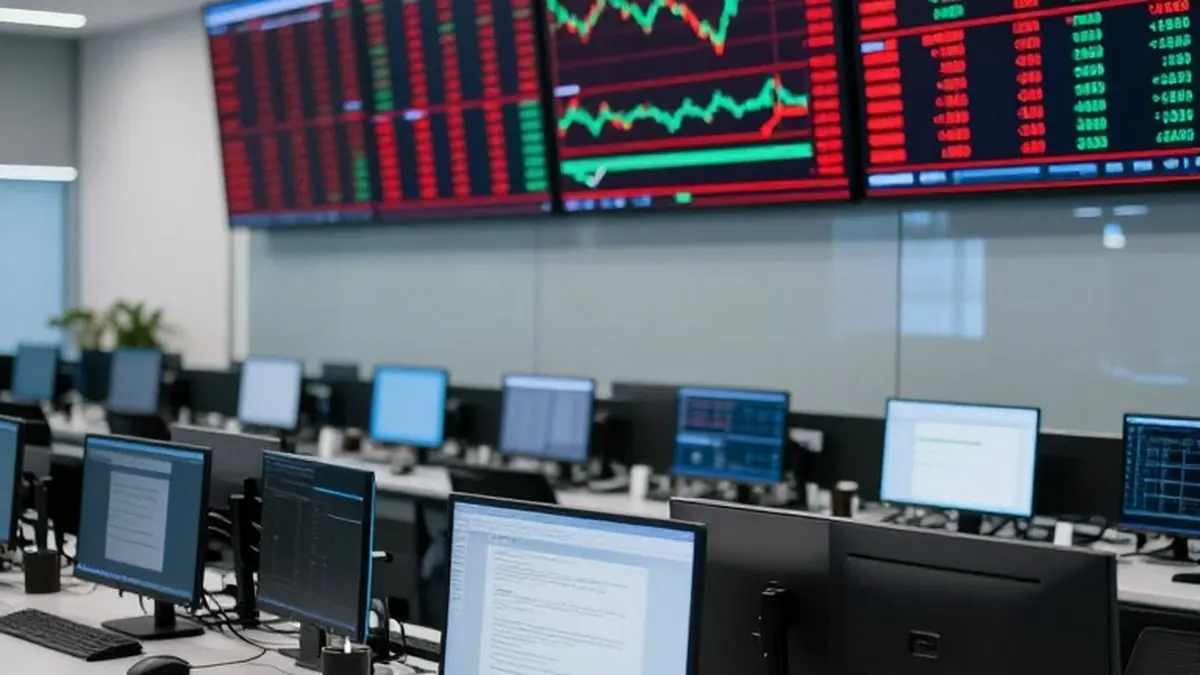
The stock market endured its most significant weekly decline in more than a year, driven by mounting concerns over the sustainability of artificial intelligence spending. The S&P 500 index fell nearly 8.6 percent for the week, marking its worst performance since the tariff-induced plunge in April 2025. The Nasdaq Composite suffered an even sharper drop of 10 percent, its steepest weekly loss in over six years, which pushed the tech-heavy index into negative territory for 2026.
Friday's session proved particularly volatile, with the Nasdaq dropping 5.3 percent and the S&P 500 falling 3.7 percent. This sharp selling highlighted growing doubts about lofty valuations in the AI sector, compounded by political opposition to new data center construction following the midterm elections. The turmoil pushed technical indicators deep into oversold territory, prompting disciplined investors to begin deploying cash reserves.
Nvidia’s leadership changes and strong earnings failed to stabilize investor sentiment. Although the chipmaker reported revenue that more than doubled, its interim CEO, Colette Kress, emphasized that the company remains committed to its customers despite the abrupt departure of Jensen Huang. The board ruled out reinstating Huang, prolonging uncertainty. Consequently, Nvidia shares lost 23 percent during the week, closing Friday just above $125.53, their lowest level since May 2025.
Anthropic’s record-breaking initial public offering also struggled to lift the broader market. The company raised a total of $93.5 billion after underwriters exercised their overallotment options. Additionally, Anthropic secured $26 billion in a private placement. While shares surged to $115 on their debut Thursday, they retreated on Friday, closing at approximately $90 for an 8.5 percent decline.
In the retail sector, Home Depot beat earnings expectations and named Richard McPhail as its next CEO. Despite a subdued outlook, the company maintained its market share gains, and analysts reiterated a buy rating with a $370 price target. Meanwhile, TJX Companies saw its stock surge after reporting improved comparable sales in its Marmaxx division, which includes T.J. Maxx and Marshalls. The stock rose nearly 4 percent for the week, though analysts maintained a hold rating.
Palo Alto Networks emerged as a top performer, gaining 6.5 percent following strong earnings and the announcement of a $4.5 billion acquisition of Applied Compute. The move aims to expand the company’s capabilities in securing enterprise AI models. Analysts maintained a hold rating with a $400 price target, noting the growing demand for modernized cybersecurity defenses.
In response to the market weakness, the investment strategy completed a planned semiconductor swap on Monday. It exited Intel at a loss and initiated a position in Advanced Micro Devices. This move was driven by AMD’s flexible chip designs and the potential for Nvidia’s leadership uncertainty to open up GPU market share opportunities. AMD shares initially dropped due to a short seller’s report alleging improper China sales, though the company pushed back against the claims.
The strategy also trimmed its Apple position after a significant rally this year, reducing its weighting to about 4.5 percent and locking in a substantial gain on shares purchased in 2014. Additionally, investors added to positions in FedEx Freight, Meta Platforms, and Constellation Brands. Meta was upgraded to a buy rating, while Constellation Brands was viewed as an attractive diversification play with a dividend yield near 3 percent.
Finally, the strategy purchased more shares of Bank of New York on Friday to lower its cost basis and add dividend income. The move reflects a broader preference for high-quality companies outside the AI infrastructure trade. BNY was selected for its limited credit risk and exposure to investment banking, providing stability in a volatile market environment.
More News · National news · Report a business · Got a Story?