Elliott Coffee's 100-Year-Old Shop Draws Lines Around the Block
A converted gas station in Dayton, Kentucky, is proving that working families value community spaces over speed, even when it means waiting in long queues for specialty beans.
By Priya Marino ·
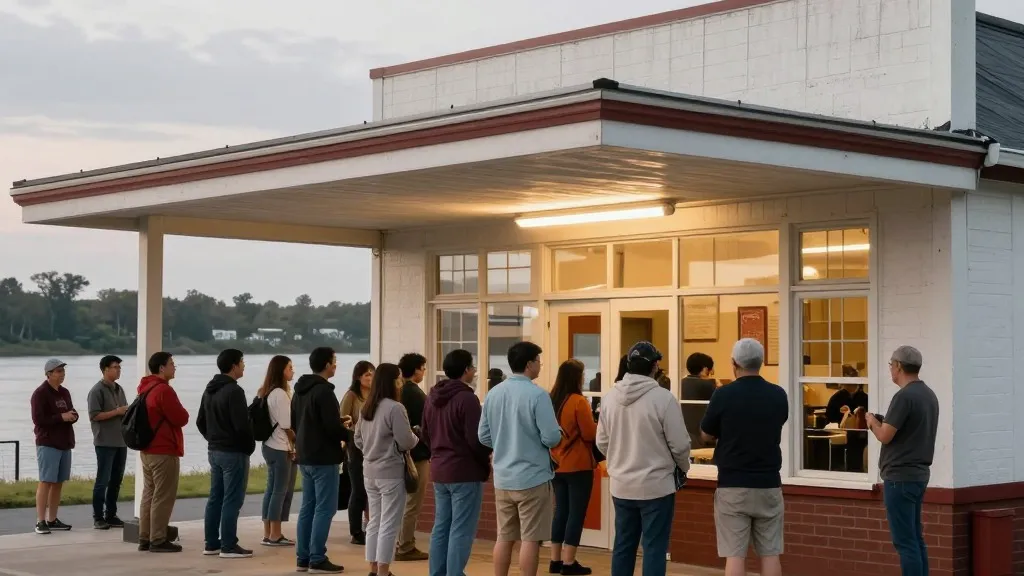
The most significant metric for Elliott Coffee is not its daily sales, but the length of the line that snakes around the corner of a historic building in Dayton, Kentucky. This 100-year-old structure, situated on a curve of the Ohio River, has transitioned from a mechanic shop and fuel stop into a bustling café. For the local population, this shift represents a tangible change in how they interact with their immediate surroundings, turning a utilitarian site into a social hub.
The story began in 2024 when Isabelle, Asa, and Elijah Knapp established the business. The location is strategically placed just ten minutes from downtown Cincinnati, a distance that makes it accessible to commuters and residents alike. The founders did not set out to create a high-volume drive-through. Instead, they aimed to reconstruct the feel of a traditional American small town, a concept they believe has faded in modern urban life.
Elijah Knapp, one of the co-founders, noted that the loss of that specific community vibe is a widespread concern. He observed that many people deeply miss the feeling of a place that is unique to their specific area. This sentiment drives the cafe's operation, prioritizing human connection over transactional efficiency. The team views the act of serving coffee as a way to acknowledge the entire supply chain, from the growers and processors to the roasters and shippers.
The menu reflects this respect for the product by featuring beans from diverse origins. Regulars can find roasts from Edinburgh, Los Angeles, and various regions in Central America. Knapp explained that the focus is not on competing with other brands but on honoring the labor and craftsmanship behind each cup. This approach appeals to customers who want to understand the journey their coffee takes before it reaches their hands.
The experience extends beyond the beverage itself. Knapp highlighted the value of the routine associated with the location, such as a neighbor walking their dog in the morning and stopping by for a drink. He described this as an experience that is difficult to replicate in other settings. The ritual of arriving, waiting, and socializing has become a defining feature of the establishment's identity.
The financial journey to this point was not without risk. Elijah Knapp left his position in the software industry to launch the venture, while his wife continued working as a nurse. The decision to commit to the lease came at a pivotal moment, as the couple learned they were expecting a child. This timing increased the pressure on the business, making its success a critical factor for the family's future stability.
Despite the personal stakes, the response from the neighborhood has been overwhelmingly positive. Knapp expressed gratitude for the volume of customers who have supported the shop since its opening. He attributed this backing to a broader desire for spaces that prioritize heart, soul, and relationship over convenience. The cafe has tapped into a market segment that is willing to trade time for quality and connection.
The operational model of Elliott Coffee does not mimic the fast-service standards of the industry. The process takes longer and often costs more than a standard coffee stop. However, Knapp argued that this trade-off is acceptable to the customer base. He noted that patrons frequently leave the location feeling that they have had a great experience, validating the slower, more personal approach the founders have adopted.
Looking ahead, the cafe faces the challenge of maintaining its community focus while managing the growing demand. The long lines indicate a strong appetite for the model, but also suggest that the current setup may be at capacity. For the Knapp family, the next steps involve balancing the need to serve more customers with the desire to preserve the intimate, small-town atmosphere that attracted them to the historic site in the first place.
Source: WCPO 9
More News · Cincinnati news · Report a business · Got a Story?