Erdogan hosts Haftar in Ankara as Turkey seeks to unify Libya
Turkish President Erdogan welcomed eastern Libyan commander Khalifa Haftar to Ankara, signaling a pragmatic shift in Ankara's policy as it works to reconcile the country's rival administrations.
By Chioma Brooks ·
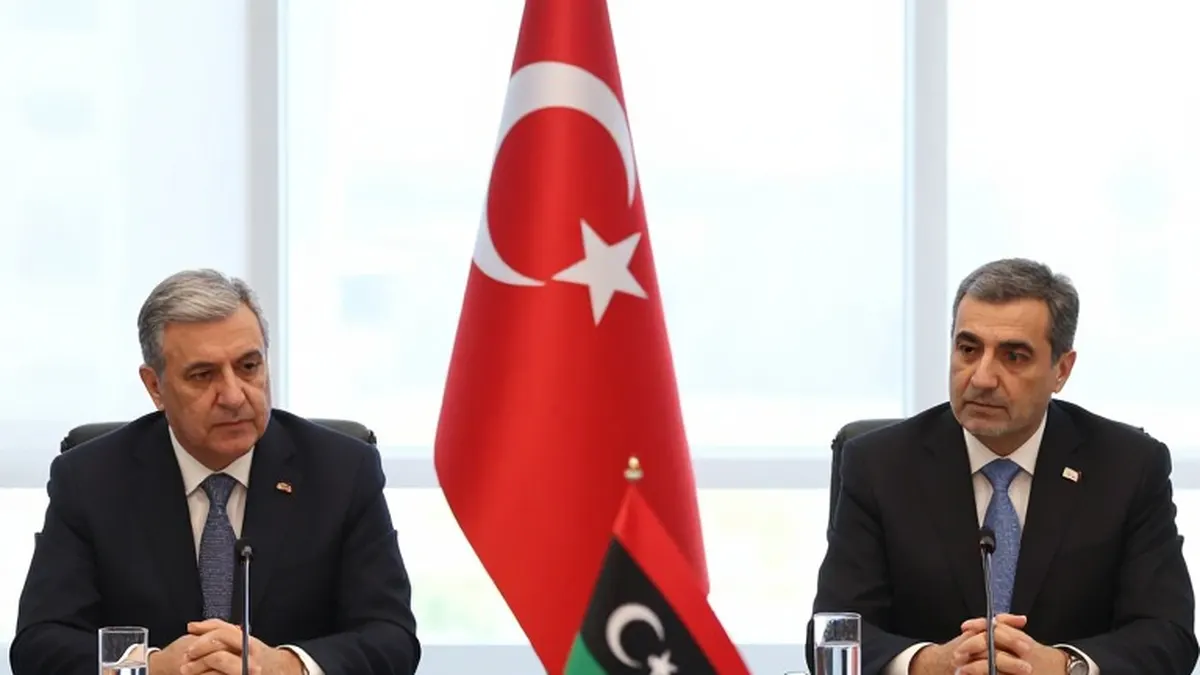
Turkish President Recep Tayyip Erdogan hosted eastern Libyan military commander Khalifa Haftar in Ankara on Wednesday. This visit marks a significant diplomatic development, occurring just days after the prime minister of the rival Tripoli-based administration met with the Turkish foreign minister in Istanbul. It is Haftar’s first trip to the Turkish capital in nearly seven years, a period that began when Turkey supported the internationally recognized Government of National Accord in repelling an offensive led by Haftar’s Libyan National Army.
Since the United Nations-brokered ceasefire in 2020, Ankara has adopted a more pragmatic approach. Rather than aligning exclusively with one side, Turkey is now working to bring the rival administrations together under a unified government and military structure. This strategy is designed to safeguard Turkey’s maritime interests in the Mediterranean Sea. The current meetings are also a precursor to an expected visit by Erdogan to Libya, which would be his first trip to the country in 15 years.
The rapprochement between Ankara and the eastern authorities accelerated in 2025 following US-led efforts to reconcile the Libyan governments. This diplomatic push was accompanied by a United Nations track that produced the 4+4 agreement in August. This political roadmap outlines a plan for a unified government and nationwide elections within two years. In July, Turkey reached specific agreements with Haftar’s forces regarding military infrastructure and training, further deepening ties with the east.
A key component of Turkey’s strategy is a maritime boundary agreement originally signed with the Tripoli-based government in 2019. Although the eastern authorities only adopted this deal last month, it remains a point of contention for other nations in the Eastern Mediterranean. Greece and Israel oppose the agreement, while Egypt has criticized it for potentially violating its own maritime rights. Ankara maintains that the arrangement is lawful and vital for its claims to gas-rich waters.
Turkey has taken several steps to facilitate military reunification. In May, Turkish Defence Minister Yasar Guler met with both Tripoli’s deputy defence minister and Saddam Haftar, the son of Khalifa Haftar and a senior commander in the east. Later, Turkish intelligence chief Ibrahim Kalin met Saddam Haftar in Benghazi. In October, Ankara hosted talks on establishing a joint military command in Sirte, though disagreements over political authority over the unified forces remain unresolved.
On the economic front, Turkey was among ten countries that welcomed Libya’s adoption of its first unified national budget in over a decade. Ankara has also coordinated its diplomatic efforts with other key players. In June, Turkish Foreign Minister Hakan Fidan met with his Egyptian and Saudi counterparts, as well as Massad Boulos, a senior adviser to US President Donald Trump. In August, Fidan traveled to both Tripoli and Benghazi for separate meetings with the respective leaders.
Analysts suggest that Turkey’s military strength and sustained presence have granted it significant prestige across Libya. Jalel Harchaoui, a Libya analyst, noted that no Libyan leader of consequence can afford to spurn Ankara. However, challenges remain. The country is grappling with an economic crisis, a weakening dinar, and rising living costs, which have fueled protests and strikes over the past year.
Political hurdles are also significant. US mediators have supported a proposal to appoint Saddam Haftar as chairman of the Presidency Council, but this faces opposition from armed factions in western Libya, particularly in Misrata. Misrata was a stronghold of the 2011 uprising and played a key role in defeating Haftar’s 2020 offensive. Sansom Milton, a senior research fellow, pointed out that the lack of a single chain of command in the west makes it difficult for Tripoli to guarantee that local armed groups will accept any deal.
The main challenge, according to Milton, is that division remains profitable for elites and armed groups on both sides, who control separate revenues and institutions. Saban Kardas, a research professor at Qatar University, emphasized that the local parties must put aside their differences to work through these deadlocks. As Turkey continues to engage both sides, the path to a stable and unified Libya remains complex and fraught with uncertainty.