Transforming the Past: The Makeup Behind the Biopic Elsinore
The makeup team for the biopic Elsinore used authentic techniques to transform Andrew Scott and Olivia Colman into their 1980s counterparts, focusing on subtle details to honor the real-life story of Ian Charleson.
By Chioma Brooks ·
The biographical drama Elsinore, now playing in theaters, recounts the poignant final chapter of actor Ian Charleson’s life. Written by Stephen Beresford, the film depicts Charleson’s courageous, honest, and witty confrontation with his mortality as he performed his last role while battling AIDS. The narrative centers on November 13, 1989, when Charleson took the stage at London’s National Theatre to play Hamlet for the final time. Despite his terminal condition, which he kept secret, he delivered a performance that moved the 1,000 audience members at the Olivier Theatre.
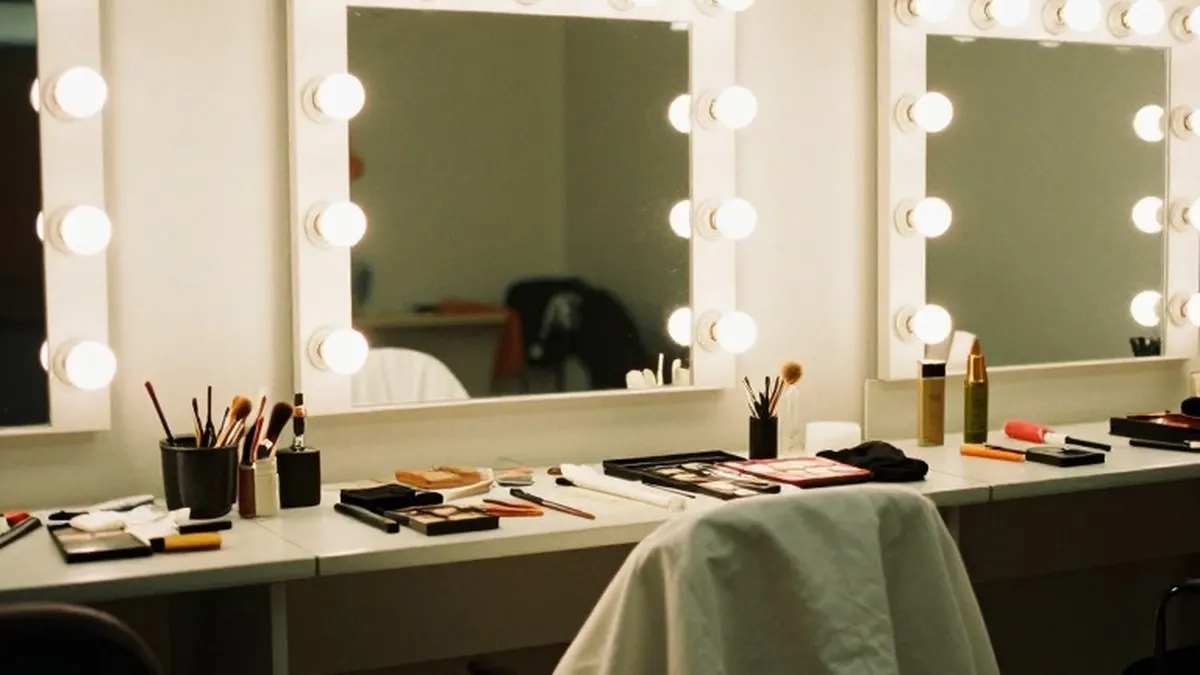
The project reunites stars Andrew Scott and Olivia Colman, who previously worked together on the series Fleabag. In this new film, Scott portrays the real-life actor Charleson, while Colman takes on the role of Margaret Johnson, the doctor responsible for his care. Bringing these real-life figures to the screen required significant physical transformations for both leads, a challenge that fell largely to the makeup department led by Nadia Stacey. Stacey, who received an honor at the Middleburg Film Festival last month, emphasized the need for sympathy and authenticity when portraying actual people.
Recreating the aesthetic of the 1980s presented a specific challenge for the production team. Stacey noted that the era is often reduced to clichés, such as the widespread use of perms. Her goal was to make the period details seamless, ensuring that the audience would not notice the hair and makeup unless they actively looked for it. She aimed to tell the story of Charleson’s journey and place the viewer firmly in the era without relying on exaggerated stylistic choices.
A key aspect of Scott’s transformation involved altering his distinct physical features to match Charleson’s. While Scott is known for his jet black hair and brown eyes, the real actor had blonde hair and blue eyes. To avoid jarring the audience with a complete change, Stacey and Scott decided to mimic how an actor in that era might have styled their own hair. Instead of bleaching Scott’s hair, they added full blonde highlights. Additionally, Scott wore blue contact lenses to capture Charleson’s defining characteristics.
The makeup team also documented the physical decline Charleson experienced after testing positive for HIV in 1986. As the character’s health worsened, Stacey adjusted Scott’s skin tone to appear discolored and added dark circles under his eyes. To represent sarcoma lesions, she applied tattoo transfers directly to Scott’s body, ensuring the visual progression of the illness felt grounded in reality.
Colman’s transformation as Dr. Johnson required a different approach, particularly regarding her hair. Stacey explained that wigs can often break the illusion for an audience. However, because the production had photographs of the real Margaret Johnson, the team knew she had a blonde bob. They experimented with this style to ensure it felt authentic. Colman, who had researched the character extensively, was open to wearing a wig if it served the accuracy of the portrayal.
The film’s production also involved a unique casting process led by director Jessica Ronane. Many of the background actors who appear in the film were personal acquaintances of Charleson. Notably, David Rintoul, who was the late actor’s best friend, was cast as the Ghost of Hamlet’s father. Some of the hospital staff in the film were also friends of Charleson, adding a layer of personal connection to the scenes.
Colman highlighted that the film avoids glorifying Charleson’s death, instead focusing on his humor and spirit. She recalled that everyone who knew him described him as hilarious and funny. This sentiment was shared by the cast, who were eager to participate in the project. The collaborative atmosphere extended to the filming of the final act, where Scott performed scenes of Hamlet for Colman, who played Johnson. Scott insisted on being present for these takes, even on his day off, to help Colman find the right emotional response.
The emotional impact of the film was evident at its premiere at the London Film Festival. Colman shared that she cried throughout the screening, moved by Scott’s dedication and the effort required to bring the story to life. She praised Scott as an incredible and generous collaborator, stating that he would be among the few people she would choose to work with for the rest of her career. The film serves as a reminder of these past heroes, offering a beautiful and resonant tribute to Charleson’s legacy.
More News · National news · Report a business · Got a Story?