Nepal Floods: 100,000 Displaced as Glacial Melt Destroys Infrastructure
With 1,500 dead and $5 billion in damages, survivors rebuild homes and health systems while facing harsh winter conditions and rising malnutrition rates.
By Priya Marino ·
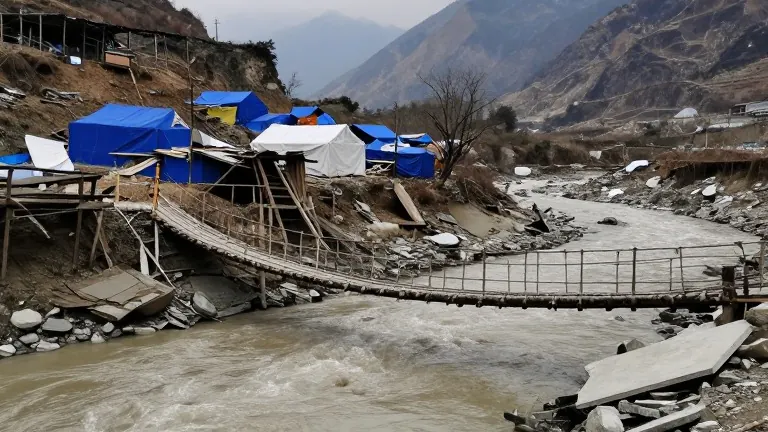
Januka Dhital ran her catering service from her home in Uttargaya, Nepal, until a sudden wall of water and mud swept it away. The glacial melt flood that struck her village destroyed thousands of structures and displaced approximately 100,000 people. At least 1,500 residents have died, and more than 5,000 remain missing.
The disaster has severed basic services across the region. United Nations data shows that seven health facilities, 23 schools, 10,000 toilets, and 64 water systems were damaged or destroyed. Over 100 bridges along the flood path are now gone, isolating communities in the upper northern slopes from essential supplies and medical care.
Shyam Pathak, a chief of health at UNICEF, describes the current phase of the response as shifting from emergency rescue to long-term recovery. International attention has waned as the work becomes more intimate and arduous. Many of the health workers leading this effort are also victims of the flood, rebuilding their own lives while helping others.
Dhital spent the first month of the disaster in a holding center before moving in with a relative. She found employment through Helen Keller Intl, a nonprofit operating in Nepal, after completing a training program that included mental health support. She now works with postpartum mothers, pregnant women, and children under five to screen for health issues in her community.
Nutrition levels have deteriorated rapidly since the floods. Pooja Pandey Rana, who directs Helen Keller's operations in Nepal, reports that moderate acute malnutrition in Naukunda Gaunpalika rose from 0.8% in June to 8.7% in October. Pandey Rana notes these figures are likely conservative estimates. Families have lost local farms and gardens, forcing them to rely on packaged foods like instant noodles and biscuits.
Ayush Joshi, who works for Save the Children in Nepal, points out that many people in the upper north remain cut off from aid delivery. He notes that cold temperatures, overcrowding, and poor ventilation in temporary tents increase health risks as winter sets in. Responders are currently winterizing shelters and distributing food and medical care to mitigate these dangers.
Pushmaya Tamang, a community aid worker, navigates makeshift bridges to reach isolated families. Her home village in Nuwakot is essentially gone, and she lost her younger sister in the floods. She describes the emotional weight of visiting grieving families, noting that workers often struggle to find the right words to comfort those who have lost everything.
Rebuilding the region is a massive financial undertaking. Preliminary estimates place the cost of reconstruction at roughly $5 billion. The U.N. Climate Fund approved $20 million for recovery, and domestic and international donors have contributed over $100 million. These funds are still far short of the total amount needed to restore homes, water systems, and schools.
UNICEF is mobilizing health workers to provide counseling and mental health support to survivors. Pathak observes that the willingness of these workers to return to duty despite their own trauma has been a key factor in the community's resilience. The focus remains on immediate needs while longer-term plans for where and how to rebuild are still being developed.