New Delhi AQI Tops 350 After Diwali Crackers Fuel Smog
Fireworks released during the festival pushed air quality into the severe category, compounding seasonal haze and crop burn smoke.
By Abigail Brooks ·
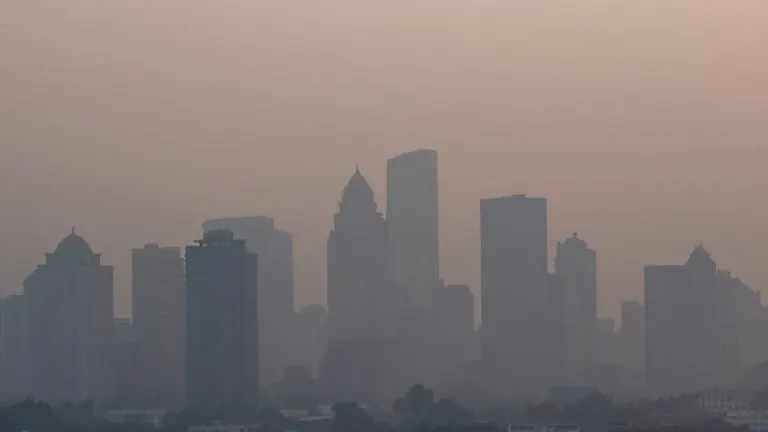
Thick smog enveloped New Delhi on Monday after residents lit firecrackers during Diwali celebrations on Sunday evening. The burst of smoke added to already hazardous pollution levels, pushing the city into a severe air quality crisis. The air quality index climbed above 350 in multiple districts on Monday morning, a level that poses serious health risks to the public.
Monitoring stations across the capital recorded these high readings as a gray haze reduced visibility over streets and high-rise buildings. Despite court-ordered restrictions, many residents continued to use conventional fireworks. The Supreme Court had previously allowed only specific green firecrackers during three-hour windows on Saturday and Sunday. While these approved crackers emit fewer pollutants than traditional ones, they still release fine particulate matter into the atmosphere.
The seasonal conditions in late October and November make the situation worse. Cooler temperatures and low wind speeds create stagnant air that traps pollutants near the ground. This local buildup coincides with smoke from crop-residue fires in neighboring Punjab and Haryana. Farmers burn leftover rice stalks to clear fields, and the resulting smoke drifts toward the capital, mixing with emissions from vehicles, industries, and construction sites.
The metro area is home to more than 30 million people, making the health impact widespread. Isyad, a resident who uses one name, reported physical symptoms from the worsening air. He cited throat irritation and itching eyes caused by the pollution. His experience reflects the strain that the annual smog places on working families and residents in dense urban areas.
Authorities have attempted to manage the crisis through various measures. These include limits on construction activity and restrictions on diesel generators. Courts have also sought to control the use of firecrackers. However, these steps have not stopped the return of severe pollution each year. Environmentalists argue that the current response is insufficient without long-term changes to energy sources and vehicle emissions.
Shweta Narayan, a public health expert at the Global Climate and Health Alliance, criticized the government's approach. She described the interventions as knee-jerk and temporary. She noted that actions are often taken only when the government feels pressured to respond. The combination of local emissions, regional crop smoke, and unfavorable weather patterns continues to define the winter air quality challenge in New Delhi.