Norfolk art venue Work|Release sells building after two-year run
The Rutter family has sold the Granby Street property that housed the popular but unprofitable space, ending a chapter in the NEON District.
By Priya Marino ·
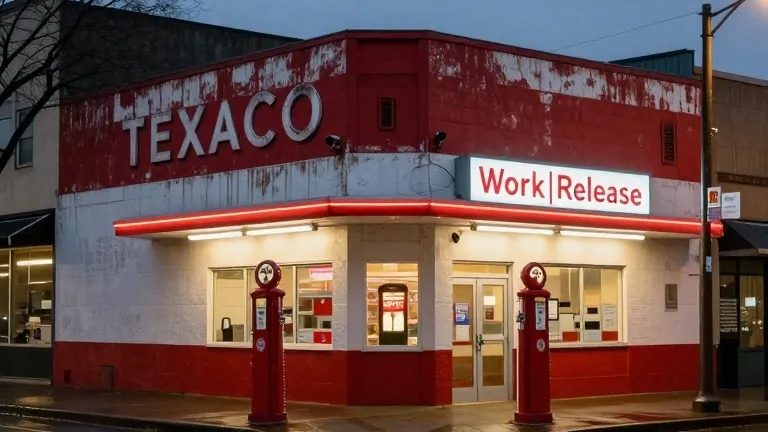
The Rutter family has sold the building at 759 Granby Street in Norfolk, the site where the art and music venue Work|Release operated from April 2015 to April 2017. The transaction concludes the physical presence of the venue, which closed without a formal farewell or public announcement after two years of high-volume activity.
Arthur "Brother" Rutter and his wife, Meredith, purchased the former Texaco station after it sat vacant for years. Previous owners had planned a condominium project that failed when the housing market crashed in 2008, leaving the Rutters with a structure lacking basic infrastructure. Rutter noted that the building contained no walls, pipes, or wires when they acquired it. Through the Rutter Family Art Foundation, the couple aimed to make contemporary art accessible to a wider public than local museums could reach.
The venue's launch coincided with the development of the NEON District. In the summer of 2014, director Careyann Weinberg held a brainstorming session with 50 to 100 attendees to define the space's identity. The group decided that art alone was insufficient, leading to a model that combined visual exhibitions with live music and social events. Weinberg described the concept as a thinking club and an art club, a label that stuck despite its multiple meanings.
Work|Release quickly attracted diverse crowds to its 2,000-square-foot space. The opening exhibition, AGLOW, featured 12 international artists. Subsequent weeks included symphony collaborations, figure drawing sessions, and punk concerts. Weinberg recalled the audience mix included young people, older residents, art enthusiasts, and partygoers from various economic backgrounds. Security guards hired for the venue later reported competing for shifts due to the high demand.
The music programming featured high-profile acts that were unusual for a space of that size. Grammy-nominated artist Masego performed early in his career, while DJ Tiësto filmed a video on site. The band of Montreal drew an audience of 500 to 600 people. Local DJs, including Bart Barnes, cited the venue as a launchpad for their careers, noting that the receptive crowd encouraged them to take creative risks. Gabe Niles described the location as a beacon of creativity.
Art exhibitions were a central component of the experience rather than background decoration. Guest curators such as Charlotte Potter and Jesse Scaccia organized shows that engaged the community. Potter curated a show of Hampton Roads artists, while Scaccia organized an exhibition on gun violence that brought together police officers and Black Lives Matter groups. A graffiti show featuring shipping containers and artists from Atlanta, New York, Baltimore, and Richmond became a favorite among staff.
Operating costs were high for a venue that employed 17 people at its peak and ran nearly every night. The space never achieved profitability. Potter recalled the Rutters stating they were willing to lose their sleeve but not their shirt. Rutter explained that the business model relied on the growth of other NEON District businesses. He noted that one business could not drive the success of the entire district. Potter compared the venue's short lifespan to a firework display, which is intense but unsustainable.
The closure in April 2017 came abruptly. Weinberg described the announcement as a simple notice that the operation was finished. Rutter stated the shutdown was intended as a pause rather than a permanent end. After the closure, Commune restaurant moved into the space, and the upstairs apartments were used as free housing for visiting artists. Following the pause of district recovery caused by the pandemic, the building became a rentable event space.
The NEON District marked its 10th anniversary in 2025 with a 244-page book featuring over 200 works of art. However, recent utility work on Granby Street has reduced foot traffic, leading some businesses to close. Niles observed that the district's creative energy is now more spread out. The original Work|Release signage remains on the building's corner, left in place to preserve the site's history.