Nvidia Board Reinstates Jensen Huang as Chief Executive
Nvidia has brought back Jensen Huang as CEO after a brief resignation period, a move that triggered a significant surge in the company's stock price and received endorsement from the US President.
By Chioma Brooks ·

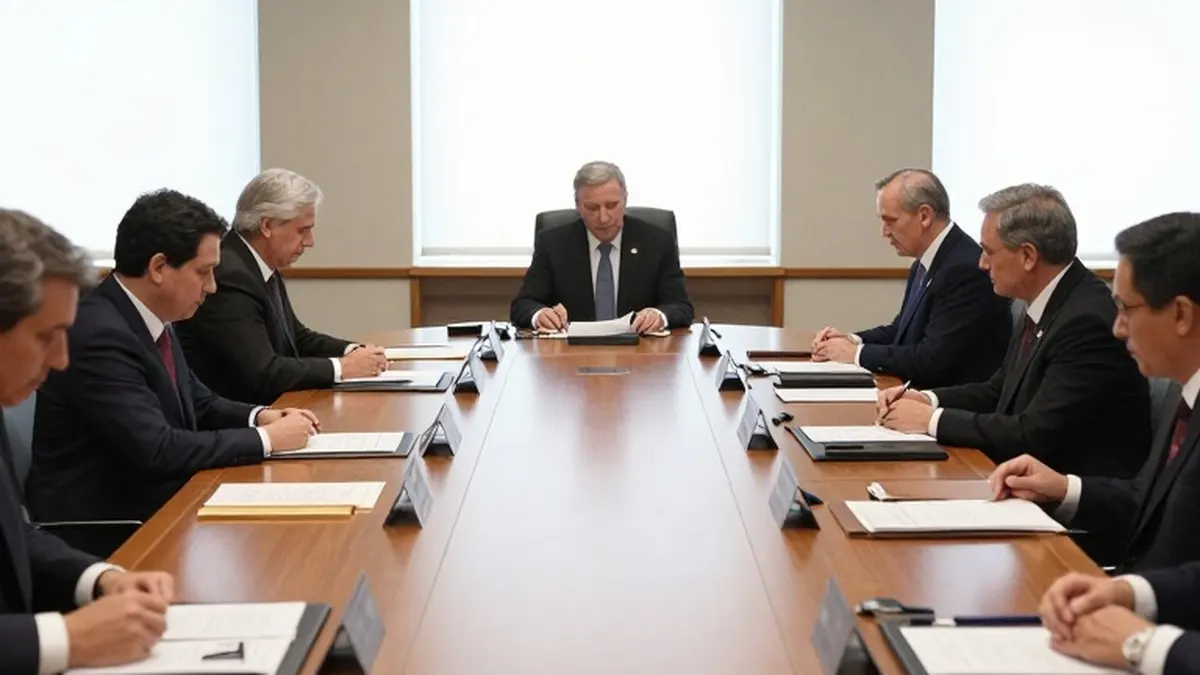
Jensen Huang has officially returned to the role of chief executive officer at Nvidia, ending a period of leadership uncertainty that lasted just over a week. The tech giant's board of directors voted on Monday to reinstate Huang as both president and CEO, reversing his resignation which had been announced on November 12.
Huang stepped down amid reports of personal scandals, including extramarital affairs and allegations involving a relationship with a Chinese spy. Despite these controversies, the board decided to bring him back to the helm of one of the world's most influential technology firms.
In a public statement announcing his return, Huang expressed gratitude for the board's confidence in his leadership. He described the return as an honor, noting that he is leading a company at the start of a new industrial revolution. Huang emphasized his humility and renewed commitment to the organization, thanking the board for their deliberation during the process.
The company also confirmed that Colette Kress, who had served as interim CEO during Huang's absence, will remain with Nvidia in her capacity as chief financial officer. This transition ensures continuity in the company's financial oversight while Huang resumes his executive duties.
The decision has drawn immediate attention from political and business leaders. US President Donald Trump praised the move on social media, stating that the board made the correct decision. Trump added that the US government does not believe Huang's return poses any risk to national security, a point of significant interest given the ongoing investigations into the chipmaker.
Huang's reinstatement comes while multiple investigations by the US Securities and Exchange Commission and the Department of Justice remain active. Despite these ongoing probes, the board and market participants appear confident in his return, reflecting a belief in his indispensable role in the company's strategy.
The news was met with a strong positive reaction from investors. Nvidia shares jumped by more than 33 percent when US markets opened on Monday. This sharp increase helped lift the broader market, which had experienced a slump in the previous week. The tech-heavy Nasdaq index rose by 6.7 percent, while the S&P 500 gained 4.6 percent and the Dow Jones Industrial Average increased by 2.8 percent in early trading.
Analysts have largely supported the board's choice. Michael Monaghan, a portfolio manager at Founders 100 ETF, described Huang's return as a huge positive for the US technology sector. He argued that founders with Huang's vision and execution are difficult to replace and are critical for the country's competitive standing in the race toward super intelligence.
Dan Ives, a senior managing director at Yorkville Ives, noted that the board likely felt it had no choice but to bring Huang back. Ives previously suggested that Nvidia could lose up to 30 percent of its value without its founder, reinforcing the view that his leadership is essential for the company's future performance and innovation.
The reinstatement occurs during a volatile period for the artificial intelligence industry. Recent midterm elections resulted in Democratic control of Congress, a body where many members hold more skeptical views regarding AI. Additionally, ballot measures to restrict data center development were passed in most recent votes. Amidst this shifting landscape, Nvidia maintains close financial ties with AI firm Anthropic, having committed significant capital to its recent initial public offering and prior investments.