Pakistan's Zeeshan Ali Launches on Historic Mission to China's Space Station
A Pakistani air force pilot is set to become the first from his country to fly in space, joining a Chinese crew for a brief stay on the Tiangong station.
By Priya Marino ·
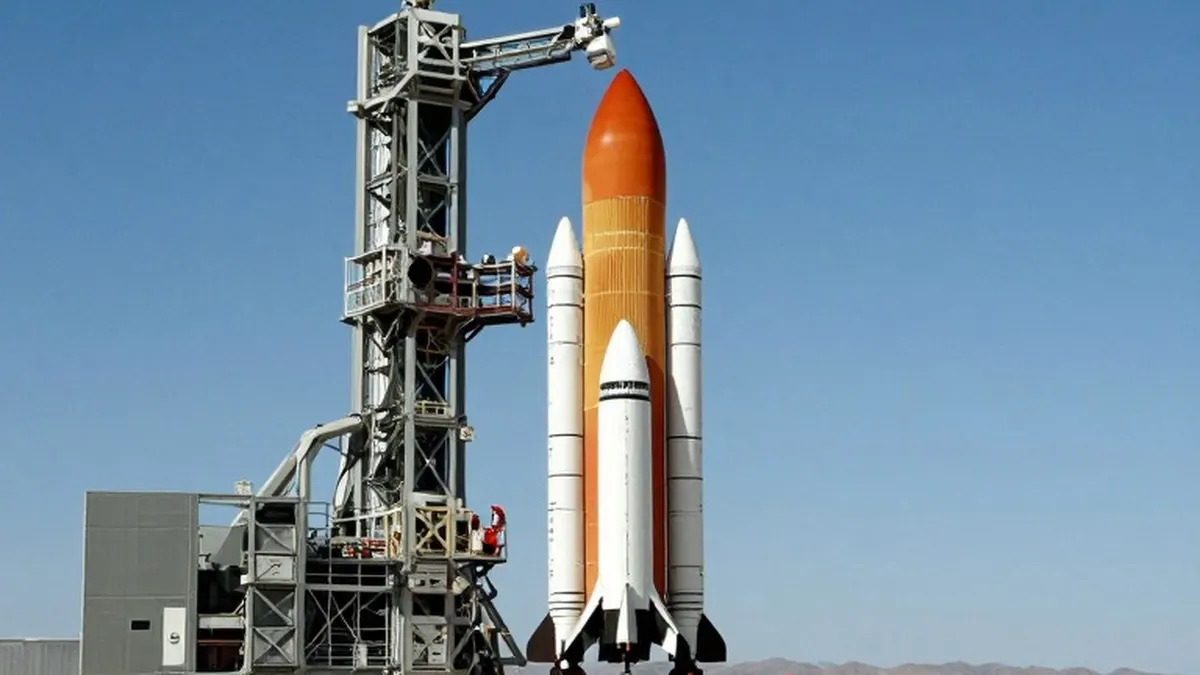
Pakistan is preparing to send its first astronaut into space on Wednesday as part of a historic international cooperation with China. Muhammad Zeeshan Ali, a 40-year-old air force pilot, will join the Shenzhou-24 mission to the Tiangong space station. He will serve as a payload specialist alongside commander Tang Hongbo and flight engineer Wu Yi. The spacecraft is scheduled to lift off from the Jiuquan Satellite Launch Center in northwest China at 8:18am Beijing time, which corresponds to 5:18am in Pakistan.
According to Zhang Jingbo, spokesperson for the China Manned Space Agency, this mission represents the first joint flight by Chinese and foreign astronauts in the nation's crewed space program. After reaching orbit, the vehicle will perform a rapid autonomous rendezvous lasting approximately three and a half hours. It will then dock with the forward port of the Tianhe core module, marking a significant step in multilateral space operations.
Ali's time in orbit is expected to be brief. SUPARCO, Pakistan's space agency, stated that he will spend about a week on the station. Following a short joint flight, he will return to Earth aboard the Shenzhou-23 spacecraft. Meanwhile, Zhu Yangzhu, a member of that crew, will remain in orbit for a year to continue scientific work.
In a statement to reporters, Ali emphasized that he was not flying for personal glory but carried the hopes of 250 million Pakistanis. He noted that he and his fellow trainee, Khurram Daud, underwent rigorous selection and training processes. Daud, who was not selected for this specific flight, had previously urged the public to pray for his success. Both men were named reserve astronauts in April and began training in Beijing shortly after.
During his stay, Ali will focus primarily on overseeing joint experiments between China and Pakistan. These include four science projects in biotechnology and materials science, as well as an experiment involving cyanobacteria. SUPARCO explained that the primary goal of the week is to install equipment, record data, and verify that the instruments survived the launch. The full completion of these experiments is expected to take between six and 12 months.
Preparations for the mission have centered on professional skills, crew coordination, and language acquisition. Ali noted that mastering technical Chinese was a major challenge, as all systems, software, and voice announcements are in that language. The two agencies signed their astronaut agreement in February 2025, and the rapid progression from pilot to astronaut has been a point of pride for both nations.
The flight coincides with the 75th anniversary of diplomatic ties between Pakistan and China. Chinese officials described the mission as a milestone in their partnership, referring to Pakistan as an all-weather strategic cooperative partner. This collaboration places Pakistan in a select group of nations involved in human spaceflight, particularly given that both countries were excluded from the International Space Station program.
Looking ahead, both nations have ambitious plans for lunar exploration. SUPARCO indicated that Pakistan is working with China on a lunar mission tentatively planned for 2028. This follows the 2024 success of the iCube-Qamar satellite, which reached lunar orbit on China's Chang'e-6 mission. A SUPARCO-developed rover is also scheduled to fly on the Chang'e-8 mission around 2030.
Ali expressed optimism about the future, describing the current mission as a launchpad rather than a finish line. He hopes to see the partnership grow from a single flight to multiple joint missions, eventually extending to the Moon and Mars. Chinese officials have also confirmed that preparations are underway for the Long March-10 rocket and the Mengzhou crewed spacecraft, with Beijing aiming to land astronauts on the Moon by 2030.
Experts suggest that this mission will provide valuable insights for Pakistan's own space program, particularly regarding the scientific challenges of human spaceflight. These include managing isolation and life support systems. The collaboration is expected to offer broader applications in medical fields and industrial innovation on the ground, reinforcing the strategic and scientific bonds between the two countries.