Pittsburgh Mayor O'Connor Proposes $872.6 Million Budget Relying on Rainy Day Fund
The 2027 spending plan eliminates vacant positions and redirects money from violence prevention and housing programs to balance the books without raising taxes.
By Priya Marino ·

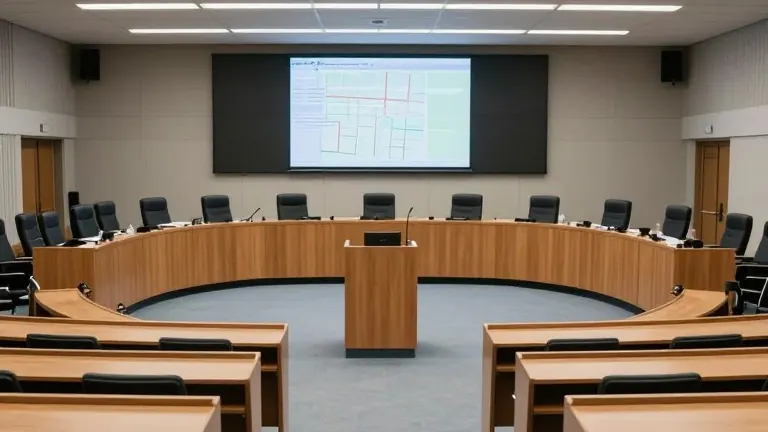
Pittsburgh Mayor Corey O'Connor proposed an $872.6 million operating and capital budget for 2027 that relies on drawing $28 million from the city's reserve fund to balance the accounts.
The plan allows the city to cover costs without increasing taxes. It also eliminates vacant positions and restructures funding for violence prevention and affordable housing initiatives. O'Connor presented the figures in Council chambers on Monday, marking his first budget address.
The proposal is largely consistent with a draft released in late September. O'Connor stated that the administration must prioritize essential services while managing a fiscal stress situation inherited from his predecessor, Ed Gainey. He acknowledged that replenishing the rainy day fund would take time, noting that the city would not achieve a fully balanced budget in 2027.
"It won't be in 2027, and it might not be for a couple of years," O'Connor said.
During the speech, O'Connor cited $100 million in support raised from corporations, unions, universities, and nonprofits. He also pointed to the recent midterm election results as a signal for future collaboration with state and federal officials. Chief of Staff Dan Gilman told reporters that the administration seeks new revenue sources from Harrisburg and Washington, D.C., to reduce reliance on local residents.
Activists in the audience booed as O'Connor left the chamber, holding signs criticizing the shift in funding. The city previously allocated $10 million annually to both the Stop the Violence fund and the Housing Opportunity Fund. The new proposal redirects $12 million from the violence prevention fund and proposes no new money for the housing fund.
Jala Rucker, co-chair of the Housing Justice Table, argued that secure housing reduces violent crime and helps families build foundations. Jasiri X, cofounder of 1HOOD Media, asked whether the administration values the communities most affected by these cuts. Gilman responded that millions of dollars remain in the budget for violence reduction contracts and that nearly $13 million in unspent affordable housing funds will continue to support development.
Gilman clarified that the Housing Opportunity Fund is not being eliminated but may be funded through future partnerships. A bill introduced in City Council on Monday would temporarily waive the requirement for the city to maintain a minimum fund balance of 10 percent of its operating costs. This waiver would apply to the years 2029, 2030, and 2031. The bill is scheduled for a public hearing on December 10.