
Pinewood Studios Hopes to Host Next Bond Film Amidst Industry Shifts
Corporate affairs director Andrew M. Smith stated that Pinewood is eager to return as the filming location for the next James Bond movie starring Robert Pattinson.
By Priya Marino ·
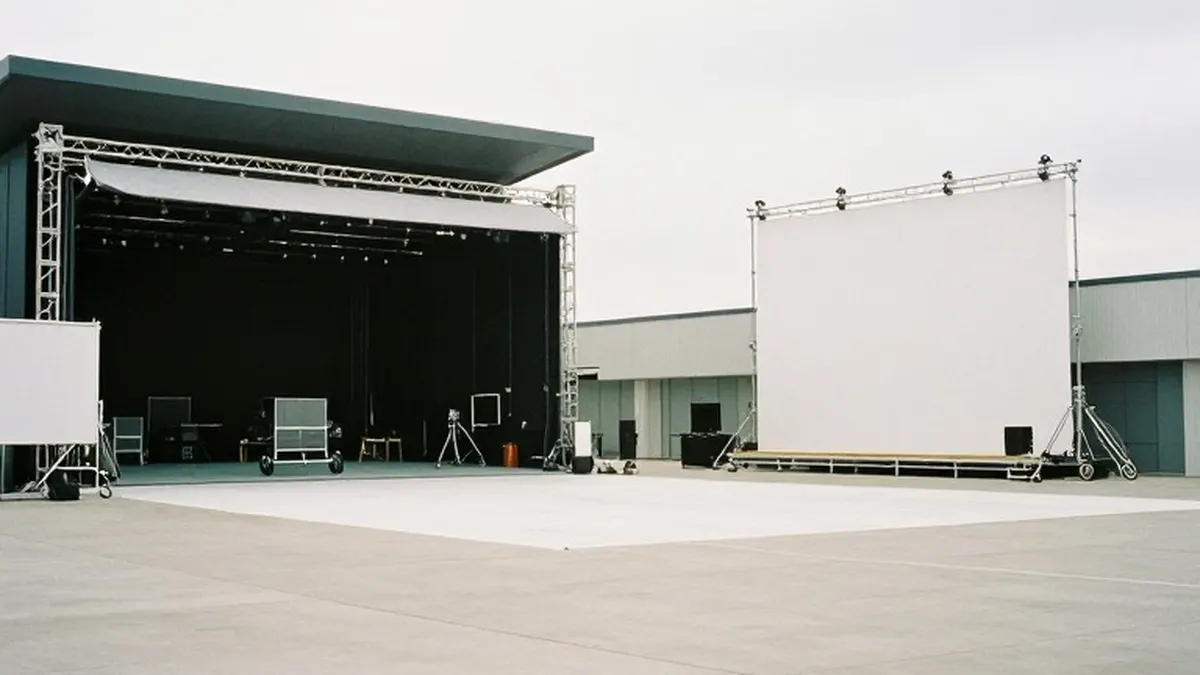
Andrew M. Smith, the corporate affairs director for Pinewood Studios in the United Kingdom, indicated that while he cannot yet officially confirm the next James Bond film will be shot on their lot, his team remains optimistic. Speaking at a panel during the Doha Industry Days, Smith expressed his desire to discuss the franchise's return but noted that it is still too early for definitive announcements. He described the studio as the historical home of Bond and said the team is keeping their fingers crossed for a positive outcome.
The connection between the Bond franchise and Pinewood Studios is deeply rooted in cinema history. Filming at the location dates back to the very first film in the series, Dr. No, which was released in 1962. Out of the 25 Bond movies produced to date, only two were not filmed at Pinewood. Those exceptions were License to Kill in 1989, which was primarily shot in Mexico and Florida, and GoldenEye in 1995. The latter was filmed at Leavesden because Pinewood was occupied by the production of First Knight, though GoldenEye did complete its sound mixing at Pinewood.
The anticipation for the next entry in the series was heightened five days ago when Robert Pattinson was officially announced as the new 007. This announcement ended months of speculation regarding who would succeed Daniel Craig. Craig portrayed the character in five films, beginning with Casino Royale in 2006 and concluding with No Time to Die in 2021. In that final installment, Bond sacrificed himself to protect the world from a global terrorist organization.
No Time to Die also marked the last film released before longtime producers Michael G. Wilson and Barbara Broccoli sold creative control of the franchise to Amazon MGM for 20 million dollars. This transition has shifted the landscape for future productions, including decisions regarding filming locations.
Amazon currently holds a significant long-term agreement with Shepperton Studios, a sister location to Pinewood in the U.K. The studio has secured nine stages in a recently expanded facility that now includes 17 sound stages. However, space at Shepperton may be limited for the Bond film, as it is currently housing the production of Lord of the Rings: The Rings of Power. A fourth season of that series is expected to begin production in early 2028.
During the same panel, Smith discussed strategies for attracting major American productions to the United Kingdom. He cited a combination of healthy tax rebates, superior infrastructure, and skilled crews as key factors. Smith noted that while infrastructure and talent are important, financial incentives are likely the primary attraction. He referenced a recent announcement about a film regarding President Nixon being shot in the U.K., suggesting that the decision was driven more by budget considerations than by any specific advantage of Pinewood over other studios like Paramount.
Smith emphasized that Pinewood has been fortunate in its positioning, particularly in maintaining leases on 59 of its 61 stages with major American studios such as Disney and Netflix. He highlighted that 21 of the 38 Marvel films produced to date were shot at Pinewood. Despite this high occupancy, Smith suggested that further investment in building new stages in mature markets is not currently the priority, as there are many empty stages available globally. Instead, the focus is on innovation for the future.
Beyond traditional film production, Pinewood is expanding its focus to new technologies, content creation, and short-form media. The studio recently entered a partnership with the U.K. government for the CoSTAR Network. This initiative involves a 75.6 million pound investment from the UKRI Infrastructure Fund, delivered by the Arts and Humanities Research Council. Based at Pinewood, the network serves as a national hub for creative businesses to test new ideas and strengthen the U.K.'s position as a leader in creative technology.
Smith concluded by emphasizing the importance of embracing new formats and technology. He suggested that content creators who successfully transition from short-form to long-form content could potentially become the next major directors in the industry, comparing their potential impact to that of the Russo Brothers.
More News · National news · Report a business · Got a Story?