Rogers cites old tax plan in El-Sayed ads
The senatorial challenger’s claims rely on a 2018 proposal and a state law El-Sayed did not help pass.
By Priya Marino ·

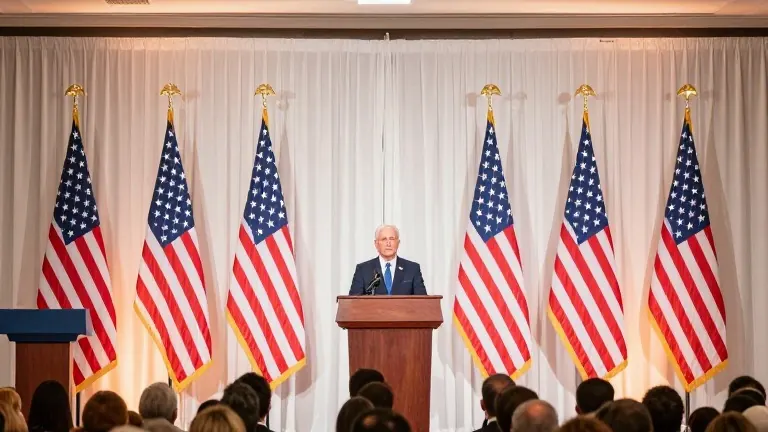
Republican candidate Mike Rogers told a crowd in Port Huron on Sunday that his opponent, Abdul El-Sayed, supports an energy tax that would raise utility bills by $2,000 annually and add 20 cents to the price of gasoline. Rogers repeated these figures in a new commercial released this week, arguing that such costs make the Democratic candidate a poor choice for affordability. The ads claim that El-Sayed’s support for the Green New Deal is already driving up Michigan utility bills and would lead to further hikes through a national energy tax.
Neither figure appears in any current proposal from El-Sayed. The 20 cent estimate traces back to a 2013 study commissioned by the National Association of Manufacturers. That research projected the price impact of a state-level carbon tax. El-Sayed proposed a similar “corporate polluter fee” during his 2018 gubernatorial race, but he has not included a carbon tax in his 2026 Senate platform.
The $2,000 cost estimate derives from a different source entirely. It comes from an analysis by the Mackinac Center for Public Policy regarding clean energy policies enacted under Governor Gretchen Whitmer. The study found that requiring utilities to source 60% of electricity from wind and solar by 2035 would increase average residential rates by that amount. El-Sayed did not draft the law, though groups like the Sierra Club cited his support for 100% clean energy goals when endorsing his Senate candidacy.
El-Sayed’s campaign stated that he is not calling for a carbon tax in the current race. A spokesperson for the campaign challenged the Mackinac Center study, pointing to conservative donors such as the Charles Koch Institute and foundations linked to the DeVos family. The campaign suggested that the think tank’s funding influences its conclusions on energy costs.
Other researchers offer conflicting data. A team at MIT found that utility-scale wind and solar projects generally lowered consumer energy prices. They noted, however, that rooftop solar installations can raise electricity rates due to increased network maintenance costs. This technical distinction suggests that the impact of renewable energy on bills depends heavily on the type of infrastructure being discussed.
Rogers’ campaign maintained that El-Sayed is “deceptively” supporting rate increases. Alyssa Brouillet, a spokesperson for Rogers, wrote that El-Sayed would hide his support for higher gas prices and the Green New Deal’s mandate for electric vehicles. The election takes place on November 3, and the winner will replace retiring Democrat Gary Peters.
El-Sayed said in June that Michigan needs 100% renewable energy immediately. While he has no legislative role in the current clean energy mandates, he remains a vocal advocate for policies that some economists argue will increase consumer costs. The debate centers on whether these past stances and external studies accurately represent the candidate’s current legislative intentions.
Source: Bridge Michigan