Rohingya survivors recount 2017 exodus as Hague court confirms genocide verdict
The International Court of Justice ruled that Myanmar committed genocide against the Rohingya, a verdict that resonates with survivors who are still living in refugee camps in Bangladesh nearly a decade after their 2017 exodus.
By Priya Marino ·
The International Court of Justice issued a significant ruling this week in The Hague, determining that Myanmar carried out a genocide against the Rohingya people. The court’s decision highlighted that the systematic violence extended beyond ethnic cleansing, noting that military forces actively killed those attempting to escape. This legal finding centers on the traumatic events of 2017, when hundreds of thousands fled their homeland to seek refuge in neighboring Bangladesh.
For the survivors, the journey to safety was marked by terrifying omens and brutal conditions. Smoke rising from distant villages often served as the signal to run, indicating that a neighboring community was under attack and that their own would soon follow. In other areas, refugees described seeing rivers run red with blood. They would pull bodies from the water, perform quick burial rites, and then continue their flight through forests, over hills, and across rivers while battling heavy monsoon rains.
The stories of organized mass killing, sexual violence, and the total destruction of villages accompanied the refugees as they arrived in Bangladesh. By the end of the crisis, more than 700,000 Rohingya had settled in what has since become the world’s largest refugee camp. For months, survivors streamed in from locations such as Tula Toli, a village where thousands were reportedly rounded up, killed, and buried in mass graves. In many communities, men were specifically targeted and captured by security forces.
The trauma of the escape was compounded by the loss of family members. Many survivors had managed to flee their initial villages only to watch their relatives being killed in the places where they had sought temporary safety. Almost a decade after the 2017 crisis, the majority of those who arrived during that period remain in the camps. They have joined a larger population of Rohingya who had already been living in Bangladesh since the early 1990s, having escaped earlier military operations and ongoing persecution.
The court’s ruling arrives during a particularly difficult period for the community. In the past year, hundreds of Rohingya have died at sea while attempting to escape the camps. Meanwhile, host nations such as Malaysia and India have discussed the possibility of returning Rohingya to Myanmar. Campaigners are hopeful that the ICJ’s decision will put an end to these repatriation plans.
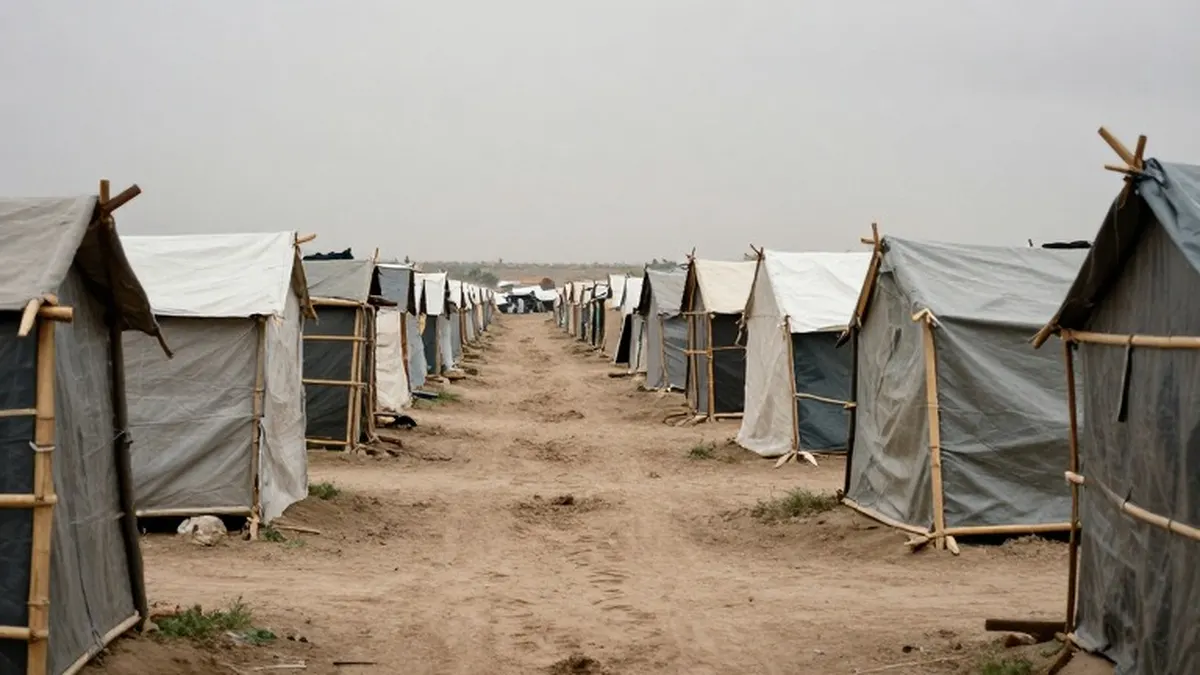
Life within the camps remains precarious. Refugees continue to live in fragile shelters constructed from bamboo and tarpaulin sheets. They face significant restrictions, including the denial of the right to leave the camps, work freely, or access education.
The personal accounts of those who escaped Tula Toli and the surrounding area illustrate the severity of the violence. Momtaz Begum and her sister, Dildar Begum, both endured the same horrific sequence of events in their village. Myanmar forces killed their husbands and children and raped them in front of their lone surviving daughters. The sisters had believed each other to be dead for months until they discovered they had both reached Bangladesh and were living in different parts of the camp. Their daughters, the only surviving children from each family, shared similar scars along the backs of their heads.
Anwara Begum’s experience reflects a long history of displacement. She had previously lived as a refugee in Bangladesh twice, first as a child in 1978 and again as a young mother in the early 1990s. During that second period, she lost her son to a respiratory disease while living in a flimsy tent during the rainy season. When she was forced to return to Myanmar, she vowed never to become a refugee again. However, she broke that oath when she saw the river near her village filled with bodies floating from Tula Toli. Her husband pulled as many bodies as he could from the water for burial before they gathered their belongings and headed west toward the River Naf, the border with Bangladesh. To cross the river, she handed all of her gold, valued at US $200, to a Bangladeshi boatman.
The elderly were not spared the rigors of the military attacks. Nur Alam, an elderly man, had to be carried on the shoulders of his children during the journey to Bangladesh. His 10-year-old grandson, Mamoon, held his hand throughout the trek, and the two remained close once they reached the camp. Alam’s arrival marked his fourth time being a refugee in Bangladesh. He was first expelled from Myanmar, which was known as Burma until 1989, during military operations in the 1950s, a time when Bangladesh had not yet achieved independence.