Israel's Security Cabinet to Review Trump Gaza Plan Amid US Pressure
Ministers are expected to approve measures for a stalled peace initiative, including international troop housing and a pilot housing project in Rafah, as Washington urges action.
By Chioma Brooks ·
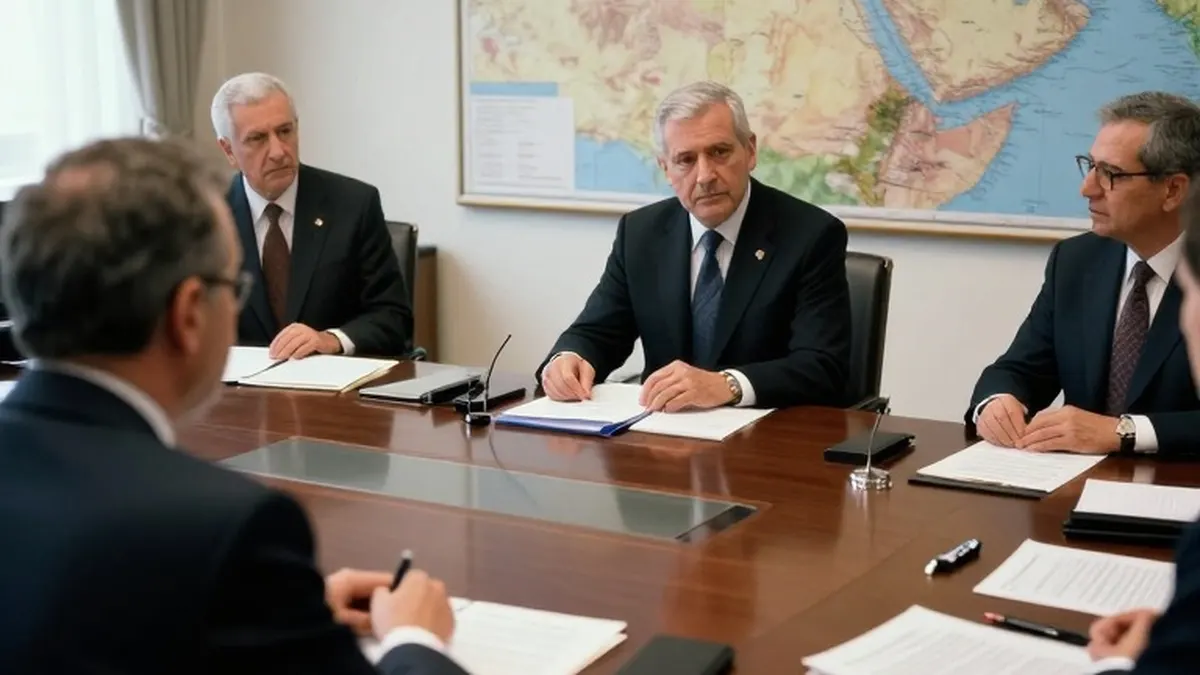
The Israeli security cabinet is scheduled to convene on Sunday to discuss implementing components of US President Donald Trump’s Gaza peace plan, which has faced significant delays. According to reports from Channel 12, ministers will review an updated draft resolution that reflects understandings reached during a recent conversation between Prime Minister Benjamin Netanyahu and Jared Kushner, the President's son-in-law.
A Board of Peace official described the call as productive on Thursday, expressing hope that Israel would take steps to advance its Gaza rehabilitation plan in the coming days. The cabinet meeting is set to occur one day before Nickolay Mladenov, a senior envoy for the Board of Peace, is scheduled to brief the UN Security Council on the panel's efforts to disarm Hamas.
The disarmament process has been stalled since Hamas approved the plan on July 30. The delay is attributed to Israel's refusal to operationalize the necessary security and governing bodies required to replace Hamas's administration. While Israel has pushed back on the gradual framework of the plan, it has not proposed an alternative other than resuming military operations, a strategy that did not dismantle the group after three years of war.
US and Board of Peace officials have accused the Netanyahu government of blocking their efforts for political reasons, particularly during the October 27 election and its immediate aftermath. The measures slated for approval include the construction of facilities to house troops from the International Stabilization Force. This force aims to deploy to Gaza in January to secure positions along the so-called Yellow Line.
The international troops will not engage Hamas in direct combat but will assist in collecting weapons surrendered by the group. Following this stage, an Emirati-funded pilot project is planned to build temporary homes on the ruins of Rafah. This area would be governed by a new Palestinian technocratic government intended to replace Hamas in administering local affairs.
However, the National Committee for the Administration of Gaza, known as the NCAG, has yet to enter the strip due to the stalled disarmament plan. Israel is also blocking the training of a new Palestinian police force. Although the Shin Bet has vetted several thousand recruits, Israel has prevented them from exiting the strip for training in Egypt for several weeks.
US and Board of Peace officials have conveyed to Israel that if Hamas fails to uphold its disarmament commitment, Israel will receive international legitimacy to address the issue militarily. Conversely, if Israel continues to block the plan, the Board of Peace is threatening to hand back its mandate. This would leave Israel, Hamas, the UN, or the Palestinian Authority responsible for providing for the strip's two million inhabitants.
On Monday, Jared Kushner told New York Magazine that Israel risks global pariah status if it does not change its approach. These comments were widely interpreted as a sign of mounting frustration in Washington. Meanwhile, a delegation from the NCAG arrived in Japan on Friday to seek Tokyo's support for rebuilding the strip. The group, led by Chief Commissioner Ali Shaath and Finance Commissioner Bashir Al-Rayyes, met with Japanese officials and the head of the Japan International Cooperation Agency.
Mladenov also visited Moscow earlier in the week to seek political backing from Russian Foreign Minister Sergey Lavrov. The NCAG's early recovery initiative includes 66 projects costing roughly $2.45 billion, a sum that the Board of Peace has yet to secure. The delegation's trip to Japan highlights the board's efforts to find new sources of support amid the stalled progress in rehabilitating the coastal enclave.
The visit to Tokyo comes as the NCAG continues to push for international partnerships to address the urgent needs in Gaza. The three-day conference focused on recovery, with Japanese officials expressing readiness to contribute to the programs. This diplomatic activity underscores the broader international effort to stabilize the region and support the transitional government tasked with replacing Hamas.