Blind Ferryman Director Seeks to Redefine Iraqi Cinema on the Global Stage
Ali Toffan Al-Fatlawi’s debut feature challenges Western stereotypes and explores perception through a unique blend of myth and modernity.
By Abigail Brooks ·
Iraqi-Swiss filmmaker Ali Toffan Al-Fatlawi first conceived the idea for his debut feature, The Blind Ferryman, during the civil war in Iraq in 2006. While living in Switzerland, he watched the violence unfold in his homeland and thought of two blind aunts. He wished that blindness might spare his countrymen from the chaos they were inflicting on one another. This initial thought evolved into a film that examines the nature of seeing, believing, and trusting one's own perceptions. The movie recently received its world premiere at the 47th Cairo International Film Festival.
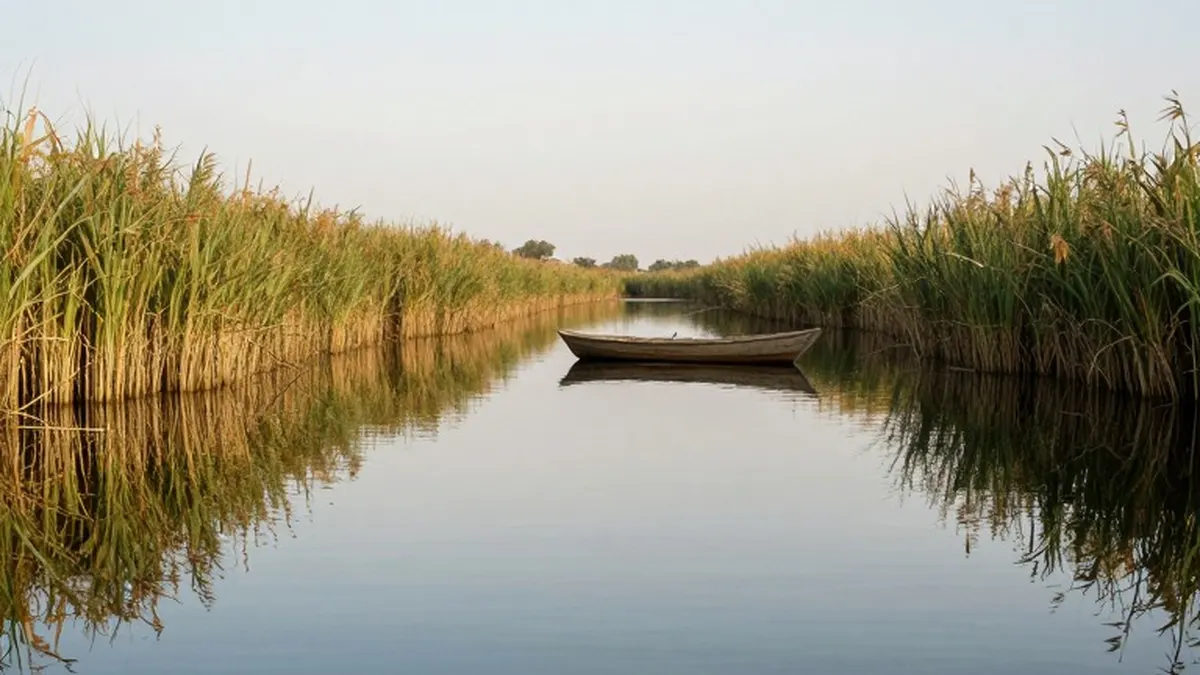
The narrative is set in the southern marshlands of Iraq and centers on Ayoub, a blind boatman played by Ahmed Moneka. Ayoub falls in love with Genya, a mysterious woman portrayed by Sam Rahmani whom no one else can see. The community around him mocks his affection, convinced she is merely a figment of his imagination. Al-Fatlawi questions this social dynamic, noting that love is a personal decision that does not require the agreement of others.
The character of Genya draws inspiration from stories Al-Fatlawi’s father told about a mythical woman in the marshlands, as well as ancient Sumerian mythology and the Epic of Gilgamesh. The director was particularly interested in the prominence of female deities in ancient Mesopotamian culture and how that shifted toward the male image of God in contemporary religion. The marshlands themselves serve as a crucial backdrop, offering a view of Iraq that contrasts with the familiar images of war and poverty often seen in international cinema.
Al-Fatlawi was careful to avoid making a film that asked for sympathy from Western audiences. He stated that he did not want to portray Iraqis as poor people seeking help. This approach influenced his casting choices. He selected a Black Iraqi for the lead role of Ayoub, while the threatening outsider from the city is depicted as a white, blue-eyed man in religious clothing. This setup deliberately challenges common stereotypes regarding who appears to be a hero and who appears to be a villain.
The director’s background as a painter and performance artist heavily influenced the screenplay. He developed the story through drawings, often painting scenes before writing them. He worked closely with his cinematographer to use a 4:3 aspect ratio, which brought characters closer together in the frame. Wide shots were composed to divide the image equally between the landscape and its reflection in the water, creating a visual balance that mirrors the film's themes.
Directing the actors required specific techniques to handle the theme of perception. Al-Fatlawi instructed Moneka to keep his eyes open and fixed, resisting conventional portrayals of blindness that might invite pity. He wanted the character to appear strong, seeing more than those with sight. For Rahmani, the challenge was to play Genya as both a real woman and a mythical presence. The director asked her to balance the character between being real and imaginary, a nuance they refined through extensive rehearsals.
The production was a personal homecoming for Rahmani, who grew up in Jordan and Canada but had never lived in Iraq. Spending nearly four months in the marshlands allowed her to use her native Iraqi dialect freely in everyday situations. She described the experience as healing, noting that it allowed her to stop code switching and feel more comfortable in her own skin. The film gave her a deeper connection to her Iraqi heritage.
Development of the project began in 2015, with support from the Doha Film Institute, El Gouna, and Red Sea film festivals. It participated in Cannes’ L’Atelier program in 2022, the same year it secured approximately $2.5 million in financing. After a 45-day shoot in Iraq, the director still needed to complete an underwater sequence he had envisioned years earlier.
Instead of using an expensive water tank, Al-Fatlawi found a cenote near Playa del Carmen, Mexico. The submerged vegetation there resembled a painting he had created in 2021. Working with two underwater photographers who were new to feature films, he completed the sequence for $15,000. At the Cairo festival, the director was moved by audiences finding meanings in the film that he had not consciously intended. He believes that viewers bring their own perspectives, making the movie richer and allowing them to enter the story from various angles.
More News · National news · Report a business · Got a Story?