25 Years Ago, 5GB of Storage Cost $399 and Held Your Whole Music Library
The 2001 launch of the 5GB iPod shifted consumer expectations for portable storage and music ownership.
By Chioma Brooks ·
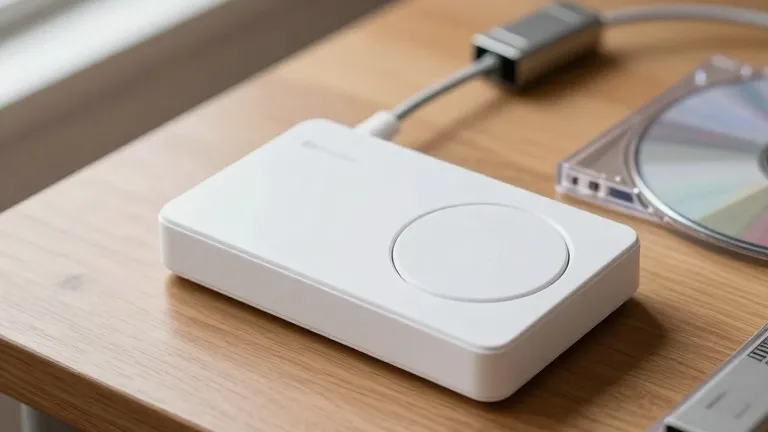
On October 23, 2001, Apple altered the economics of personal audio by pricing a 5GB hard drive at $399. For the consumer, this specific price point meant the entire recorded music library fit in a pocket without a computer. Before this launch, carrying a large collection required multiple CDs or a cumbersome portable jukebox. The new device consolidated thousands of tracks into a single, lightweight object that weighed 6.5 ounces. It weighed less than the cell phones available at the time, making it a practical accessory for daily use rather than a specialty item.
The hardware relied on a 1.8-inch Toshiba hard drive that was 0.2 inches thick. This component allowed the device to measure 2.4 by 4 by 0.78 inches. The storage capacity held approximately 1,000 songs encoded as MP3s at 160Kbps. Steve Jobs, who introduced the product, stated that for most users, this capacity represented their entire music collection. The player supported MP3, WAV, and AIFF file formats, covering the primary digital audio standards of that era. It also provided 20 minutes of skip protection during physical movement.
Jobs positioned the launch during a period of corporate recovery for Apple. The company had moved past its earlier hardware designs with the release of Mac OS X and iMacs. He argued that the Mac would serve as the hub for all digital media. He identified four existing market categories for portable music: CD players, MP3 CD players, flash players, and hard-disk jukeboxes. Jobs believed the hard-disk category offered the clearest path to market leadership. Competitors such as Sony, Creative, and Sonic Blue already sold portable devices, but Jobs claimed none had solved the problem of digital music usability.
The transfer speed was a primary selling point over the existing USB connections. Jobs demonstrated that a FireWire 400 cable could move the contents of a CD onto the player in five to 10 seconds. By contrast, the standard USB connections of that time required about five minutes for the same transfer. A full library of 1,000 songs took about 10 minutes to load via FireWire, a process that would have taken five hours over USB. The device used a lithium-polymer battery that provided 10 hours of continuous playback. Apple stated that the battery could recharge from empty to 80 percent in one hour.
The interface featured a scroll wheel with a piezoelectric clicker to provide tactile feedback. This design allowed users to navigate by playlist, artist, or song title with one hand. Jobs emphasized that the controls offered Apple's legendary ease of use. The first track played during the presentation was Sarah McLachlan's Building a Mystery. The launch coincided with the release of iTunes 2, which added MP3 CD burning and synchronization features. Auto-Sync allowed the player to automatically match the library on the connected Mac. The device also functioned as a FireWire hard drive when connected to a computer.
The iPhone arrived in early 2007, more than five years after the iPod debut. Both products remained in Apple's lineup together for over a decade. The iPod line eventually faded as smartphones integrated music playback. The seventh-generation iPod Touch released in May 2019 was the final model. Apple officially discontinued the product line in May 2022, ending a 21-year run of dedicated portable music players.