Israeli attorney general freezes E1 settlement tender process until new government sworn in
Gali Baharav-Miara ordered the caretaker government to halt bids for 1,234 housing units in the contested West Bank corridor, hours after Britain imposed sanctions on Israeli construction firms.
By Priya Marino ·
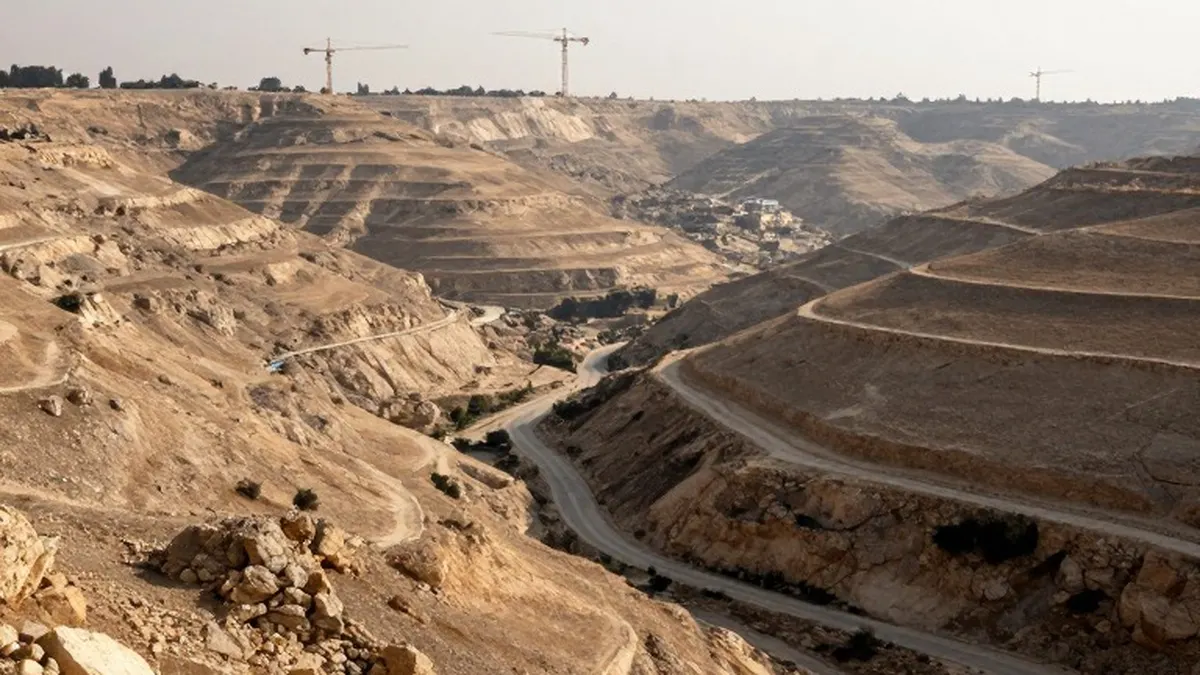
Attorney General Gali Baharav-Miara instructed Israel's caretaker government on Tuesday to halt the process of issuing construction tenders for the contested E1 settlement area in the West Bank until a new government is formed. The decision was announced hours after Britain imposed sanctions on Israeli construction firms and reiterated its warning against advancing the long-disputed project.
Hebrew media outlets reported that the decision followed legal discussions in which it was determined that the limits placed on a caretaker government's powers apply in this case as well, meaning it lacks the authority to advance construction on E1.
The deadline for companies to submit bids to build 1,234 housing units had been set for Thursday. It has now been pushed back at least until a new government is sworn in.
The E1 project would slice across the West Bank, severing territorial contiguity between major Palestinian population centers, including Ramallah, East Jerusalem and Bethlehem. The Palestinians and many Western governments argue the plan would effectively destroy the possibility of a contiguous Palestinian state in the territory.
The Israeli anti-settlement group Peace Now welcomed the freeze as "an important step" but urged the next government to cancel the project outright. "A government that has lost an election has no mandate to use its final days in power to advance destructive measures that endanger Israel's future and its international standing," the organization said. It warned that construction in E1 "could extinguish the possibility of a two-state solution" and plunge Israel into a severe diplomatic crisis and international sanctions. "The fight is not yet over," the group added, calling on the next government to definitively cancel the tender and halt what it described as a policy of annexation.
The Ma'ale Adumim Municipality denounced the decision and said it would file an appeal with the High Court of Justice. "It appears that political considerations are guiding the legal advice more than legal considerations," said Mayor Guy Yifrach. He had also protested the attorney general's decision in September to postpone the tender until after Israelis went to the polls on October 27, a delay made over concerns the campaign could be used for engineering.
The E1 plan received final approval in August 2025 after years of delays caused largely by vehement objections from the international community, including the United States. The European Union's diplomatic service condemned the issuance of tenders in August, warning the planned construction would "divide the West Bank in two, isolating East Jerusalem" and further undermine "the viability of a two-state solution." Members of Prime Minister Benjamin Netanyahu's coalition have championed the project as a way to cement Israeli control in the area between Jerusalem and Ma'ale Adumim, with far-right Finance Minister Bezalel Smotrich hailing it as a "significant step that practically erases the two-state delusion."
Foreign Minister Gideon Sa'ar vowed that Israel would hit back at the British sanctions, which also targeted an activist group that prevents the delivery of aid to Gaza. Writing on X, Sa'ar called the measures "a hostile act targeting private, law-abiding companies" and pledged that Israel would not change its policies. "On the contrary, we will consider new ways to strengthen Jewish communities in Judea and Samaria and will act to protect those involved in developing and building the Land of Israel," he said. "Israel will respond to the British government's actions with countermeasures. A wide range of possible responses is currently under consideration."
Eran Roll, chairman of the Israeli Building Center, warned the sanctions could have far-reaching consequences for the entire construction industry by deterring international companies, investors and financial institutions from doing business with Israeli firms. He urged the country's political leadership to work to have the sanctions lifted "as soon as possible." "This is a blow to Israeli construction companies, patriotic companies that are building the State of Israel from north to south," Roll said.