Army Sets Date to Detonate 5 Tons of Lead Azide at Iowa Plant
Residents near Burlington were asked to evacuate before the 9 a.m. blast, which officials say is safer than leaving the unstable chemical in storage.
By Chioma Brooks ·
Residents within five miles of the Iowa Army Ammunition Plant in Middletown were advised to leave their homes on Wednesday morning. The Army scheduled a controlled detonation of 5 tons of lead azide for 9 a.m. local time. This stockpile is the nation's entire supply of the chemical, which is used in making bombs and other munitions.
The blast is designed to eliminate a material that has become increasingly unstable. Army officials warned that the chemical could explode at any time if left in its current state. Maj. Gen. Eric Shirley, the Army leader for the operation, stated that inaction was no longer an option. The detonation follows a series of delays and public concern over the health risks associated with lead dust.
The lead azide arrived at the Middletown facility in 2009. It was collected from military bases across the country and stored in 68 barrels. Robert Cekada, director of the Bureau of Alcohol, Tobacco, Firearms and Explosives, confirmed the timeline for the stockpile's arrival. In March of this year, a routine inspection revealed that the chemical had partially crystallized. This change made the material sensitive to friction and cold temperatures, increasing the risk of a spontaneous explosion.
Military experts reviewed several methods for handling the unstable barrels. They determined that controlled detonation was safer than thermal treatment or neutralizing the contents. The Army moved the detonation date three times after the initial plan for last Friday. Court documents indicate the shifts were made to allow for better safety measures and favorable wind conditions. A federal appeals court ruled on Monday that the U.S. Environmental Protection Agency had included adequate safeguards to limit the spread of lead dust.
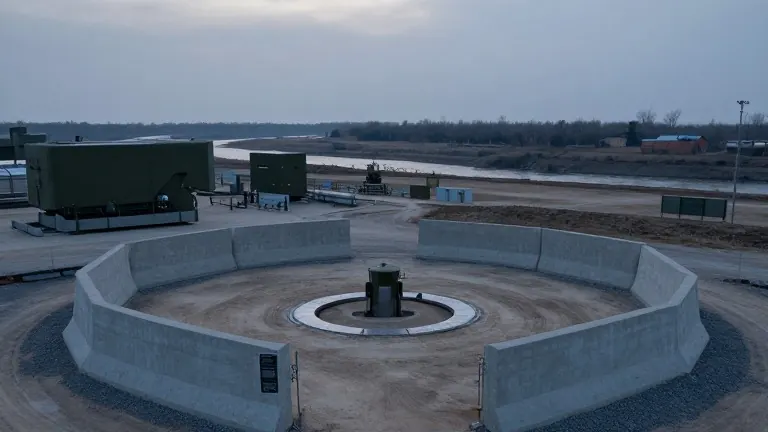
The Army installed concrete and sand barriers two stories high around the bunkers where the barrels are located. These structures are intended to contain much of the plume generated by the explosion. Ballistic gels and foams are placed to absorb lead dust, and the military plans to use thousands of gallons of water to further dampen the plume. Acting Secretary of the Army Adam Telle told the public not to panic, noting the specific steps taken to contain the material.
Wind forecasts for Wednesday point toward the southwest. Officials expect the plume to travel toward Missouri, moving away from Burlington. Burlington is a city of just under 25,000 people located along the Mississippi River. The Army asked residents within a five-mile radius to evacuate to avoid inhaling lead dust, while assuring them that the barriers would limit the spread of the plume.
The detonation is scheduled for the day before Thanksgiving. Schools in the area closed early, and many businesses shut down for the day. Some residents sealed their windows and doors as a precaution. Lucy Giehl, a resident of West Burlington, expressed concern about the long-term presence of lead in the area. She noted that it seemed the issue could have been addressed sooner. Other locals raised questions about the potential impact on local water sources, farms, and animals.