Bambu Lab H3C Launch Date Confirmed: Nine-Tool Printer Targets November 3
The new flagship 3D printer will feature a novel tool storage system designed to improve visibility and reduce waste.
By Priya Marino ·
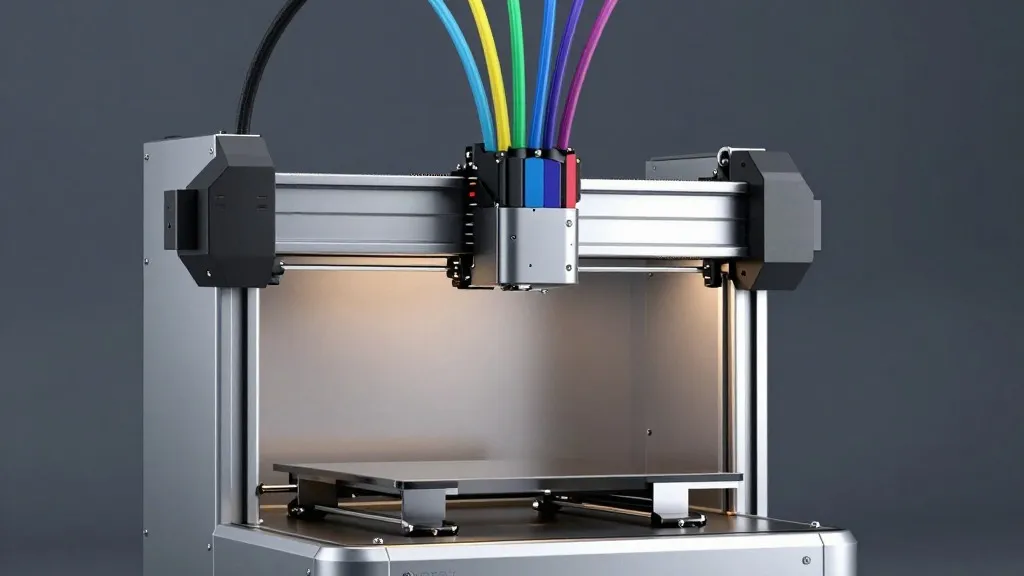
The 3D printing industry is poised for a significant shift in how multi-color and multi-material prints are handled, as Bambu Lab has confirmed that its new tool-changing printer, the H3C, will go on sale on November 3. This launch resolves months of speculation surrounding the machine's capabilities and design. The announcement centers on a teaser video that reveals a machine equipped with nine distinct tools stored on a specialized rack at the front of the build chamber. This configuration represents a departure from previous systems and marks a major step for the company's flagship product line.
Tool-changing technology is widely regarded as the next logical step for the sector. Traditional automatic material switching systems often create waste and slow down the printing process when changing colors or materials. By contrast, a tool changer allows the printer to physically swap out the entire nozzle assembly. This method is faster and generates less plastic waste, addressing two of the most common complaints from users of existing systems. The H3C is designed to capitalize on these efficiency gains while maintaining the high output standards expected of Bambu Lab's professional-grade equipment.
The new device joins the H-line, which currently includes the H2S, H2D, and H2C models. Among these, the H2C serves as the closest relative to the H3C. The H2C is a seven-tool induction-heated nozzle swapper that utilizes a motorized rack to hold inactive tools. It is one of the company's larger machines, offering a build volume of 330 by 320 by 325 millimeters. The H3C appears to expand on this foundation by increasing the tool count to nine, suggesting a broader range of material or color compatibility for complex projects.
A key design feature highlighted in the promotional material is the placement of the idle tool heads. The 11-second teaser video shows the tool rack lowering into position with a distinct metallic sound. Because the unused tools are stored above the build plate, they do not obstruct the user's view of the first layer of the print. This is a notable improvement over competing systems, such as the Bondtech INDX, which has been criticized for requiring users to look through the tool rack to monitor the print bed. Better visibility is expected to make the H3C more user-friendly for those who closely monitor their prints.
Prior to the official announcement, speculation ran rampant across online forums and video platforms. Several creators who did not have access to review units analyzed leaked clues to predict the machine's specifications. One widely shared image suggested the printer would hold ten spools, but the new teaser video clearly shows nine colorful Bowden tools arching over the top of the unit. While the exact mechanism that holds the spools remains undisclosed, the design is described as fitting the company's established aesthetic and functional style.
The H2 line has been marketed as a hub for home manufacturing, and the H3C is expected to follow a similar trajectory. At the Formnext trade show last year, shortly after the H2C was introduced, Bambu Lab representatives expressed interest in creating multitasking machines that perform functions beyond standard 3D printing. This philosophy is evident in the company's current lineup, such as the A2L, which offers an optional blade for cutting and embossing. Although the addition of a laser to the H2D was not universally welcomed by all users, the focus on versatile, multi-tool machines remains a core part of the company's strategy.
The H3C is positioned to challenge other multi-tool systems in the market by combining high tool capacity with improved visibility and efficient material handling. For working professionals and hobbyists alike, the ability to swap between nine different tools without manual intervention promises to streamline complex workflows. The machine's placement in the flagship H-line signals that Bambu Lab views this technology as a premium feature rather than a niche add-on. As the launch date approaches, attention will turn to the specific pricing and performance metrics that will define the machine's value proposition.
Full technical details regarding the H3C are expected to be released at the November 3 launch event. Until then, the available information focuses on the physical layout and the tool storage mechanism. The company has indicated that there are additional features that have not yet been revealed, leaving room for further surprises. For readers interested in the future of additive manufacturing, the H3C represents a concrete step toward more versatile and efficient desktop production systems.