Big Oil refining profits jump as global fuel supplies tighten
Exxon, Shell, BP, and TotalEnergies report surging margins, with Chevron's downstream earnings quadrupling to $4.9 billion.
By Chioma Brooks ·
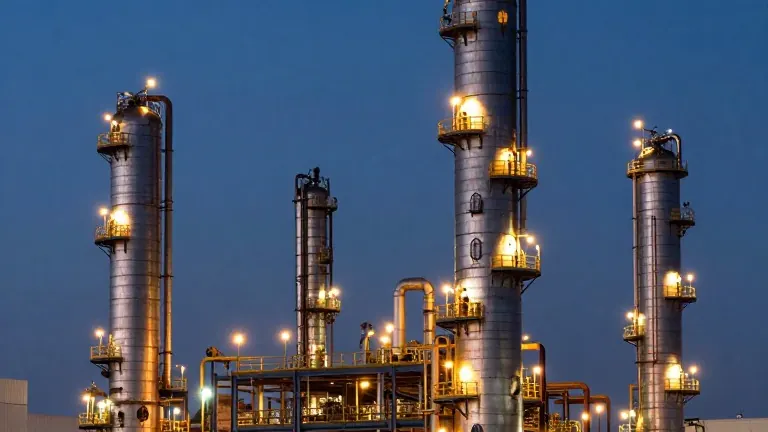
Refining margins for major oil companies have spiked sharply, leaving consumers facing higher energy prices while producers record windfalls. Corporate results released this week show that Shell, BP, TotalEnergies, and Exxon are earning significantly more from processing crude oil into gasoline, diesel, and jet fuel. Chevron reported that its downstream earnings more than quadrupled compared to the previous year, reaching $4.9 billion. The company attributed the jump to higher margins on refined product sales, even though it does not publish a standalone refining-margin figure like its peers.
President Donald Trump criticized the industry in August, stating that ExxonMobil and Chevron were making too much money due to shortages. His comments came as the U.S. and Israel engaged in a war with Iran, which disrupted global energy markets. The current profit surge is driven by tight fuel supplies and elevated refining margins. Although oil firms say they are running facilities near capacity to meet demand, global refinery output remains under pressure from several simultaneous factors.
Ukrainian drone strikes on Russian refineries and disruptions in Middle East infrastructure linked to the Iran war and Houthi attacks on Saudi Arabia have compounded existing issues. These events have accelerated refinery closures in Europe and North America. Dan Jørgensen, the European Commissioner for Energy and Housing, warned of an energy security crisis this week. He noted that approximately one-quarter of refineries in the European Union have shut over the past two decades, even as new capacity has been added in other regions.
The earnings spikes are bringing profits back toward levels last seen during the 2022 energy shock following Russia's invasion of Ukraine. This recovery is happening while higher crude oil prices also support the upstream businesses of integrated majors. The contrast between corporate gains and consumer costs has drawn attention to the effectiveness of political interventions. Some analysts argue that efforts to tackle prices, such as releasing emergency diesel stockpiles and a U.S. deal with Russia to supply more diesel, may have limited impact unless supply materially increases, demand weakens, or global tensions ease.
Raphael Portela, director for corporate strategy and analytics at Wood Mackenzie, explained that crude oil barrels are still leaving the Gulf but at a steep freight premium. He stated that the diesel and jet fuel those barrels would have become are largely missing from the market. Portela added that Russia's refinery outages and export ban have further reduced the global pool. He said the crunch would end when product supply returns based on greater crude availability, such as Gulf refineries restarting and Russian exports returning.
Portela noted that a settlement in the Strait of Hormuz would quickly affect margins through sentiment. However, with inventories currently depleted, the physical tightness in the market will carry well into 2027.
Source: CNBC
More Business · Consumer Watch · Report a business · Got a Story?