Democrats Sweep Senate Races in Ohio, Texas, and Kansas
Federal agents' actions in Minneapolis and economic pressures drove voters to reject Republican incumbents in key states.
By Chioma Brooks ·
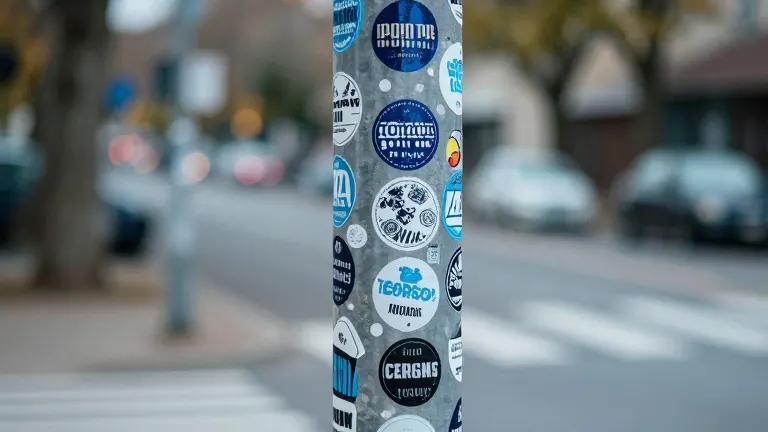
Minnesotans cast their ballots in the state’s Senate race on Tuesday, and the results signaled a sharp shift in the political map. In a display of collective sentiment, many voters affixed their “I voted” stickers to a lamppost at a makeshift memorial on Nicollet Avenue in Minneapolis. The memorial has stood for nine months for Alex Pretti, a registered nurse killed by federal agents while shielding a fellow protester during the winter deportation campaign. The gathering of stickers suggested that this election carried unusual moral weight despite being a routine midterm contest.
The rejection of President Donald Trump was evident in the tallies, reaching deep into regions traditionally aligned with conservative politics. Republicans lost the Senate race in Ohio, a state that had long provided symbolic support for Trump’s base. The party also appears likely to lose in Michigan. In Texas, Democrats won a statewide race for the first time in more than a hundred contests, a streak dating back to 1994. Similar victories were recorded in South Carolina, Iowa, and Kansas, the latter state not seating a Democratic senator since the Great Depression.
In southwestern Kansas, the shift was visible at the county level. Finney, Seward, and Ford counties, where Trump won by approximately thirty-five points two years ago, voted narrowly for the Democratic candidate in the U.S. Senate race. This marked a departure from the stable political geography that had characterized the country for a decade, with blue cities and deep red outlying areas. The new results indicate instability along these traditional boundaries.
Voters cited various specific grievances for their decisions. In South Texas, the intensity of immigration raids played a role. In Kansas, the Iran war’s impact on diesel and fertilizer prices influenced the outcome. In South Carolina, the choice of a poorly received Republican candidate contributed to the loss. These local factors combined to override the cultural divisions that had previously insulated conservative voters from political change. The news of these events reached voters in places that had previously seemed impervious to them.
The Democratic Party’s success was driven in part by a new cohort of younger candidates who challenged the status quo. Jon Ossoff in Georgia, James Talarico in Texas, and Abdul El-Sayed in Michigan led campaigns that denounced oligarchic and authoritarian elements. Their approach distinguished them from the party’s traditional doctrine. The South, historically the most conservative region in the United States, now appears politically divided. The future of the Republican Party is in question, with uncertainty surrounding whether J. D. Vance remains the presumptive presidential nominee and whether the party will unify behind Trump after losing Texas.
Democrats face internal challenges despite their breakthroughs. A dispute between the insurgent left and the legacy party remains unresolved, with both sides claiming vindication from the midterm results. The party generally remains unpopular, and leadership is now held by figures such as Hakeem Jeffries and Chuck Schumer, who are seen as lower-profile leaders. This structure leaves the party without a clear face for the upcoming presidential primary, despite its potential claim on a majority.
Fox News flashed a graphic around 11 p.m. predicting that Democrats would win control of the House of Representatives. This outcome marked a departure from the narrative established after the 2024 election, where conservatives argued that Trump’s victory represented a defining turn against modern ideas. Trump called into Fox News just after midnight, describing the moment as a point in time. “It’s just a point in time,” the President said. “There was a mood in the air, I guess.”
The 2024 election now appears more like an aberration than a historical pivot. The past two years of governance have been tallied by voters, as seen in the stickers on the Minneapolis memorial. Elon Musk spent nearly two hundred million dollars to keep Texas red, but the state ended up in a different political color. The morning after the election presents a slightly different landscape for the country.