Detroit food co-op sees sales spike after community rallies for support
The Woodward Avenue store hit its highest weekly revenue since opening after a fundraising campaign drew in new member-owners and local partners.
By Priya Marino ·
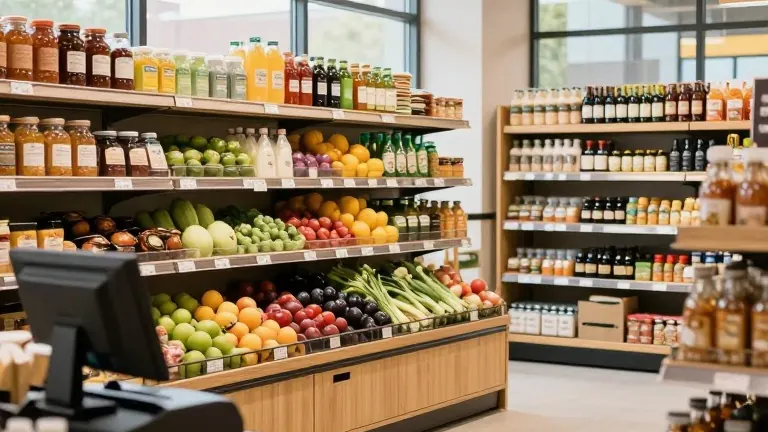
Detroit People’s Food Co-Op just posted its best sales week since it opened its doors in May 2024. Between Sept. 28 and Oct. 4, the store on Woodward Avenue brought in nearly $98,000. That figure represents a 60% increase compared to the same period last year.
This surge follows a rough stretch for the cooperative. Summer sales fell below the $73,000 weekly benchmark needed to sustain operations. Malik Yakini, a board appointee for the Detroit Black Community Sovereignty Network, attributed the dip to dangerous air quality from Canadian wildfires and heat waves that kept shoppers indoors.
In September, the co-op launched a fundraising drive called the Mframadan Campaign. The name comes from a Ghanaian word meaning a house built to withstand windy and treacherous conditions. The campaign runs through Nov. 30. Its goal is to raise $155,000 to stabilize the store’s finances.
Community response has been strong. Churches organized shopping days, and a local nonprofit provided a historic grant. Lanay Gilbert-Williams, the co-op’s board president, reported that 260 new individuals joined as member-owners after the campaign began. These members pay a $200 fee, which can be paid in installments, and they gain voting rights and grocery discounts.
Experts say the store’s situation is typical for new cooperatives. Anthony Goodwin, CEO of Development Co+operative at the National Co+op Grocers, noted that it often takes 10 to 12 years for a startup co-op to become financially sustainable. He warned that market conditions can change during that long timeline, making viability difficult for single-store operators.
JQ Hannah, executive director of the Food Co-Op Initiative, described these early financial struggles as a common phase of post-open stabilization. She said cash flow problems are not uncommon at this stage. Hannah believes Detroit is making a strong case for community investment. She noted that urban and historically redlined communities now account for 50% of the 120 groups currently organizing food co-ops across the country.
To address the financial gap, the co-op has implemented an operational reset. Yakini said staff are being retrained, the store is being restocked and cleaned, and customer service protocols are being tightened. The store is on track to meet its $155,000 fundraising goal, having already raised $35,000 through a GoFundMe page.
More Business · Consumer Watch · Report a business · Got a Story?