FAA halts router work after last week's flight chaos
The agency paused installing new equipment and switched to older routers while investigators examine why the system failed.
By Chioma Brooks ·
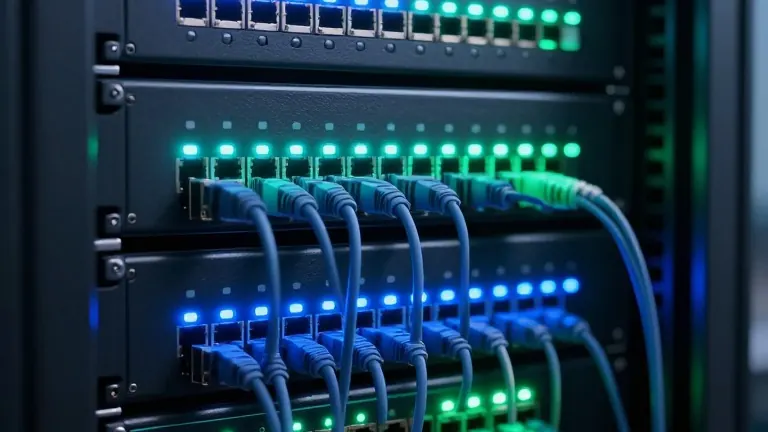
The Federal Aviation Administration stopped installing new routers after last week's nationwide grounding of flights.
Agency spokesperson Ian Gregor said the FAA paused work on Juniper routers and disabled existing ones on Friday. Technicians linked the failure to a new unit in El Dorado, Arkansas. Another router in Amarillo, Texas, had malfunctioned three weeks prior.
Transportation Secretary Sean Duffy explained that a federal contractor was replacing copper wires with fiber optic lines. The new equipment in Arkansas caused intermittent communications and radar signals at 17 of the 22 regional air traffic control centers. These centers manage planes at high altitudes.
The FAA reported that excessive data flooded the network at a rate of 1,000 connection attempts every four to five seconds. This surge created instability in aircraft communications and radar feeds. The agency is now using Cisco routers that have operated for 25 years while it investigates the cause.
Hewlett Packard Enterprise, the owner of Juniper, issued a statement saying the devices worked as configured. The company noted that the equipment did not fail or act improperly during the incident. L3Harris is currently testing the routers at its headquarters.
Democrats on the Senate Commerce Committee wrote to Secretary Duffy demanding a root cause analysis. They stated that only 400 of more than 3,600 new routers have been installed so far. The letter urged the FAA to determine why the specific device failed and how to prevent similar issues.
The Trump administration sent lawmakers a letter on Tuesday requesting $50.1 billion for modernization. The plan allocates $10.1 billion for the air traffic control system. The remaining funds cover airport infrastructure, five new traffic control centers, and upgrades to up to 140 control towers. Congress approved $12.5 billion last year for similar infrastructure updates.
Bernstein estimated the ground stop cost the four largest U.S. airlines $345 million. American Airlines faced $113 million in costs, while Delta and United each reported $96 million. Southwest Airlines accounted for $40 million of the total. Analysts said the weekend's cancellations will affect quarterly earnings for all four carriers.