Federal Court Halts Detonation of 5 Tons of Lead Azide in Iowa
The Eighth Circuit granted an emergency stay after environmental groups challenged the EPA permit, leaving the timing of the blast at the Middletown plant uncertain.
By Abigail Brooks ·
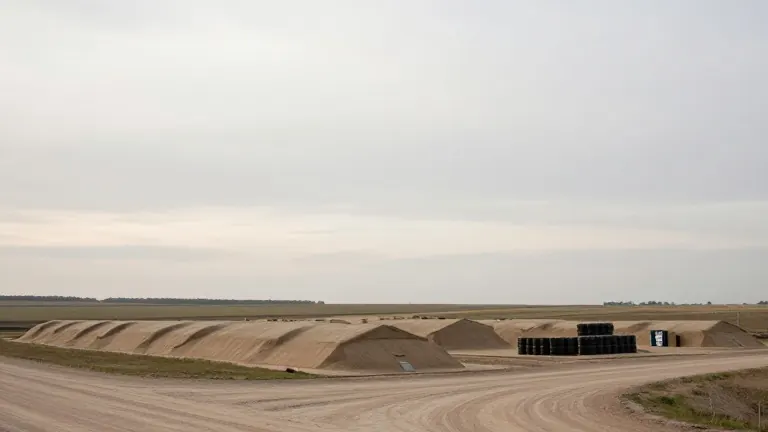
The U.S. Eighth Circuit Court of Appeals paused the Army's planned destruction of unstable explosives in Iowa on Friday.
The court granted an emergency motion to stop the detonation of lead azide at the Iowa Army Ammunition Plant in Middletown. This move follows lawsuits filed by environmental groups on Thursday. The pause remains in effect until the judges issue a final ruling on the stay.
The Iowa Environmental Council and the Sierra Club Iowa Chapter challenged the emergency permit issued by the Environmental Protection Agency. The groups argued that local residents had too little time to prepare. They also claimed the EPA did not release the scientific data used to justify the blast as the safest option. Without that information, they said, independent experts could not verify the safety assessments.
The facility has stored 68 barrels of lead azide for more than 20 years. Justine Barati, a public affairs specialist at Army Sustainment Command, stated that the material was kept in earthen-covered containers filled with a bath of ethanol and water. A routine inspection earlier this year found that some of the water had evaporated. According to the EPA, this change caused the lead azide to recrystallize. The process made the explosive more sensitive to friction and shock, increasing the risk of an accidental detonation.
Acting Secretary of the U.S. Army Adam Telle said the military determined that a controlled detonation was the best disposal method. The process would create a cloud of dust containing toxic lead particles. Preliminary weather maps suggested the plume could travel north across eastern Iowa. It might cross the Mississippi River and reach northwestern Illinois. Thousands of people live along that projected path, which includes farms, residential areas, and water sources.
The original schedule called for a noon Central Time blast on Friday. The Army initially delayed the event to Monday but set no new date. Residents of Middletown were instructed to evacuate their homes from 8 a.m. to 2 p.m. on the first day. The military warned that the force of the explosion could shatter windows in nearby structures.
A group of bipartisan elected officials from Illinois and Iowa asked the Pentagon and the EPA to delay the work. The letter was sent to Acting Army Secretary Adam Telle and U.S. EPA Administrator Lee Zeldin. The signatories included U.S. Sen. Dick Durbin, U.S. Sen. Tammy Duckworth, U.S. Rep. Darin LaHood, U.S. Rep. Mary Miller, U.S. Rep. Eric Sorensen, Illinois Gov. JB Pritzker, U.S. Sen.-elect Juliana Stratton, and U.S. Sen.-elect Josh Turek. They cited the need to explore safer alternatives while addressing the urgent hazard posed by the volatile materials.
More News · National news · Report a business · Got a Story?