Hormuz Conflict: African Food Prices Surge as Fertilizer Costs Spike
Trade ministers and UN officials warn that war in the Middle East is disrupting supply chains, doubling fuel costs in some nations, and threatening next year's harvests.
By Abigail Brooks ·
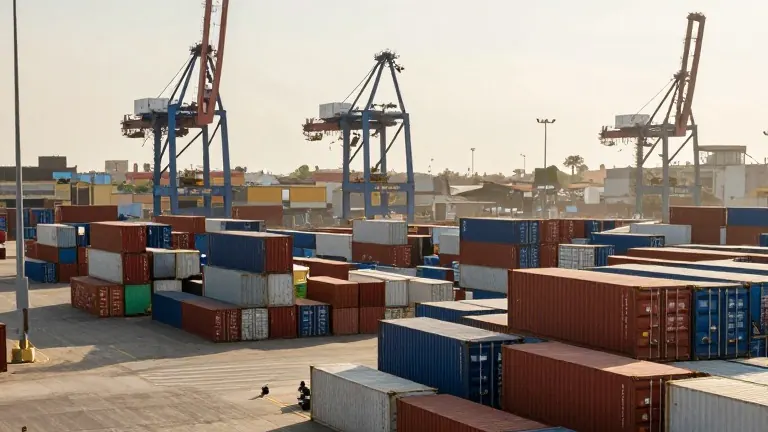
The war between the United States, Israel, and Iran is hitting African economies hard. The conflict has disrupted the Strait of Hormuz, a waterway that previously carried one-fifth of the world’s oil and liquefied natural gas. This disruption is sending fuel and fertilizer prices soaring, which is driving up the cost of food for millions of people.
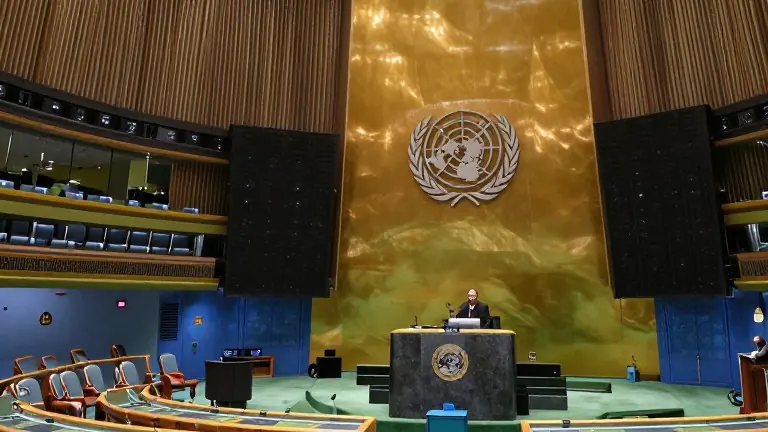
Luz Maria de la Mora, director of the Division on International Trade and Commodities at the United Nations’ UN Trade and Development, warned that the crisis needs to be resolved quickly. She told reporters at the World Investment Forum in Doha, Qatar, that fertilizer prices have risen dramatically. Many countries are now using less fertilizer to save money. De la Mora said this reduction will affect crop yields next year and likely reduce the availability of food while raising prices further.
The impact is visible on the ground in African nations. In Zimbabwe, where more than 70 percent of the population relies on agriculture, rising costs are a critical concern. Monica Mutsvangwa, the minister of women affairs, community, small and medium enterprise development, said the situation is severe. In Uganda, which also depends heavily on farming, fuel prices have more than doubled. Sanjay Tanna, the minister of trade, industry and cooperatives, confirmed the sharp increase to journalists.
The shock has not hit every economy in the same way. Uganda’s reliance on subsistence farming has provided some protection against global market volatility. Tanna noted that domestic food production helps cushion the blow. However, the country is still facing financial pressure. The Ugandan shilling has lost 10 percent of its value against the US dollar since mid-2026. Tanna acknowledged that the international trading system is unfair but believes Uganda is in a good position because it produces its own food.
Zimbabwe is taking a different approach to navigating the crisis. The country is positioning itself as a neutral partner for investors from both the United States and China. Mutsvangwa stated that Zimbabwe wants to attract capital regardless of its origin. She pointed to the country’s deposits of more than 60 critical minerals, including lithium and graphite, as well as its tourism potential. Her goal is to ensure that foreign investment follows local rules and helps develop the nation.
De la Mora explained that capital is risk-averse. Investors need certainty that their money will yield returns. She argued that governments can build that confidence through transparent institutions, the rule of law, and investment in infrastructure. This includes reliable electricity, energy supplies, and digital connectivity.
Jean-Jacques Bouya, the Republic of Congo’s Deputy Prime Minister for Coordination, Development Infrastructure and Land Planning, said his country is aligning its Vision 2063 plan with African Union goals. The strategy focuses on connectivity through electricity, digital infrastructure, and physical links. Bouya also emphasized the need to expand local processing of natural resources. He argued that Africa can no longer just be a place where raw materials are extracted and sold back at higher prices.
The World Investment Forum took place on October 25 and 26. It brought together heads of state, policymakers, CEOs, and investors to discuss global investment and sustainable development. The meeting highlighted how global conflicts ripple through local economies, forcing African nations to adapt their strategies for survival and growth.
The next major step for these nations is implementing the infrastructure and investment plans discussed at the forum. Zimbabwe and Uganda are focusing on attracting capital, while the Republic of Congo is working on aligning its development plan. The immediate goal for all three is to stabilize their economies against the ongoing pressure from global fuel and fertilizer markets.
Source: Al Jazeera