South Africa races to replant five intercepted ancient baobabs
Five centuries-old baobab trees were saved from export to Georgia after authorities blocked their shipment, leading to a urgent replanting effort in the Timbavati reserve.
By Chioma Brooks ·
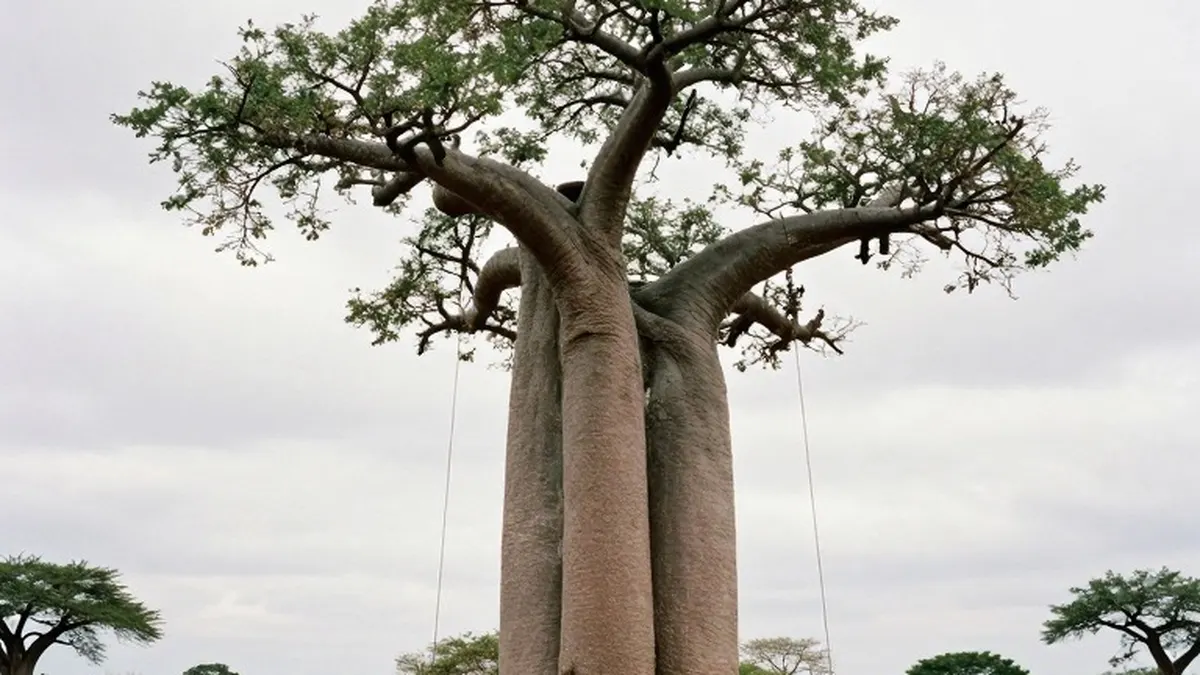
Environmentalists in South Africa are working against the clock to replant five ancient baobab trees that were dug up for export. The massive trees, which weigh approximately 20 tonnes, were intercepted by authorities who determined they had been moved without the required permissions. The exporter had intended to ship the specimens thousands of miles to Georgia, a destination that mirrors a similar controversy involving baobabs in Kenya four years ago.
The trees arrived at a reserve in Timbavati, located in north-eastern South Africa, on Wednesday. They will be replanted and secured with cables to aid their recovery. Since July, the baobabs had been held at a warehouse in Durban after being stopped by officials. The department of forestry, fisheries and the environment confirmed the intended destination was Georgia but did not identify the specific buyer.
This incident recalls an episode in Kenya where eight baobabs were uprooted for export to the Shekvetili Dendrological Park. That park is owned by Bidzina Ivanishvili, an influential Georgian billionaire and former prime minister. While the initial export was blocked due to environmentalist outcry labeling the move as biopiracy, it was eventually permitted to proceed. Experts note that such exports remain rare occurrences in the global trade of wild plants.
David Newton, the programme office director for east and southern Africa at the NGO Traffic, explained that using baobabs as ornamental plants is highly unusual. He attributed this rarity to the exceptional difficulty of extracting, transporting, and successfully re-establishing the trees. Sarah Venter, founder of the Baobab Foundation and a leader in the current replanting effort, expressed optimism about the trees' survival chances if they are placed in the ground quickly.
Venter noted that the winter months from May to October, when the trees are dormant and have shed their leaves, are the optimal time for relocation. She warned that once spring begins in November, the trees will use their water reserves to grow new leaves, necessitating immediate planting to prevent stress. The rescue mission has been complicated by the physical challenges of moving such enormous specimens, which require special trucks designed for abnormal loads.
The five trees weigh between 19 and 29 tonnes, with diameters reaching 4.5 metres and heights up to 12.5 metres. Under South African law, baobabs are protected species, meaning a permit is required to cut or disturb them. Wambui Ippolito, a landscape designer and horticulturist from Kenya, emphasized that a baobab is not merely part of an ecosystem but functions as an ecosystem in itself, serving as a biodiversity anchor.
The trees support a wide variety of wildlife, including bats, bush babies, grey-headed parrots, and the southern ground hornbill, which shelter in their cavities. Elephants, monkeys, and warthogs also rely on the fruit for sustenance. Ippolito highlighted the profound cultural significance of the baobab, describing it as a sacred tree throughout Africa. From Senegal to Ghana, communities often regard the tree as part of their human history, with ancestors having sat beneath its branches for generations.
Technical aspects of the replanting process are manageable due to the shallow root systems of baobabs, which do not require deep planting and regenerate quickly. Once in the ground, the trees will be stabilized with cables and protected by electric fences to guard against damage from local elephants. The specimens are estimated to be between 200 and 300 years old, though Venter noted that baobabs can easily reach 1,000 years of age, suggesting they have centuries of life remaining if they survive the transition.
A criminal case has been opened against the owner of a landscaping company allegedly responsible for the illegal harvesting and transportation of the trees. The outcome of this legal process will be watched closely as the environmental community continues to advocate for the protection of these iconic and culturally significant trees.