ANC faces local election test in Johannesburg
South Africans vote on November 4 to choose local councils that select mayors, with the Democratic Alliance aiming to displace the ruling party in the economic hub.
By Priya Marino ·
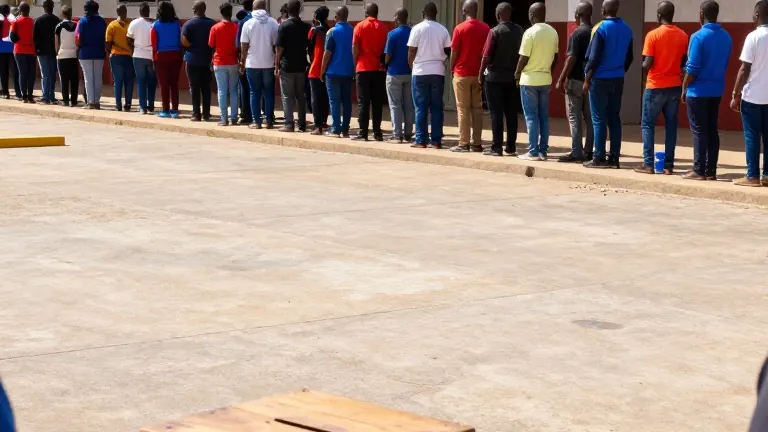
South Africans cast ballots in local elections on November 4 to determine leadership for eight major city municipalities, 44 district councils, and 205 local councils. The vote serves as a direct assessment of the African National Congress, which lost its parliamentary majority in 2024 and saw its local support fall below 50 percent in the 2021 local elections.
Johannesburg, the country’s largest city and economic center, is a central focus of the race. The city has changed mayors five times in the four years since the last local elections. It is currently administered by a fragile ANC-led coalition. The Democratic Alliance, the country’s second-largest party, is targeting control of the municipality.
The DA has nominated Helen Zille, its former national leader and a 75-year-old politician, for mayor. Zille has used public stunts to draw attention to municipal service failures, including snorkeling in a water-filled road trench and rowing an inflatable boat through a pond formed by a water leak. These actions highlight the struggles of the city’s roughly five million residents with water and electricity supplies.
Voters choose council members rather than mayors directly, allowing small parties to influence coalitions. This dynamic allows the DA to challenge its traditional base in Cape Town. The MK Party, led by former President Jacob Zuma, is also contesting the vote. Zuma was expelled from the ANC in 2024 after founding his new party. The MK Party became the third-largest party in Parliament during the 2024 national elections, with strong support in KwaZulu-Natal.
National leaders remain rivals despite serving together in a unity government. ANC leader Cyril Ramaphosa, who was reelected president in 2024, faces scrutiny from opposition groups. Key issues for voters include high crime rates, unemployment, and immigration. Protests against illegal immigration have gained traction in recent months, with some parties making opposition to undocumented migration a core part of their local campaigns.
The ANC, which led the country out of white minority rule in 1994, faces its most significant local challenge in a decade. The outcome in Johannesburg will indicate whether the DA can expand its footprint beyond its southern stronghold. The MK Party’s participation adds a new variable to the regional power dynamics. Results will determine the composition of local councils that manage essential public services for millions of South Africans.