U.S. Carries Out 'Minor Strikes' on Iran as Missiles Hit Qeshm Island
President Trump described recent attacks as effective and brief, while Iranian officials demand tangible actions from Washington before resuming negotiations.
By Chioma Brooks ·
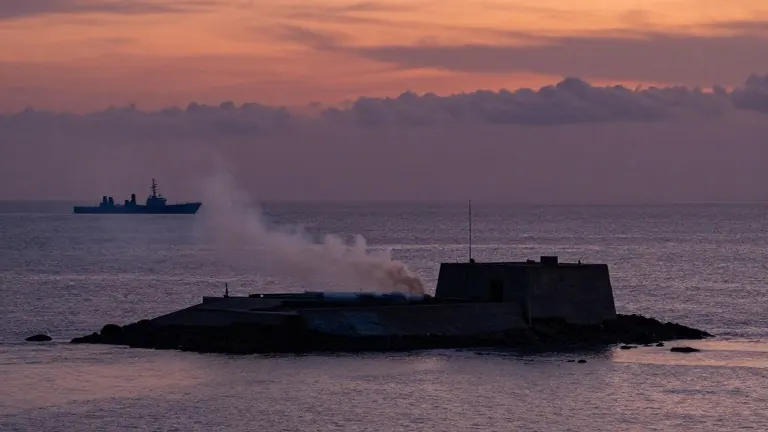
Tensions in the Strait of Hormuz escalated on Friday as the United States conducted new military actions against Iranian targets. President Donald Trump told reporters in West Palm Beach, Florida, that the U.S. carried out 'minor strikes' on Iran. These actions followed reports that two missiles struck Qeshm Island, a location off Iran's southern coast near the vital waterway for oil and gas transport.
The Iranian news agency Tasnim reported that the missiles hit the island on Friday. Reuters noted that Tasnim stated there was no official information regarding the extent of the damage. The U.S. had previously struck the same island on Monday, a move one U.S. official described to MS Now as a defensive measure. The new strikes mark the first since the midterm elections on Tuesday, ending a period where analysts debated whether the vote would lead to further escalation or renewed diplomacy.
Trump did not explicitly confirm that his comments referred to the Qeshm Island strikes, telling reporters, 'I don't want to talk about it.' However, he described the effectiveness of the U.S. actions. 'We do minor strikes, but they knock out,' Trump said. He claimed that U.S. forces destroyed an anti-aircraft device in approximately 15 minutes, or possibly five minutes.
The president expressed confidence in the likelihood of a diplomatic resolution. He stated that Iran wants to make a deal very badly, citing the country's economic pressures and military losses. 'They have 300% inflation. Their navy's gone. Their airport, everything's gone, and they want to make a deal,' Trump told reporters. He added that the current conflict involves few casualties compared to historical wars, noting that while the U.S. may have been engaged for seven months, the actual fighting lasted only three or four weeks.
The International Monetary Fund published a report on Oct. 13 forecasting that Iran's consumer prices would rise by an average of 78.6% in 2026. Despite Trump's optimistic outlook, Iranian officials maintain a cautious stance. Ali Bagheri Kani, deputy secretary of Iran's Supreme National Security Council, spoke to the state broadcaster IRIB on Friday. He said Iran wants more than 'paper commitments' from the U.S. before entering a new phase of diplomatic talks. 'We must see practical measures by the Americans,' Kani said.
The situation leaves both nations in a state of active conflict with mixed signals for the future. The U.S. has demonstrated continued military capability through the strikes on Qeshm Island. Meanwhile, Iran has outlined specific conditions for resuming formal negotiations, creating a gap between American assurances and Iranian demands for verifiable actions.