Iran Drops 2,000-Kilometer Missile Cap; Gaza Rain Floods Tents
General Hossein Mohebbi announces the removal of a range restriction days after Supreme Leader Ayatollah Mojtaba Khomeini warned of unlimited responses to threats.
By Abigail Brooks ·
Iran’s Revolutionary Guard has lifted a self-imposed restriction on the range of its ballistic missiles, removing a ceiling of 2,000 kilometers, or 1,200 miles, that had defined the reach of its arsenal. Gen. Hossein Mohebbi, the spokesman for the paramilitary force, announced the change at a press conference in Tehran, stating, "That restriction has been lifted for us." He noted that Iran would demonstrate these capabilities in practice rather than through further statements, though he did not specify if the country currently possesses missiles capable of exceeding the previous limit.
The announcement follows remarks by Ayatollah Mojtaba Khomeini, Iran’s supreme leader, who warned days earlier that any threat from the United States or Israel would face a response without geographic limits. While Iran is not currently known to possess missiles with ranges beyond the 2,000-kilometer mark, that distance covers parts of Greece and the Balkans, the entire Arabian Peninsula, the Levant, and most of Egypt. U.S. officials have indicated that technology derived from Iran’s space program could be repurposed to construct intercontinental ballistic missiles.
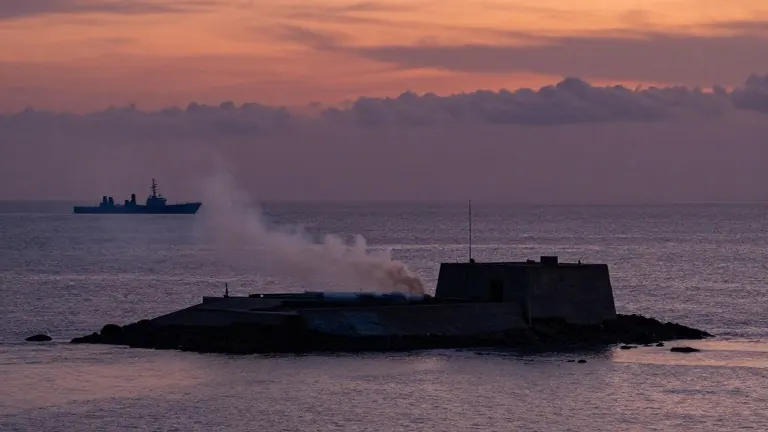
In a separate development, the Iranian military reported that a tanker east of the Strait of Hormuz struck a naval mine and caught fire. The vessel had turned off its navigational beacon and was operating in a prohibited area. The military did not identify the tanker’s nationality or its intended destination.
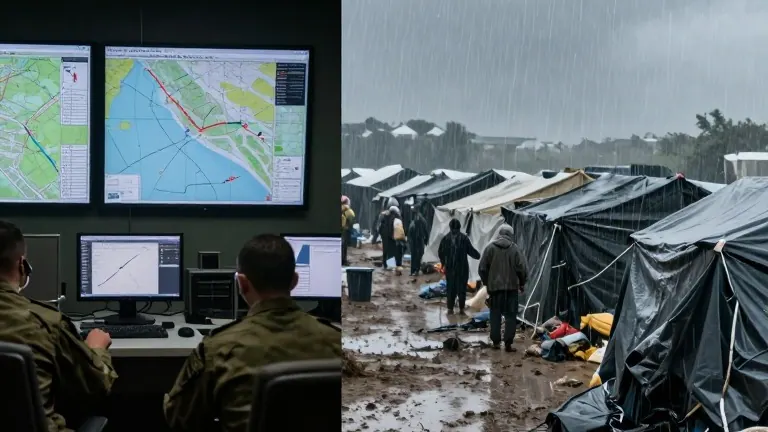
Meanwhile, heavy rains have begun to flood the Gaza Strip, intensifying conditions for displaced families. The precipitation has turned camp pathways into pools of muddy water and soaked mattresses and belongings inside fragile tents. More than 1.6 million Palestinians currently live in makeshift shelters in the territory, where nearly the entire population has lost its homes due to Israel’s campaign.
Majed Al-Omari, who lost a limb during the war, struggled to navigate between tents on crutches after the rain tore down the wooden frame and plastic sheeting of his shelter. "We will have to sleep in the street tonight, or find somewhere else to stay," he said.
The United Nations humanitarian office states that 294,250 families require shelter assistance for the rainy season. However, available supplies are sufficient to provide partial help to only 18% of those in need. The agency cited a lack of funds, slow procurement procedures, and delayed approvals by Israeli authorities as reasons why additional supplies may not reach Palestinians until more than halfway through winter.