Apple’s 1999 Price Tag for 1,000 Songs Marks iPod's 25th Anniversary
A quarter-century ago, a $399 device with 5GB of storage challenged the market by fitting a massive music library into a pocket-sized form factor, a feat that redefined portable audio.
By Valentina Cruz ·
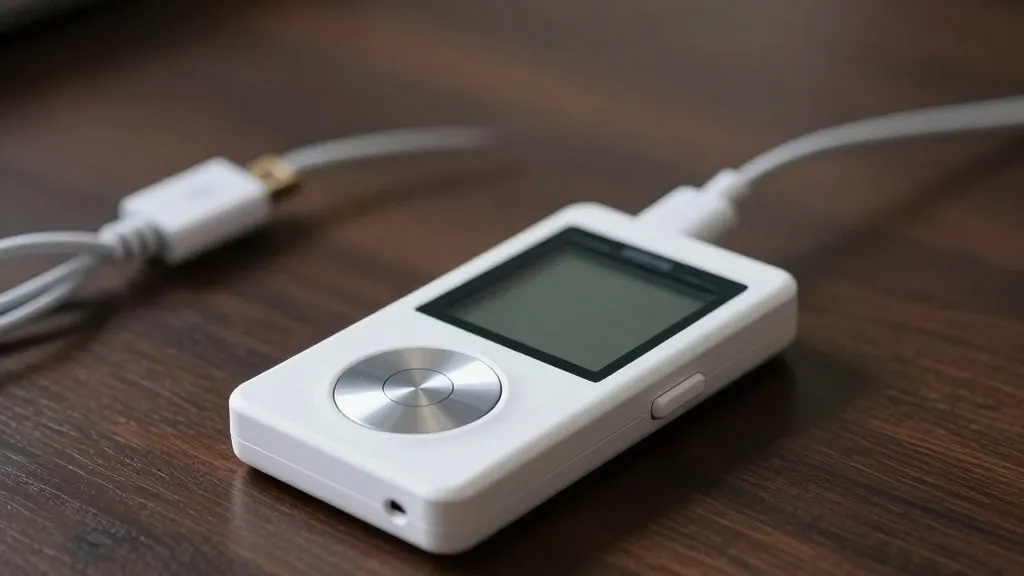
$399. That was the price tag attached to a device that promised to hold 1,000 songs in its 5-gigabyte storage capacity, a figure that served as the central hook when Apple unveiled the original iPod on October 23, 2001. The announcement, made by then-CEO Steve Jobs, marked the 25th anniversary of a product that would dominate the portable music market for nearly two decades. At the time, the cost was steep for a gadget that was not a Mac, but the company bet that consumers would pay a premium for the convenience of carrying their entire auditory history in a package no larger than a deck of cards.
The launch occurred at a pivotal moment for the Cupertino-based company. Having successfully navigated the post-dot-com bubble landscape with the Mac OS X era, iBooks, and iMacs, Apple was in the midst of a financial and cultural revival. Jobs had previously articulated a vision where the Mac would serve as the hub for a user's digital lifestyle, connecting cameras, camcorders, and DVD players. He reasoned that music was a universal passion and a massive target market that lacked a definitive leader, making it the logical next step for the company's expansion beyond the desktop.
Despite the presence of established competitors such as Sony, Creative, and Sonic Blue, Jobs argued that the market had not yet found the correct formula for digital music. He noted that there were four mainstream options at the time: CD players, MP3 CD players, flash-based players, and hard disk-based jukeboxes. Apple identified the hard disk approach as the optimal entry point, prioritizing capacity over the smaller storage limits of flash memory or optical discs. The device was introduced as an MP3 player capable of handling CD-quality sound and supporting the dominant audio formats of the era, including MP3, WAV, and AIFF.
The technical specifications were designed to emphasize portability without sacrificing performance. The device measured 2.4 by 4 by 0.78 inches and weighed just 6.5 ounces, a dimension and weight profile that Jobs described as lighter than most contemporary cell phones. This compactness was made possible by a 1.8-inch hard drive from Toshiba, which was 0.2 inches thick. The 5GB capacity was specifically calculated to store 1,000 typical pop songs encoded at 160Kbps, a metric Jobs used to assert that the device could hold the entire library for the average user.
Performance was a key differentiator, particularly regarding data transfer speeds. The original iPod featured a FireWire 400 connection, which Apple touted as the first and only such capability in a music player. Jobs claimed that transferring an entire CD’s worth of data took only five to 10 seconds, a dramatic improvement over the five minutes required for USB connections of that period. For a full 1,000-song transfer, the FireWire connection was estimated to take 10 minutes, compared to five hours for a USB-based alternative. The device also included 20-minute skip protection and was powered by a rechargeable lithium-polymer battery that provided 10 hours of continuous playback, with an 80% recharge achievable in one hour.
The user interface was designed to leverage Apple’s reputation for ease of use. The device featured a minimal aesthetic with durable back and sides, and controls that were optimized for single-handed operation. A piezoelectric clicker provided tactile feedback for the accelerated scroll wheel, allowing users to quickly navigate playlists, artists, or specific tracks. During the unveiling, the first song demonstrated on stage was 'Building a Mystery' by Sarah MacLachlan, serving as a practical test of the navigation system's responsiveness.
Integration with software was the third pillar of the iPod’s value proposition. The device launched alongside iTunes 2, which introduced features such as MP3 CD burning and syncing support. The Auto-Sync feature ensured that libraries curated on a Mac were automatically updated on the portable player whenever it was connected for charging or data transfer. Additionally, the iPod functioned as a FireWire hard disk drive, offering a dual-purpose utility that extended beyond music playback.
The lifecycle of the iPod spanned over a decade, coexisting with the iPhone, which launched in early 2007. While the smartphone eventually rendered the dedicated music player redundant, the two devices maintained a parallel presence in Apple’s product lineup. The last model, the 7th-generation iPod Touch, released in May 2019, was left without significant updates for several years. The product line was officially discontinued in May 2022, closing a chapter in personal technology that began with a simple promise: putting the entire music library in your pocket.
Retrospectively, the 2001 launch stands as a testament to the power of integrating hardware, software, and design philosophy. The skepticism that surrounded the $399 price point and the reliance on FireWire technology in a USB-dominated world has largely faded, replaced by an acknowledgment of the device's cultural impact. For readers in the Great Lakes and Ohio Valley, who have lived through the shift from physical media to streaming, the 25th anniversary serves as a reminder of how a single product category can fundamentally alter daily habits before being quietly absorbed into a larger ecosystem.
Source: Tom's Hardware