Arizona canal planners warned of water shortages in the 1960s
Decades-old predictions about falling flows in the Central Arizona Project are now being tested by a new federal plan that could cut Arizona's water allocation by nearly half.
By Priya Marino ·
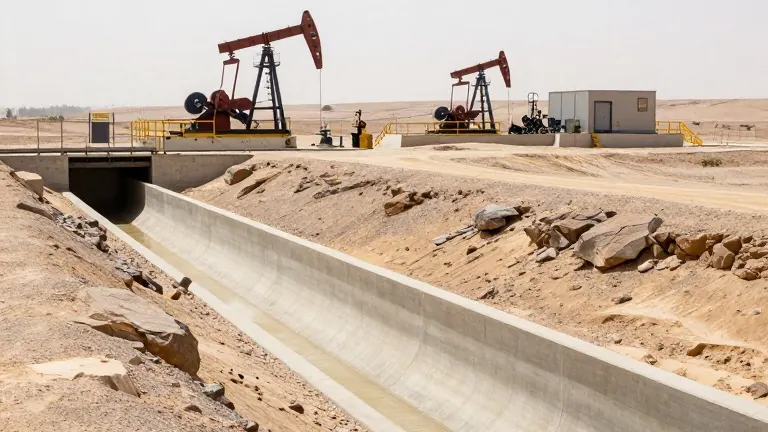
A new federal plan to reduce water use in the Colorado River basin has triggered legal action from Arizona, Nevada, and the Central Arizona Project canal system. The proposal could cut the amount of water allocated to the Central Arizona Project by 47 percent. This drastic reduction threatens the 336-mile infrastructure network that supplies water to Phoenix and Tucson. The move comes as reservoirs in the basin hit record lows and policymakers struggle to agree on how to manage demand.
The Central Arizona Project is a complex system of canals, pipelines, and pumping plants that moves water through the desert. Rich Weissinger, who worked as director of field maintenance for the project for nearly 30 years, described the system as an engineering marvel. He noted that the facility relies on massive, riveted metal casings to house motors and turbines that keep water flowing. Weissinger stated that many people, industries, and municipalities depend on the project for a stable and reliable water source.
However, the reliability of that source is under pressure from dry conditions and high demand. The current crisis mirrors warnings issued by the project’s original architects in the 1960s. Floyd Dominy, then commissioner of the Bureau of Reclamation, provided specific estimates for future water diversion. He predicted that available supplies for the project would be more than halved between 1990 and 2030. Dominy attributed these declines to growing water use in upstream states such as Colorado, New Mexico, Utah, and Wyoming. While climate change and drought have become primary drivers of supply issues in the 21st century, Dominy’s forecast of reduced water availability proved broadly correct.
Lawmakers who supported the project also acknowledged the need for additional water sources. In 1968, Congressman Mo Udall told Congress that bringing in outside water was necessary. He argued that assuming no extra water would be added was a violent assumption. Udall and other proponents suggested connecting the Colorado River system to the Columbia River in the Pacific Northwest or building massive desalination facilities on the Pacific Coast. Senators from the Pacific Northwest responded by adding a provision to the legislation that barred the federal government from studying such inter-basin water moves for ten years after the law passed.
Those ideas never became reality. Tom McCann, a former deputy general manager for the Central Arizona Project, said there was no willingness to spend money to address a future problem that had not yet arrived. McCann noted that while managers did not completely write off augmentation ideas, they did not expect water shortages to become this severe. He explained that cost and political hurdles prevented the implementation of the proposed backups. McCann described the early warnings as largely forgotten over the decades.
Brad Udall, son of Mo Udall and a senior water and climate research scientist at Colorado State University, offered a different perspective. He said his father and uncle Stewart Udall, who served as secretary of the Interior from 1961 to 1969, could have done better than suggesting complicated and expensive augmentation plans. Brad Udall argued that the brothers deserve some forgiveness because they were working in an era of national optimism following World War II. He recalled that the 1968 mindset was that the country could engineer its way out of every crisis. He described the proposal as a hasty way to get the massive project approved after a long legal battle with California.
Chuck Podolak, former director of the Water Infrastructure Finance Authority of Arizona, suggested that the promise of augmentation allowed policymakers to avoid a difficult political reality. Farms and ranches account for roughly three quarters of all Colorado River water use. Water experts say it would be more affordable for cities to buy water from farms than to build huge new infrastructure. Podolak argued that promising large-scale projects like desalination plants helped policymakers avoid saying that Phoenix would grow at the expense of agriculture.
The Central Arizona Project continues to divert water into central Arizona without the major infusion of desalinated water or pipelines to the Pacific Northwest that were once envisioned. The system now faces a steep shortage that forces a reevaluation of the decisions made decades ago. The legal fight over the new federal plan will determine how much of the remaining water stays in Arizona.
Source: WCBE