Michigan households see income rise but remain below national median
Census data shows the state population dipped slightly while Detroit and Grand Rapids posted small gains, and EV adoption lagged behind neighboring states.
By Chioma Brooks ·
Michigan residents saw their median household income rise to $75,832 in 2025, yet the figure remains well below the national average of $84,780, according to data released by the US Census Bureau this week. The income gain marks a recovery from 2024 levels, but the state continues to trail the nation in overall household earnings.
The annual American Community Survey also indicates that Michigan’s total population declined slightly. The state had approximately 10.1 million residents in 2025, representing a loss of 12,575 people compared to 2024. This decrease of less than half a percent follows two years of estimated population growth. The survey covers areas with more than 65,000 residents and tracks variables ranging from educational attainment to transportation habits.
Among the state’s largest cities, trends were mixed. Detroit, with an estimated population of 649,115, and Grand Rapids, at 201,180, both saw populations increase by 0.5 percent. Detroit gained 3,413 residents, while Grand Rapids added 1,049. Lansing recorded the largest percentage increase among major cities, adding 1,317 residents to reach a population of 114,783. This growth, approximately 1.2 percent, secured Lansing’s position as the sixth largest city in Michigan. In contrast, Dearborn, Southfield, Rochester Hills, and Farmington Hills each lost roughly 800 residents.
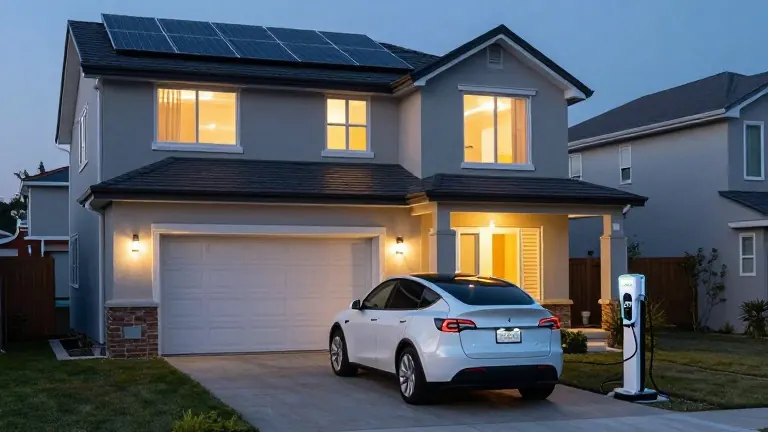
The survey introduced new metrics for electric vehicle and solar panel ownership. An estimated 148,819 Michigan households, or 4 percent, owned an electric vehicle in 2025. This rate fell short of the national average of 5.5 percent and lagged behind neighboring Illinois and Minnesota. Tricia Holley, a survey statistician at the Census Bureau, noted that western states led in adoption, with California recording the highest rate per household, followed by Washington, Hawaii, and Nevada.
Solar panel adoption in Michigan also trailed nearby states. The Census estimated that 65,918 Michigan households had solar panels in 2025. Illinois had 177,113 such households, and Ohio had 72,125. On the education front, 92.7 percent of Michigan adults held a high school diploma or equivalent, exceeding the national estimate of 90.6 percent. However, only 33.9 percent of Michigan adults earned a bachelor’s degree or higher, compared to the national figure of 37.4 percent.
The gap in postsecondary education has persisted for nearly a decade. Data released earlier this year showed that only 25 percent of 11th graders in the state were college ready, a slight decrease from 26.6 percent the previous year. A decade ago, that figure stood at 35 percent.
Source: Bridge Michigan