Army Postpones Lead Azide Detonation in Iowa Amid Public Concerns
The U.S. Army has delayed the planned controlled explosion of unstable explosives at the Iowa Army Ammunition Plant until Monday to address safety concerns and public outcry.
By Khalid Rahman ·

The U.S. Army has announced a delay in the planned destruction of approximately 9,500 pounds of bomb-making material at the Iowa Army Ammunition Plant in Middletown. Originally scheduled for the weekend, the controlled detonation of lead azide has been pushed back to Monday, November 23. Acting Secretary of the Army Adam Telle stated that this new date represents the latest possible moment before a forecasted temperature drop, which could further complicate the operation.
Lead azide is a highly explosive chemical that serves as a primary component in various ammunition and warheads produced at the facility. For two decades, the material has been stored in underground concrete tanks submerged in a water and ethanol solution. However, inspections earlier this year revealed that the tanks had become too dry, causing the lead azide to crystallize. This crystallization process renders the chemical unstable, raising fears that it could detonate unexpectedly if not addressed promptly.
The decision to postpone the operation follows a wave of public concern and political pressure. Many residents in the Middletown area first learned of the plans at the beginning of the week. In response, the Iowa Environmental Council and the Sierra Club filed a lawsuit against the Environmental Protection Agency on Friday. Elected officials also called for a pause in operations to allow for a more thorough risk assessment.
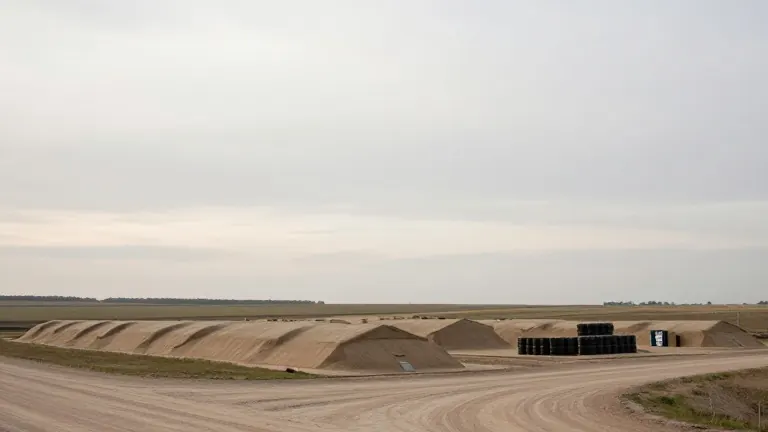
Army spokesperson Justine Barati explained that cold weather poses a specific hazard to the material. She noted that lead azide can become more volatile when exposed to lower temperatures, making the timing of the detonation critical for public safety. The Army intends to destroy the underground containers, which are surrounded by massive barriers of lime fill and sand designed to absorb shock waves and pressure.
Communication regarding the event has been a point of contention. While the Army held an informational open house in October and distributed maps estimating the potential path of a lead dust plume, those maps now require revision to align with Monday's weather forecast. If the detonation proceeds, air quality will be monitored jointly by the Army, the EPA, and the University of Iowa.
Public health experts from the University of Iowa have indicated that the health effects of the event will depend heavily on the concentration of lead in the resulting dust plume. Residents have expressed anxiety about whether the dust will remain contained within the plant or travel to nearby communities. The Army has not yet provided a comprehensive response on where else lead azide may be stored nationwide.
The Iowa facility is one of five Army ammunition plants located across the country, with the others situated in Missouri, Virginia, Tennessee, and Pennsylvania. The plant produces medium and large caliber ammunition, missile warheads, mortars, mines, and other explosives. As the new deadline approaches, officials emphasize that public safety remains the top priority in managing this high-stakes operation.
More News · Middletown news · Report a business · Got a Story?