Climate Tipping Points: Why Small Temperature Gains Matter
With global warming likely to reach 1.7 or 1.8 degrees Celsius, new data shows how these increments drive coral extinction, heat deaths, and stronger storms.
By Priya Marino ·
For hundreds of millions of people living near coastlines or in urban centers, the difference between 1.5 and 2 degrees of global warming is not a minor statistical variance. It determines whether their homes survive and whether their bodies can withstand the heat. As delegates gather in Turkey for the COP31 climate summit, the original 1.5 degree target set a decade ago is now considered out of reach. Current data indicates global average temperatures are already close to that threshold.
A recent United Nations study projects the best-case scenario for the planet is now 1.7 or 1.8 degrees Celsius of warming, roughly 3 degrees Fahrenheit above pre-industrial levels. If fossil fuel emissions continue on their current trajectory, the world could face 2.8 degrees of warming by the end of the century. Tim Lenton, a climate professor at the University of Exeter, notes that every fraction of a degree avoided helps limit harm.
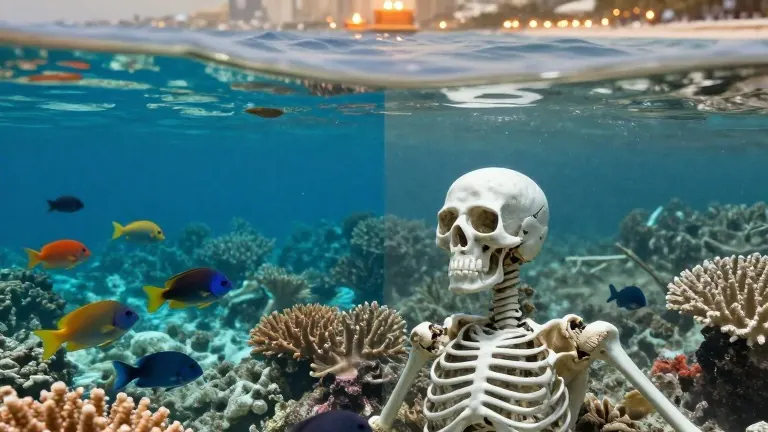
The impact on marine ecosystems is already visible. Coral reefs support vast biodiversity and provide food and livelihoods for hundreds of millions of people. However, corals are highly sensitive to heat. Prolonged marine heat waves cause bleaching, which can kill the organisms. Since the late 1990s, four global bleaching events have occurred. Scientists say a fifth event is likely unfolding now due to a historically strong El Niño raising water temperatures.
Research published in the journal Nature last month found that 44% of coral species globally are at risk of extinction. David Obura, director of the coral research organization CORDIO East Africa, states that time is critical in these efforts. The Intergovernmental Panel on Climate Change determined that beyond 2 degrees of warming, 99% of corals would be lost. Obura explains that at 2 degrees, most corals will not survive in functional ways to build reef ecosystems.
Conservation groups and coastal communities are working to make reefs more resilient. Strategies include restoring damaged corals, reducing water pollution, and breeding heat-tolerant species. Obura points out that most people do not have the option to abandon degraded ecosystems because that is where they live. The goal is to make these environments function again despite rising temperatures.
Human exposure to dangerous heat is also rising sharply. Researchers found that for every tenth of a degree of warming, an additional 140 million people are exposed to dangerous heat levels. In Europe this past summer, an estimated 50,000 people died of heat-related causes. Heat poses particular risks to the elderly, pregnant individuals, and those with chronic health conditions. Lenton compares the human body’s response to heat as a tipping point, where physiology can fail and lead to death.
Warmer air also holds more moisture, increasing the intensity of storms. For every degree of warming, the atmosphere can hold 7% more water vapor. This leads to heavier downpours, a trend already evident in most of the United States. Higher levels of warming also increase the risk of other tipping points, such as the collapse of Antarctic glaciers. If these glaciers destabilize, the resulting melt would add vast volumes of water to the ocean, raising global sea levels.
At the COP31 negotiations, major new commitments to cut emissions are not expected. Instead, discussions are focusing on a new goal for electrification. This involves transitioning more cars and homes to run on electricity rather than fossil fuels. Since a growing share of the world's electricity comes from cleaner sources like solar and wind, this shift aims to reduce overall emissions.
Lenton emphasizes that while the exact location of tipping points is uncertain, more warming increases the likelihood of crossing them. Less warming controls that risk. The negotiations in Turkey aim to stave off these increments, recognizing that each fraction of a degree avoided has tangible effects on human health and global ecosystems.