New Federal Rules Change Car Seat Crash Testing Starting December 5
The National Highway Traffic Safety Administration mandates stricter side-impact and frontal crash tests for child restraints manufactured on or after the new deadline.
By Priya Marino ·
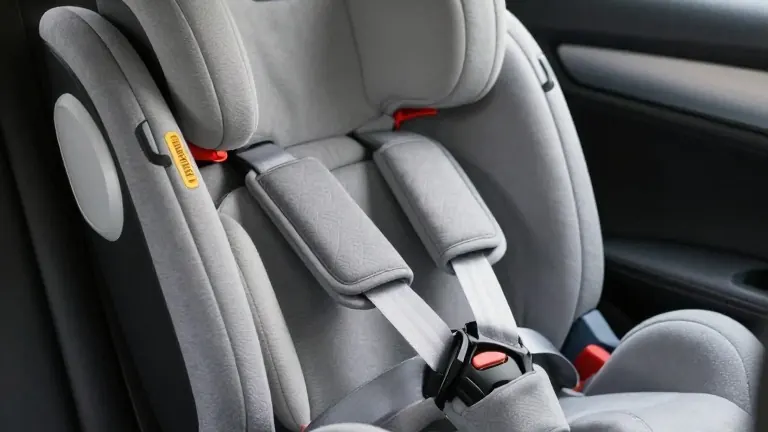
Federal safety rules for child car seats tighten on December 5, 2026. The National Highway Traffic Safety Administration, or NHTSA, requires manufacturers to meet new standards for side-impact and frontal crashes. These changes alter how new seats are engineered and tested to protect children in specific collision scenarios.
The first change involves side-impact protection under Federal Motor Vehicle Safety Standard 213a. This rule, originally issued in 2022, becomes mandatory for all covered seats made on or after December 5. Manufacturers must use a simulated vehicle seat and door to test how a restraint performs in a T-bone crash. The standard applies to portable restraints that include a weight range for children under 40 pounds or a height range under 43 inches. Exceptions exist for car beds, harness-only restraints, and seats built exclusively for school buses.
A second rule, Federal Motor Vehicle Safety Standard 213b, updates frontal-impact testing. For seats manufactured on or after the December 5 deadline, the frontal crash test will use an updated test seat that better represents modern vehicle back seats. Most restraints will also be tested with a simulated lap-and-shoulder belt, replacing the lap belt used in previous tests. This shift aims to reflect how children are actually secured in today's cars.
Parents do not need to replace existing car seats because of this deadline. The requirement applies to the date of manufacture, not the date of purchase. A seat bought in January might have been made in October, depending on inventory. Some companies have already begun producing seats that meet the new standards. Owners should continue to verify that their current seat fits the child and the vehicle, follows installation instructions, has not been recalled, and is within its stated usable life.
Labeling requirements also shift for forward-facing seats and boosters. Manufacturers must now specify a minimum forward-facing weight of 26.5 pounds. For booster seats, the minimum weight label must be at least 40 pounds. These numbers are not immediate switching points. NHTSA advises keeping children in their current stage until they exceed the specific limits set by that seat's manufacturer.
The NHTSA issued the side-impact rule in 2022, but the compliance date arrives this December. The agency distinguishes between the rule's creation and its mandatory enforcement. Drivers purchasing new seats after December 5 should check the manufacture date tag to confirm the model meets the updated FMVSS 213a and FMVSS 213b criteria.