GLWA inspects aging pipes to prevent next major outage
The Great Lakes Water Authority is using electromagnetic testing and manual checks to assess 80 miles of vulnerable infrastructure.
By Abigail Brooks ·
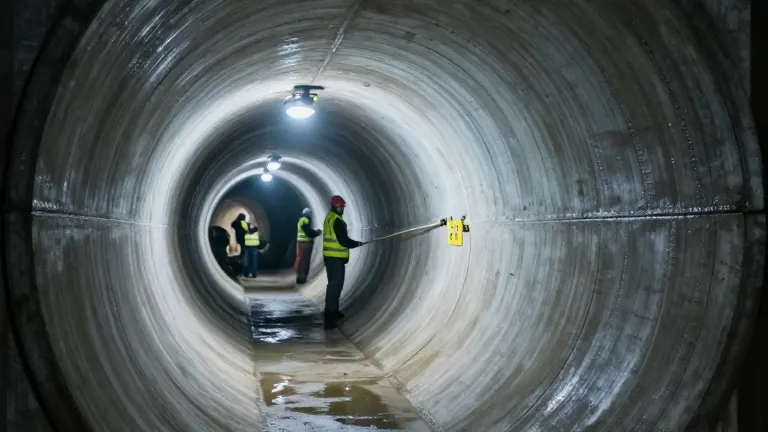
The Great Lakes Water Authority is inspecting its aging transmission mains to identify structural flaws before they cause another major service disruption.
In May 2026, a rupture in a 42-inch prestressed concrete cylinder pipe in Auburn Hills cut off water to thousands of residents in northern Oakland County. The incident triggered a state of emergency and exposed a specific vulnerability in pipes installed during the 1960s and 1970s. These pipes were designed to last 90 to 100 years, but the Auburn Hills section failed after roughly 50 years of service.
GLWA managers state that the vintage of the pipe is a primary factor in determining which sections receive condition assessments. Olivia Olsztyn-Budry, a GLWA manager, noted that the utility has approximately 80 miles of this susceptible infrastructure within its network. Crews recently conducted inspections in Van Buren Township on a transmission main installed in 1962. That specific line serves Romulus, Van Buren Township, and Ypsilanti. It spans 11 miles and has recorded 12 breaks since entering service.
The inspection process requires extensive preparation. Planners schedule the work one year in advance. Workers spend about a month draining the pipe before entering it. On inspection day, crews travel through the pipe, covering approximately one mile per day. They employ two distinct methods to evaluate the structure. The first involves an electromagnetic tool that sends electric signals through the pipe’s internal wires. A receiver detects these signals. If the signal is disrupted, it indicates a break in the wire.
The second method is manual. Crew members tap the interior of the pipe with a rod and listen for changes in sound. These variations may signal delamination or cracks in the concrete. Olsztyn-Budry described the electromagnetic data as the primary indicator of wire breaks. The goal is to detect problems before they escalate into emergencies. Engineers then compare the number of broken wires against a structural threshold to determine the necessary action.
If a pipe falls below that threshold, GLWA has two options for repair. Engineers can excavate the site and replace the pipe entirely. Alternatively, they can install a carbon fiber reinforced polymer liner from the inside. This liner system requires no surface construction and can extend the pipe's lifespan by roughly 50 years. The utility’s system delivers drinking water to nearly 4 million residents across eight southeast Michigan counties. The network comprises roughly 800 miles of water transmission main with an average age of 72 years.
Of the total mileage, about 400 miles consist of PCCP. The 80 miles from the 1960s and 1970s represent the most vulnerable segment. Replacing all of this vulnerable pipe would cost an estimated $1.6 billion. In September, GLWA published a report titled The Crisis Beneath Us: The Urgent Need to Invest in Michigan’s Water Infrastructure. The document estimates a statewide water and wastewater investment need as high as $85 billion over the next 20 years.