Israeli Election: Netanyahu Faces Direct Challenge in 120-Seat Race
Voters decide between the long-time prime minister and a former general in a contest shaped by term limits and war losses.
By Abigail Brooks ·
The election in Israel is less about traditional political lines and more about one specific leader. Benjamin Netanyahu has served as prime minister for 19 of the last 30 years. He first took office three decades ago. The political field has split into two main camps: those who support him and those who oppose him. Polls indicate the two sides are running close.
The race centers on 120 seats in the Knesset. The outcome will determine if Netanyahu continues to lead or if a new government forms. The opposition bloc includes Naftali Bennett and Avigdor Lieberman. Both are former prime ministers or key right-wing figures who once worked with Netanyahu before splitting. Their parties are part of the larger anti-Netanyahu coalition.
Gadi Eisenkot leads the main opposition challenge. He is a former chief of staff for the Israel Defense Forces. He entered politics four years ago. His party is named Yashar, a word that means straight or direct. Eisenkot proposes US-style term limits for prime ministers. He argues that power corrupts. His platform calls for a country without lies.
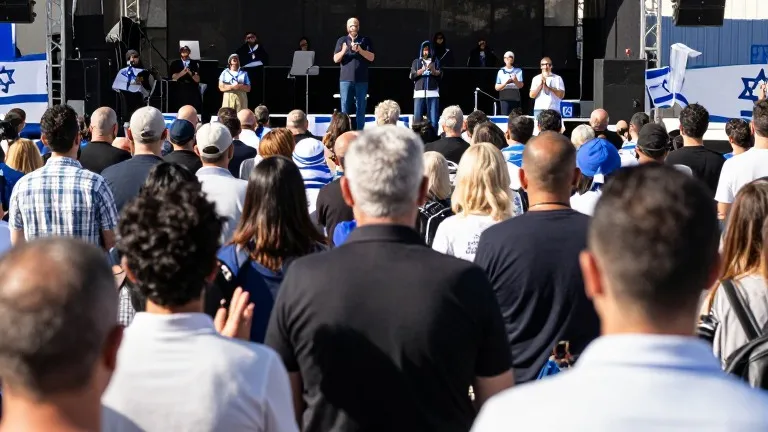
Supporters value Eisenkot’s plain speaking style. Noa Sadeh, 56, attended a rally in Modi'in this week. She said she is tired of politicians who only know how to talk. She wants a leader who does the work. Eisenkot’s background as the son of working-class Moroccan Jews adds to his appeal with certain voters.
On the far right, Itamar Ben-Gvir’s party, Otzma Yehudit, is also campaigning against the center. Yishai Fleisher, a party representative, told voters in Bet Shemesh that Netanyahu drifts left. He wants to pull the country to the right. His proposals include more settlements in the West Bank and Gaza. He also supports a ministry to encourage the voluntary departure of Palestinians. He backs the death penalty and more weapons for Jewish civilians.
Netanyahu has framed the vote as a choice between the right and Palestine. His campaign posters use a rhyming slogan to make this point. The opposition includes parties with large Palestinian citizen bases. These citizens make up about a fifth of Israel's population. The key question is whether the anti-Netanyahu Jewish parties will rely on these Arab parties to form a majority. They are forecast to outpoll Netanyahu but fall short of a majority on their own.
The conflict has weighed heavily on the campaign. The October 7, 2023, attacks occurred while Netanyahu was in power. More than 70,000 Palestinians have died in the subsequent war in Gaza. Israel says one-third of those killed were Hamas combatants. The war did not eliminate Hamas. Iran's nuclear threat remains. Netanyahu also faces a corruption trial and the Qatargate affair.
Oded Levi voted for Netanyahu in 2022 but attended an Eisenkot rally this week. He said the current prime minister is responsible for the recent events. Netanyahu’s base remains loyal despite reports that he received warnings about the October 7 attacks. His allies claim his intelligence chiefs kept him in the dark. Many expect him to outmaneuver rivals in post-election coalition talks.
Expatriate Israelis are flying home to vote. This group is not captured in standard polls. Their votes could decide the race if the margin is one seat. On Thursday, a state ceremony marked the 1995 assassination of Yitzhak Rabin. Netanyahu sent a low-ranking minister to the event. Yair Golan, leader of the Democrats party, said he is optimistic. He hopes opposition leaders can agree on a regional strategic process for security.
A video from a Negev music festival showed young Israelis singing Shir LaShalom. The song was associated with Rabin. The full flights home and the rally attendance suggest a shift in sentiment. The vote on Tuesday will determine if the 19-year rule continues or ends.
Source: The Guardian