Michigan battery growth: Industry leaders argue storage cuts energy costs
The Solar Energies Industry Association says new battery technology allows solar power to run homes and businesses reliably, regardless of weather.
By Abigail Brooks ·
Michigan homeowners and businesses could see lower energy bills as battery storage technology becomes cheaper and more efficient. Tim Pawlenty, a former Minnesota governor who heads the non-profit Solar Energies Industry Association, argues that storing solar power solves the main complaint against renewable energy: reliability.
Pawlenty notes that early batteries were large and held little charge. Current models are smaller and can store power for eight to 10 hours, with technology approaching 12 to 14 hours. This capacity allows a house or business to run on solar-generated electricity stored during the day, even after the sun sets. The falling price of these units, combined with improved efficiency, makes them a viable option for average consumers.
The state has emerged as a production hub for this equipment. General Motors is developing next-generation battery technology, while LG Energy Solution is constructing its second battery storage and manufacturing plant in Michigan. Corning also operates a facility in the state that produces component parts for the solar and storage supply chain. Pawlenty projects Michigan will rank among the top five states in the nation for battery storage deployment over the next few years.
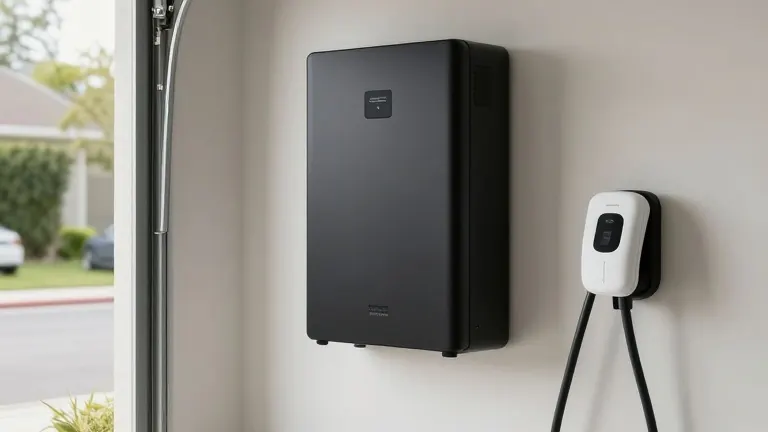
There are four distinct tiers of solar investment. The first is residential systems, where panels sit on roofs and batteries in garages. The second is community solar, which uses ground-level arrays for local neighborhoods. The third is commercial solar installed on large warehouse roofs, such as those at Walmart locations. The fourth is utility-scale facilities that occupy large tracts of land to generate massive amounts of power for the grid or industrial users.
Homeowners with garage-based batteries can use stored energy to power lights, appliances, and electric vehicle charging at night. Some residents can also sell excess energy back to the grid, depending on local utility rules and regulations. Pawlenty describes this setup as a home-based ecosystem where the household acts as its own energy supplier, providing both financial savings and power reliability.
The political environment for this technology is mixed. President Trump’s administration has previously cut clean energy credits and scaled back fossil fuel subsidies, though he has endorsed a bipartisan permitting bill currently pending in Congress. That legislation would speed up the approval process for new energy projects. Pawlenty argues the market is demanding more solar and storage because the technology is cost-effective and quick to deploy, independent of government policy.