Midterm Strategy: GOP Rallies Echo Early 20th Century Klan Messaging
Analysts compare current Republican campaign rhetoric to the xenophobic platforms of the 1920s Ku Klux Klan, citing specific remarks by Trump, Vance, and RFK Jr.
By Priya Marino ·
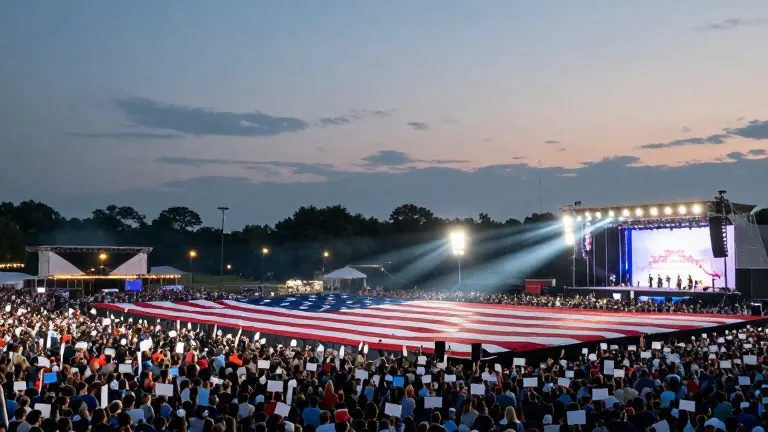
Republican conservatives have long cited historical records to argue that the early Ku Klux Klan was a Democratic phenomenon, but recent campaign activities suggest a shift in ideological alignment. The 2026 midterm election cycle has seen a series of coast-to-coast rallies where Republican candidates and officials emphasize themes of white ethnic preservation and fear of demographic change. These events mirror the political strategies employed by the second wave of the Klan in the 1920s, which organized as a white fraternity to defend Anglo-Protestant America against perceived external threats.
Researchers from the Berkley Center for Religion, Peace & World Affairs noted that the 1920s Klan exploited popular xenophobia to create a unified political and social movement. EBSCO, a research platform, described the earliest version of the organization as a fraternal order for white, male, Anglo-Saxon Protestants opposed to Reconstruction. The subsequent rise of the group presaged the Red Scare of 1919 and 1920 and the Immigration Act of 1921, the first U.S. legislation to establish quotas based on national origin. This period was defined by widespread prejudice in mainstream society toward immigrants, Black Americans, and Jewish Americans.
In the 1926 book The Klan’s Fight for Americanism, Imperial Wizard Hiram Wesley Evans described Klansmen wrapping themselves in the flag and the cross to proclaim themselves the moral guardians of America. Evans argued that Americanism required the pioneer stock to be kept pure. He stated that mongrelization was proven bad and that interbreeding improved men only between closely related stocks of the same race, specifically citing English, Dutch, German, Huguenot, Irish, and Scotch lineages.
Current Republican campaign messaging reflects these historical themes. President Donald Trump, Vice President JD Vance, and Health Secretary Robert F. Kennedy Jr. have frequently used rhetoric emphasizing the protection of white heritage. Trump has described Mexican immigrants as rapists bringing drugs and crime, and has claimed they are poisoning the blood of America. He also invoked scientific racism, suggesting migrants are predisposed to murder because it is in their genes. Vance, who spread claims about Haitian migrants in Springfield, Ohio, recently told a crowd in Michigan that the Middle East is a region made up of countries whose names he could not even pronounce.
Vance has also asserted to white audiences that they no longer have to apologize for being white. In a separate remark, RFK Jr. questioned the point of having Indian people in the United States. He told a crowd that many of his contemporaries are in bed with Indians, adding that they are everywhere, unethical, and do not smell the freshest. These comments have drawn attention to the specific language used in recent campaign events, which contrasts with the party's historical narrative regarding the Klan.
Republican officials have labeled several Democratic figures, including Senate candidate Abdul El-Sayed, New York City Mayor Zohran Mamdani, and Representative Ilhan Omar, as communists, jihadists, and scammers. The administration has also promoted the Great Replacement Theory, an ideology associated with white supremacist groups. Trump has claimed that an Islamic takeover is underfoot and that candidates from so-called third world countries, such as Somalia, threaten American freedom and material possessions.
The use of fear and ethnic purity as primary campaign tools has characterized the current Republican push for congressional majorities. While some Democrats point to the party switch to explain the historical association with the Klan, the current campaign events focus on present-day rhetoric and policy positions. The rallies serve to galvanize voters by linking patriotism to the preservation of a specific ethnic identity, a strategy consistent with the political gospel of the 1920s Klan.
Source: WERE