Vance Tests 2028 Message With Midterm Campaign Stints
The vice president is using his role as anti-fraud czar and campaign speeches to define a populist identity separate from President Trump's.
By Chioma Brooks ·
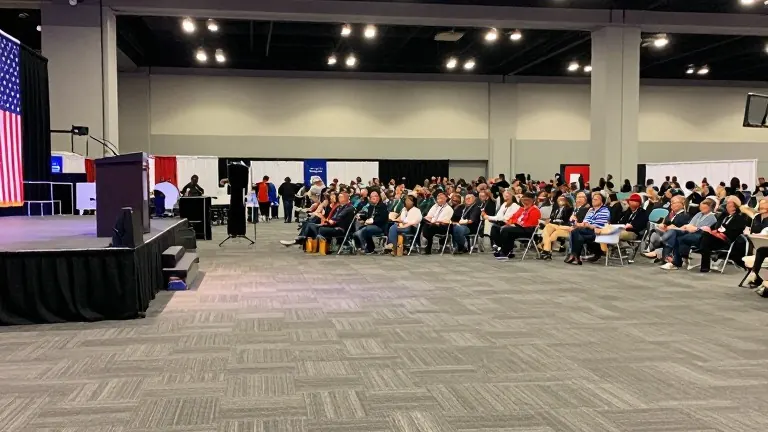
JD Vance has made his current role as the head of President Trump's anti-fraud task force a central part of his public image this year. He uses the position to discuss his personal history while working to root out malfeasance in federal social safety net programs.
In Cincinnati last week, Vance told a crowd about his first job as a grocery store cashier at Dhillon Foods. He noted that the store was about 20 miles from where he was speaking. He also mentioned that many members of his family relied on federal food benefit programs.
This personal narrative fits into a wider political pitch he is delivering across the country. Vance describes a past America marked by local stability and community. He often references his childhood in rural southern Ohio and the small businesses that sponsored his youth football teams.
"I distinctly remember looking in my old jerseys and seeing the names of the businesses that had sponsored those teams and realizing that most of the teams I played for, those businesses no longer existed," Vance said in Howell, Michigan. He blamed politicians in distant places for the consequences paid by working families.
Vance is currently traveling with a distinct style that differs from President Trump. His delivery is described as more practiced and less comedic, yet it shares the same core themes of MAGA politics. He emphasizes traditional values and economic populism while engaging in culture war rhetoric.
In a speech in Weatherford, Texas, Vance mocked Democratic Senate candidate James Talarico. He joked that Talarico had to grapple with his masculinity and whiteness. Vance told the cheering crowd that there was not much to grapple with regarding those traits.
The vice president faces a specific challenge in promoting Republican candidates while serving an unpopular president. He navigates economic complaints by framing them as inevitable geopolitical results rather than direct policy failures. In Montana, he compared current gas prices to spikes in 2022, 1979, 2001, and 2007. He argued that prices rise whenever a foreign leader acts unpredictably.
Vance also addresses high beef prices by pointing to consolidation among meatpackers. This approach allows him to acknowledge consumer pain without directly blaming Trump's policies that have angered beef producers. His 2028 campaign will likely rely on this blend of personal biography and populist critique.
Source: WBAA