Michigan population holds near 10.1 million as cities show mixed trends
Census data shows a slight statewide drop, while Detroit and Grand Rapids gained residents and household income rose but remains below the national average.
By Priya Marino ·
The US Census Bureau released estimates this week that place Michigan's 2025 population at approximately 10.1 million residents. This figure represents a decline of about 12,575 people compared to 2024, a decrease of less than half a percent. The state had previously recorded two consecutive years of estimated population growth.
Four of the state's 17 largest cities reported modest increases in their resident counts. Detroit, the state's most populous city, added 3,413 people to reach an estimated 649,115 residents, marking a 0.5% rise. Grand Rapids, the second largest city, saw its population grow by 1,049 to 201,180, also a 0.5% increase. Lansing experienced the largest percentage gain among major cities, adding 1,317 residents to reach 114,783, a jump of about 1.2%. This growth secures Lansing's position as the sixth largest city in Michigan.
Other major cities saw smaller declines. Dearborn, Southfield, Rochester Hills, and Farmington Hills each lost approximately 800 residents. Despite these losses, all four cities maintain estimated populations exceeding 75,000. The American Community Survey provides these estimates for areas with more than 65,000 residents, covering characteristics such as education, income, and transportation.
Economic indicators show mixed progress. The median household income in Michigan rose from $72,389 in 2024 to $75,832 in 2025. However, the state still lags behind the national median household income, which stood at $84,780. Tricia Holley, a survey statistician at the Census Bureau, noted that western states have led the way in switching to electric vehicles. She stated that California had the highest rate of EV adoption per household, followed by Washington, Hawaii, and Nevada.
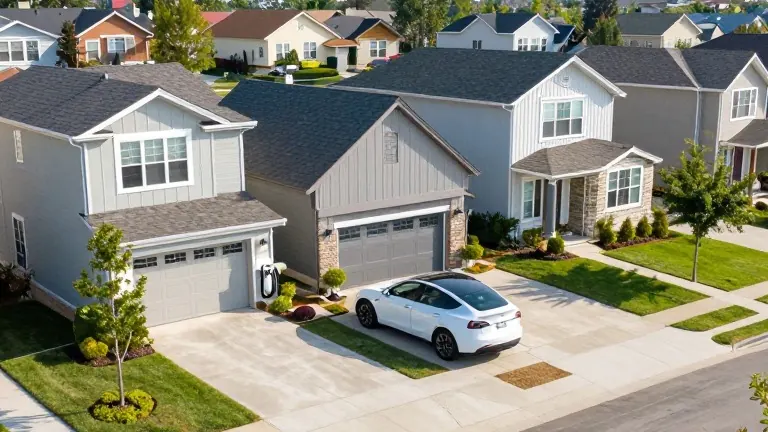
The survey included new data on electric vehicle and solar panel ownership. An estimated 148,819 Michigan households, or about 4%, owned an electric vehicle last year. This rate is lower than the 5.5% national estimate and trails the rates in Illinois and Minnesota. For solar power, 65,918 Michigan households had panels installed in 2025. This number is lower than the 177,113 in Illinois and the 72,125 in Ohio.
Educational attainment data reveals that 92.7% of Michigan adults hold a high school diploma or equivalent, higher than the 90.6% national estimate. In contrast, only 33.9% of Michigan adults have a bachelor's degree or higher, compared to 37.4% nationally. This gap in postsecondary degrees has persisted for nearly a decade. Recent SAT data indicates that only one in four 11th graders in the state is considered college ready, a slight dip from the previous year's 26.6% and down from 35% a decade ago.
Source: The Oakland Press