Black turnout surge flips three Senate seats and reshapes the Southern map
Record participation in states like Louisiana and Georgia helped Democrats seize control of key legislative chambers and narrow margins in Mississippi.
By Chioma Brooks ·
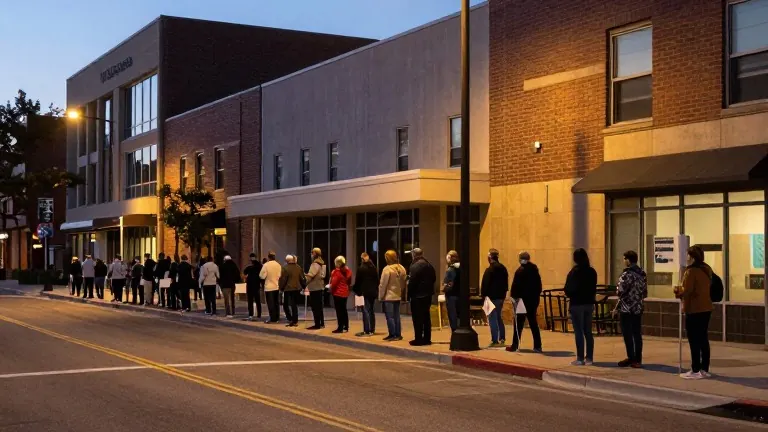
Democratic candidates captured U.S. Senate seats in North Carolina, South Carolina and Texas on Tuesday, a shift driven by a sharp increase in Black voter participation across the region. The results have fundamentally altered the electoral map, positioning the South as the central battleground for both parties heading into the 2028 presidential cycle.
The surge in turnout was visible in states with large Black populations. In South Carolina, the state recorded its highest voting numbers for a gubernatorial election year, a trend attributed in part to elevated Black engagement. Democrat Annie Andrews used this momentum to flip a U.S. Senate seat. A similar dynamic played out in Louisiana, where Democrat Jamie Davis lost to Senator-elect Julia Letlow by a margin of less than two percentage points. This result occurred in a state that President Trump won by more than 15 points in 2024.
Mississippi remains the focal point of the remaining uncertainty. Democrat Scott Colom leads incumbent Republican Cindy Hyde-Smith by fewer than 1,200 votes in a state with the highest share of Black voters in the country. The race is currently too close to call, keeping the balance of power in the Senate in flux.
Republican-led redistricting efforts intended to secure favorable House districts in Alabama, North Carolina, Texas and Florida largely failed to prevent Democratic gains. These map changes followed a Supreme Court ruling earlier this year that weakened parts of the Voting Rights Act. In Alabama, Representative Shomari Figures won by nearly eight points in a district redrawn to favor Republicans. In Tennessee, Democratic state representative Justin Pearson is within a few thousand votes of winning a seat where Memphis was split into three districts.
Ashley Kennedy Shelton, who leads the Louisiana-based Power Coalition for Equity and Justice, described the recent court decision as personal for Black voters. She noted that rising costs for electricity, gas and food have forced individuals who previously avoided politics to recognize its impact on their daily lives. She stated, 'Everybody's spending more money on their electricity bills, their gas bills, their food bills. All of these different things are really personally impacting voters.'
The Democratic performance extended well beyond federal offices. In Georgia, Senator Jon Ossoff’s 18-point victory propelled former Atlanta mayor Keisha Lance Bottoms to win the governor’s race. Democrats swept every statewide elected office, gained control of the state utility regulator and secured a majority in the state House. In North Carolina, former Governor Roy Cooper’s 20-point win helped flip multiple congressional seats and secured control of the state House.
State legislative control shifted in other regions as well. Texas Democrats won a majority in their state House, while Republican supermajorities in Florida and South Carolina ended. Dozens of additional pickups were reported in Alabama, Arkansas, Kentucky and Tennessee. These down-ballot results indicate a broad swing away from the Republican Party in the region.
Both parties are already directing their strategies toward the 2028 election. Potential presidential contenders from both sides have invested financial support and campaign time in tight Southern races. On the Democratic side, former Transportation Secretary Pete Buttigieg, Senator Raphael Warnock and Kentucky Governor Andy Beshear made notable appearances. On the Republican side, Texas Senator Ted Cruz and Vice President JD Vance focused their efforts on the region.
Texas, Florida, Georgia and North Carolina collectively hold more than a third of the 270 electoral votes required to win the White House. The closer-than-expected margins in these states make them attractive targets for both parties. Even where Republicans retained the Florida governor’s seat and U.S. Senate seat, the narrowness of the results suggests the region will remain the center of national political competition.
The results of Tuesday’s election have established a new baseline for congressional control. The combination of expanded House and Senate majorities and shifted state legislative power means that future paths to national office will require sustained engagement in the Southern states.