Iran's military chief bars US Navy from Gulf as oil prices rise
Brent crude reached $117 per barrel while Iranian officials declared American warships unwelcome in the region.
By Priya Marino ·
Iran's armed forces have declared the US Navy barred from re-entering Iranian territorial waters, a move that coincided with Brent crude oil reaching approximately $117 per barrel. The price jump marked the highest level for the benchmark since April, driven by renewed fears of expanded conflict in the Middle East. Ali Abdollahi, the chief of general staff for Iran's military, issued the statement on Saturday morning via state media.
Abdollahi asserted that the US cannot target vessels in the region if it keeps its ships at a distance. He criticized American rhetoric as contradictory, noting that Washington claims Iranian military power is largely destroyed while refusing to move aircraft carriers closer to Iranian shores. He described the US president's desire for military re-entry as a dream, stating that Iran can target any vessel in the area.
President Donald Trump addressed the uncertainty on Friday at a rally in Florida. He indicated that the United States had not decided on its next strategic move, suggesting the military might launch another operation similar to Epic Fury, the large-scale bombing campaign that began the war in February. Trump weighed whether to end the fighting with massive strikes or to continue the naval blockade and sanctions.
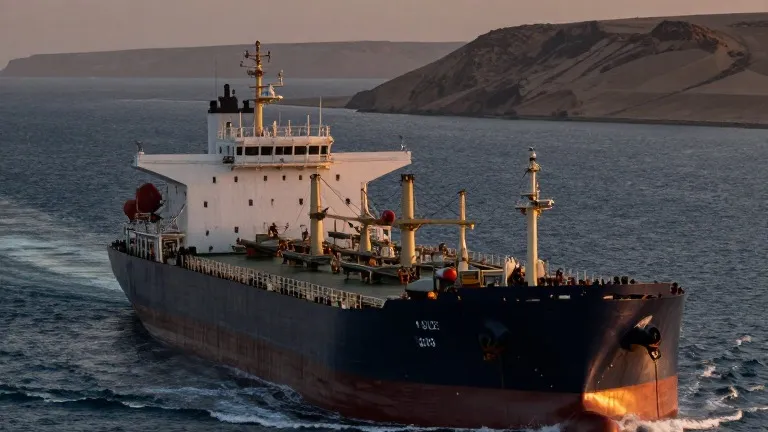
The Strait of Hormuz remains a focal point of the conflict. The Islamic Revolutionary Guard Corps reported that seven tankers were attacked or struck mines between Wednesday and Thursday. By Friday, the IRGC claimed two supertankers had hit mines. The group stated its doctrine has shifted toward a more offensive posture, threatening seabed internet and communication cables if civilian infrastructure is targeted again.
Diplomatic efforts have stalled despite recent meetings. Senior diplomats from Turkiye, Saudi Arabia, Pakistan, and Egypt met with counterparts from the UK, France, Germany, and Italy in Istanbul on Friday. The United States and Iran were not present at the talks. Turkish Foreign Minister Hakan Fidan said a new attack on Iran would widen the war and spread the conflict across the region.
Regional tensions expanded beyond the immediate Gulf area on Saturday. The Houthis in Yemen struck Riyadh, following recent attacks on Dammam's international airport and the Shaybah oilfield. Saudi forces responded by bombing Houthi-held areas in Marib and Taiz. In southern Lebanon, Israeli air strikes hit areas near Nabatieh, and artillery fell near Zawtar ash-Sharqiyah.
US intelligence agencies have reported that Iran has substantially increased efforts to strike American officials in the Middle East and elsewhere, according to reports from Axios on Saturday. Iranian state-linked media claimed Tehran activated a dead hand doctrine that would allow attacks to continue from all 31 provinces if senior leaders are assassinated. Reformist newspaper Etemad suggested the zero hour for another intense round of fighting was approaching.
Iranian analysts and officials framed the current standoff as a shift away from negotiation. Analyst Reza Nasri wrote that Iran will no longer negotiate under bombardment and will end the cycle by all necessary means. The diplomatic gap was highlighted by the Istanbul meeting, where regional ministers supported the Islamabad memorandum of understanding and demanded unrestricted passage through the Strait of Hormuz.