M John Harrison Wins Booker Prize for Dystopian Satire
The 81-year-old author claims the £50,000 award for his 198-page novel, becoming the oldest recipient in the prize's history.
By Chioma Brooks ·

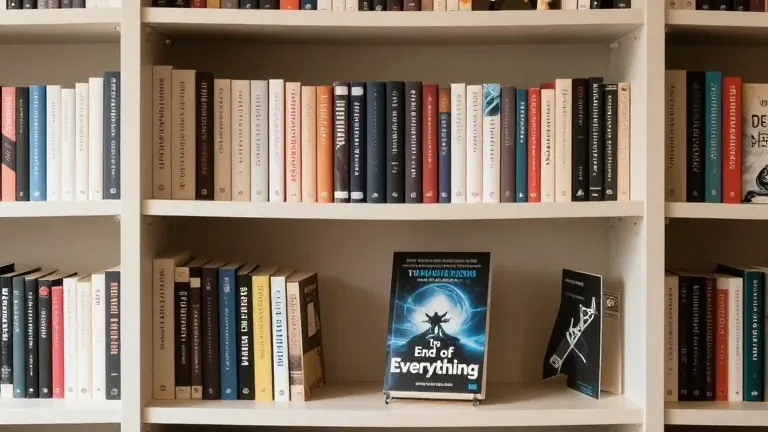
M John Harrison has become the oldest winner of the Booker Prize. The 81-year-old British author won the £50,000 award on Monday for his dystopian satire The End of Everything.
The novel is 198 pages long. It was the shortest book on the 2026 shortlist. The other nominees included Marlon James for The Disappearers, Douglas Stuart for John of John, Elizabeth Strout for The Things We Never Say, Rebecca Perry for May We Feed the King, and Luke Kennard for Black Bag.
Historian Mary Beard chaired the judging panel. She named the panelists as poet Raymond Antrobus, musician Jarvis Cocker, critic Rebecca Liu, and writer Patricia Lockwood. Beard stated that Harrison was the unanimous choice of the group.
Beard described the work as having "extraordinary, expert writing and huge ambition." She noted that the book views current politics through a future lens. She added that the novel leaves the reader with a sense of optimism despite its subject matter.
The plot follows a beachcomber and his pistol-wielding aunt on the Kent coast. They survive in a near-future society facing collapse. Shapeshifting entities called the iGhetti invade the region. A violent event early in the story pushes the characters into a post-moral world. The narrative uses short, filmic chapters to create a dreamlike ambiguity.
Harrison has written 13 novels in a 60-year career. Beard rejected the idea that the prize was a lifetime achievement award. She pointed out that she is only ten years younger than the author. "We are not celebrating octogenarians," she said.
Gaby Wood, the chief executive of the Booker Prize foundation, noted that the rules no longer restrict the prize to literary fiction. She said Harrison is the first winner to come from the science fiction world. Wood called him a genuinely original thinker who takes ideas seriously.
Harrison said he has worked for 40 to 50 years to shift the balance between science fiction and literary fiction. He asked why a well-written work of science fiction should not be considered literary. He stated that the novel is about trying to live as if nothing has gone wrong. He identified the core disaster as the failure to comprehend.
Harrison cited the collapse of rationality associated with Trumpism and the internet as a central theme. He also mentioned humanity's attempt to abandon the environment it depends on. He described the book as a disaster story where the disaster is the loss of factual understanding.
This is the first Booker Prize win for his publisher, Serpent’s Tail. Harrison previously won the Boardman Tasker Prize for Mountain Literature in 1989 for Climbers. He won the Arthur C. Clarke Award in 2007 for Nova Swing. He received the 2020 Goldsmiths Prize for innovation in fiction for The Sunken Land Begins to Rise Again.
The author is a former rock climber and fell runner. He served as a judge for the Booker Prize in 2022. Colm McKenna reviewed the book for The Irish Times. McKenna called the narrative rudderless but memorable. He noted that the characters operate outside a recognizable emotional structure, which can make engagement difficult.