Record Spending Marks 2026 Midterms as Parties Battle for Control
With polls open, the most expensive election in history is defined by a Republican committee advantage and a Democratic edge in candidate fundraising.
By Abigail Brooks ·
Voters across the nation are casting ballots on Tuesday in what analysts expect to be the most expensive election in American history. The financial scale of this midterm contest stands out sharply against previous cycles, with both parties deploying record sums to secure control of Congress. This spending surge is not uniform across the board. While the total war chest is massive, the flow of money reveals a complex and divergent strategy between the two major parties as they fight for the balance of power in the final two years of President Donald Trump's second term.
According to data compiled by the Associated Press, Republican committees have outraised and outspent their Democratic counterparts at the committee level. This financial edge is largely attributed to the influence of Trump-affiliated groups and the significant contributions of Elon Musk. These external super PACs and party committees have poured billions into the race, creating a substantial buffer for Republican candidates. The Associated Press notes that this committee-level dominance is a key factor in the current strategic landscape, allowing Republican operatives to buy extensive media coverage and digital advertising in critical states.
However, the picture changes when looking at the candidates themselves. At the individual candidate level, Democrats have outraised their Republican opponents. This suggests that while the party machines and outside groups are leading in total dollars raised, the specific candidates running for the House and Senate are generating strong fundraising momentum. This divergence highlights a potential challenge for Republican committees, which must now translate their larger war chests into actual votes at the ballot box. The effectiveness of this spending will be a key metric as results begin to trickle in from early voting states.
A significant portion of the Republican spending is concentrated in areas where President Trump performed well in the 2024 presidential election. An analysis of AdImpact data by the Associated Press indicates that 88.1 percent of Republican general election TV ad spending has gone to states and districts that Trump won. Within that figure, more than 850 million dollars has been spent in districts where he won by ten points or more. This strategy suggests a focus on defending the president's base and ensuring that Republican incumbents in safe districts maintain their leads. The heavy concentration of dollars in these areas reflects a defensive posture aimed at protecting the party's current standing.
In contrast, Democrats are leveraging their candidate-level fundraising strength to target swing districts and states. The party is focused on the net gain of three House seats required to claim a majority, given that Republicans can lose no more than two seats. This mathematical constraint drives the allocation of resources, with Democratic committees and candidates focusing on the 46 battleground districts identified by Ballotpedia. The goal is to flip enough Republican-held seats to shift the balance in the House, while also fighting to hold onto the Senate where Democrats need a net gain of four seats to achieve control.
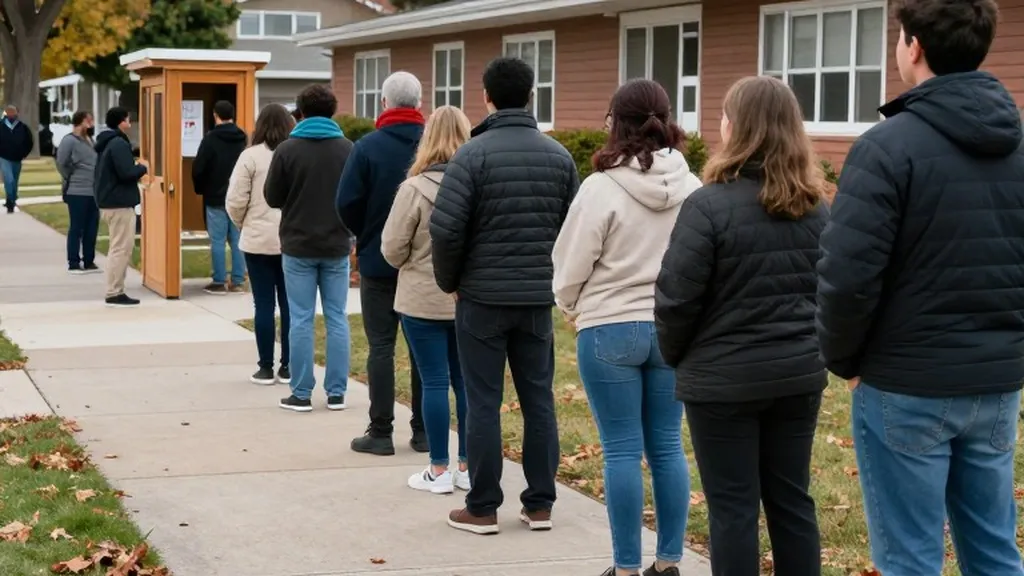
The cost of living remains a central issue for voters, and the money in the race is being spent to highlight this theme. The Associated Press reports that voters are struggling with high prices and are angry over the unpopular war with Iran. These economic anxieties are driving voter engagement, with more than 57 million people having already voted as of Monday, surpassing early vote totals from four years ago in many closely watched states. The high volume of early voting suggests that the financial investment in outreach and advertising is having an effect on voter turnout, particularly among Democrats who are described as cautiously optimistic about their chances.
Republican leadership is bracing for the possibility of losing the House while fighting to hold the Senate. RNC Chairman Joe Gruters has emphasized that everything depends on turnout, stating that if they turn out their voters, they win. This focus on mobilization is a direct response to the financial advantages of the Democratic candidate pool. Despite the committee-level spending edge, Republicans recognize that turnout is the ultimate determinant of success. The party is working to counter the narrative of economic discontent by highlighting their record and pushing voters to support their candidates in key districts.
The role of Elon Musk in the fundraising landscape cannot be overlooked. His contributions have helped close the gap at the committee level, providing Republicans with a significant financial cushion. This support has allowed them to outspend Democrats in key media markets, ensuring that their messages reach a wide audience. The inclusion of such high-profile donors in the funding mix has made this election distinct from previous midterms, where the gap between party committees and candidate fundraising was less pronounced. The Associated Press notes that this financial infusion is a critical component of the Republican strategy.
Democrats, on the other hand, are relying on the anger of the American people to drive their candidate fundraising. DCCC Chair Rep. Suzan DelBene stated that the American people are angry and want change. This sentiment is reflected in the candidate-level fundraising numbers, which show Democrats pulling ahead of their opponents. The party is using this momentum to fund targeted ads and ground games in the battleground districts. The focus is on turning out voters who feel that the high cost of living and the war with Iran are issues that need to be addressed by a change in congressional leadership.