Senators Warn Banks Against Handling Russian Diesel Shipments
Lawmakers are pressing financial institutions and port authorities to hold off on Russian diesel transactions while Congress reviews the legality of the administration's sanctions waiver.
By Priya Marino ·
A bipartisan group of lawmakers wrote to major U.S. banks and port authorities this week warning them to hold off on Russian diesel deals, saying the transactions could draw legal challenges and congressional investigations. The letters went to the chief executives of firms including Goldman Sachs and to port authorities in Houston, Corpus Christi, Beaumont and the New York/New Jersey terminal.
The lawmakers pointed to the Ending Importation of Russian Oil Act of 2022, which generally bars Russian energy imports unless the president certifies to Congress that Russia has halted hostilities in Ukraine, poses no immediate threat to NATO allies and recognizes Ukrainian self-governance. They also argued that Section 216 of the Countering America's Adversaries Through Sanctions Act requires congressional review before licensing actions that change U.S. policy toward Russia, and said that review has not happened.
The letters arrived after President Donald Trump announced an arrangement with Russian President Vladimir Putin on October 9 under which Russia would ship diesel to the United States. Trump said Russia would first send more than 300,000 metric tons, followed by 500,000 tons in November and 1 million tons afterward, with up to 3 million tons more available depending on refinery conditions. The Treasury Department issued General License 135, a six-month exemption from certain sanctions restrictions.
The correspondence was signed by Democratic Senators Jeanne Shaheen, Ron Wyden, Sheldon Whitehouse, Chris Coons and Elizabeth Warren, along with outgoing Republican Senator Thom Tillis and Representative Gregory Meeks, the top Democrat on the House Foreign Affairs Committee. Recipients were asked to confirm by October 28 that they had preserved records of any Russian diesel transactions dating to September 1 and to disclose any knowledge of proposed or completed imports.
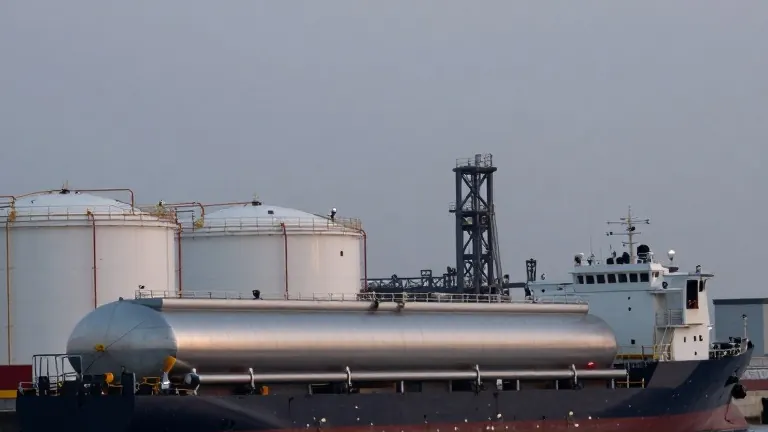
Vessel-tracking data cited by the lawmakers indicated ships carrying Russian diesel could reach Beaumont and New York/New Jersey by the end of October. Representative Jamie Raskin, the top Democrat on the House Judiciary Committee, separately warned fuel-industry associations that companies importing the fuel could face civil and criminal penalties including up to 20 years in prison.
The White House said the initiative was politically motivated. Spokesperson Taylor Rogers said Democrats 'have no agenda to improve the lives of Americans and will instead continue their decade-long obsession with investigating President Trump.'
Michael Wain, a senior international trade policy adviser at the law firm Akin, said General License 135 reduces sanctions risk for foreign firms operating within its terms, though companies must still consider British and European Union rules. Rachel Ziemba, a senior fellow at the Center for a New American Security, said the warnings could give U.S. banks pause about financing the shipments.
Russian diesel output fell from about 175,000 tons a day in September to 160,000 tons a day in the first half of October, industry sources said, before recovering toward 180,000 tons a day after new export quotas were introduced. Russia began granting exemptions to its domestic diesel export ban on October 1 to allow shipments under the arrangement.
Source: RFE/RL