Midterm Results: Republican Strategy Fails on Cost of Living
Voters in key states rejected Republican candidates despite nearly $500 million in ad spending, signaling a disconnect between social media discourse and economic realities.
By Chioma Brooks ·

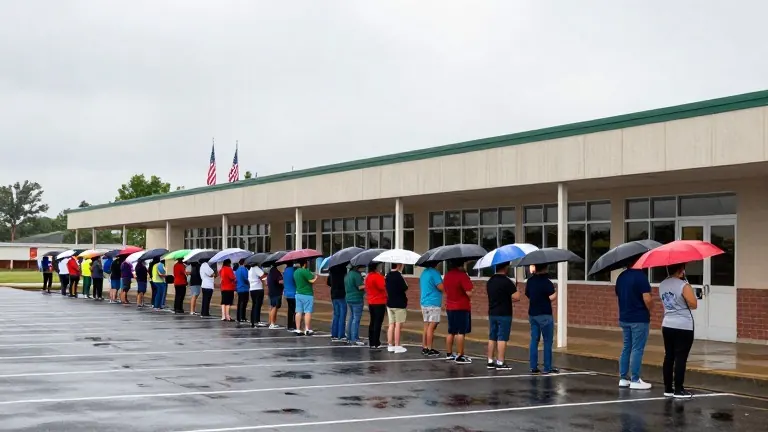
The 2026 midterm elections resulted in a decisive setback for the Republican Party, with the party losing control of historically red states including Texas, Kansas, and South Carolina. The party also barely retained Florida, while the Senate race in Mississippi remains too close to call. These results indicate that voters prioritized economic stability over cultural issues, contradicting the party's recent strategic focus.
Vice President JD Vance highlighted the campaign's tone during a town hall in Texas one week before the election. When Kate White, a Texas Christian University student and Turning Point USA chapter leader, asked how young people could afford to settle down and have children, Vance responded with a joke about former Ohio Governor Jon Husted. He later blamed rising housing costs on institutional investors and "20 million illegal aliens," but the initial reaction underscored the party's reliance on online humor over substantive policy explanations.
Republican strategy relied heavily on social media engagement, particularly on X, where the party believed it held a mandate. This approach ignored polling data suggesting voters were primarily concerned with affordability. The Department of Education promoted "Malfoid," a gender-swapped Harry Potter character, while the Department of Homeland Security touted record lows in legal immigration. These posts targeted online audiences rather than the general electorate, who remained focused on gas prices and grocery costs.
Elon Musk contributed nearly $500 million to Republican candidates and PACs, funding ads that focused on culture war issues. The spending failed to offset voter dissatisfaction with the party's performance on the cost of living. Bo French, the Republican candidate for Texas railroad commissioner, lost by a wide margin after posting anti-Indian memes on X. This loss reflected a shift among Asian American voters, who moved toward Democrats in down-ballot races in Texas.
Katie Miller, wife of White House adviser Stephen Miller, cited safety concerns under Virginia law regarding public home addresses to explain why she did not vote. The Millers reside on a secure military installation. Meanwhile, a recent poll indicated that a majority of young men across all racial groups voted for Democrats in the midterms, challenging the party's assumption that this demographic aligned with its cultural project.
Vance posted a retrospective on X, stating he consulted pollsters who identified the war with Iran, cost of living, and the relationship with Israel as top voter concerns. He noted that the party failed to address these priorities adequately. The algorithmic nature of social media created an echo chamber, where niche topics dominated feeds and misled leaders about mainstream public sentiment. This disconnect between online metrics and electoral outcomes proved decisive in the November vote.